Are All Luxury Labels Made In Same Factories? What Viral Claim On Tiruppur Reveals
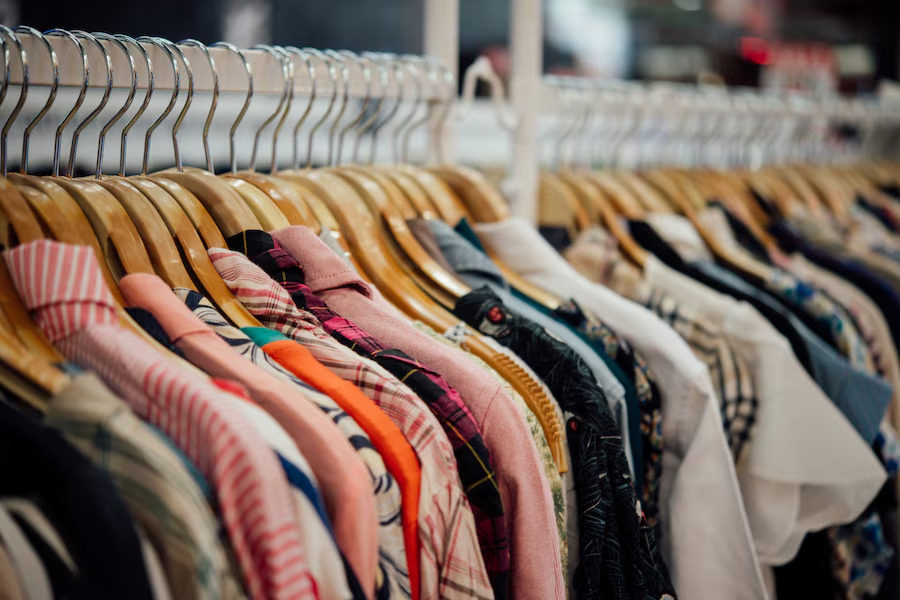
A social media debate has erupted over the production of luxury brands in Tiruppur, Tamil Nadu, with users discussing the rationality of the high price markup on many brands. The debate started after Vineeth K, founder of Deals Dhamaka, revealed that many luxury brands are produced in the same factories in Tiruppur as mass market brands.
The main difference lies in the labels, not the manufacturing, he said. Noting this difference, he wrote on X on Sunday: “Any T-shirt above Rs 2,000, any jeans above Rs 4,000 is a waste of money. Go to Chennai, all the luxury brands have the same factory make, just the tags are different.”
His comments have resonated with many people online. The X post has garnered over three lakh views so far. While many agreed with Vineeth K on the illusion of the consumption race, some argued that despite being made in the same factories, certain luxury brands use different materials.
“Sorry, sir, but I don't agree. Maybe they are stitched in the same factory, but the materials are different. And of course, the user experience is different. You will realise this after 5–6 washes,” a user commented.
Any Tshirt above Rs.2000
November 30, 2025
Any Jeans above Rs.4000
Is a waste of money.
Go to Chennai, all the luxury brands have the same factory make, just the tags are different.Echoing a similar sentiment, another user said that those who have visited Tiruppur understand this reality and don't chase brands.
“I found this in 2010 in Tiruppur. The textile factory gets orders and at last they put brand logo stickers in that material. After this, the price skyrocketed from nowhere,” the user said, sharing his experience.
However, some users also offered differing views, drawing from their personal experience with some premium brands. One user commented that while he had heard about mass production of various brands under the same roof, some indeed offer “unparalleled” experience.
“I've heard about those factories before. Do they sell Louis Philippe t-shirts? The quality is unmatched, priced around Rs 2,400, and they easily last 3–4 years even with heavy use,” the user said.
Others attributed the phenomenon of wearing premium brands to marketing strategies and the influence of peer pressure.
“Once you shop at a store. (I am talking about Levi's) They sell experience. They assure you of the material, design, fit, etc,” a user explained.
Making a similar remark, another said, “You pay for the social effect it has, not the material.”
Tiruppur is popularly known as the ‘knitwear capital' of India. The textile city of Tamil Nadu produces 90% of India's cotton knitwear exports and around 55% of total knitwear exports, according to the Tiruppur Exporters' Association (TEA). In 2024-25, the city's knitwear exports reached Rs 39,618 crore.

-
The Economic Imperative: Analysing The Material Driving Force Behind India-Canada Strategic Reset

This economic complementarity is further reinforced by deep institutional investment ties and talent mobility, which form the bedrock of the bilateral framework.
-
Medicine Pricing: Where Must Profit Stop?
India must confront excessive margins, hidden incentives and regulatory gaps that threaten the integrity of medicine.
-
Why Amazon And Flipkart Are Struggling To Beat Meesho In India's Smaller Cities
With 274 million users and lowest-cost logistics, Meesho is defending its value commerce crown against giants like Amazon and Flipkart.
-
High US Salaries, No Green Card Certainty: The Financial Calculation Facing Indian H-1B Families
The suspension of PERM processing at eight technology employers does not cancel existing H-1B visas. What it does is force a question many Indian families have been avoiding: is the US salary worth tying your career and family plans to one employer?
-
Swiggy vs Eternal: Food Delivery's Two Rivals Are No Longer In The Same Race
Eternal is building a private AI assistant, dark.ai. Swiggy is still working out how to make Instamart pay, with an operating loss of Rs 895 crore in the July-September quarter while Blinkit stayed profitable.
-
Where You Live Shapes How You Get To Work | The Reason Why
Two-wheelers are the most popular way to get to work in India, accounting for nearly 43% of workplace commutes.
-
Unhedged Position: Can India See An Indonesia-Style Time Correction?
The Nifty is trading below levels it first clocked in 2024. Is there, then, as I have suggested in the headline, potential that the current time correction drags on painfully for the next three-five, even ten years?
-
Navigating Friction And Energy Realities: An Analysis Of Marco Rubio's October Visit To India
Occurring at a critical juncture marked by stalled trade negotiations and escalating geopolitical pressures over global energy supplies, the visit offers a profound window into modern US-India relations.
-
India Exports Capital. Why Not Export Trusteeship?
The big question, then, is whether India can build an institution that global borrowers, investors, banks, and lawyers can trust, even without an Indian connection.
-
France's Economy & Politics Are In Crisis | The Reason Why
Let's look at how the French economy and politics evolved under Nicolas Sarkozy, Franois Hollande and Emmanuel Macron.










