Zomato Looks To Exit Online Grocery Business As Food Delivery Recovers
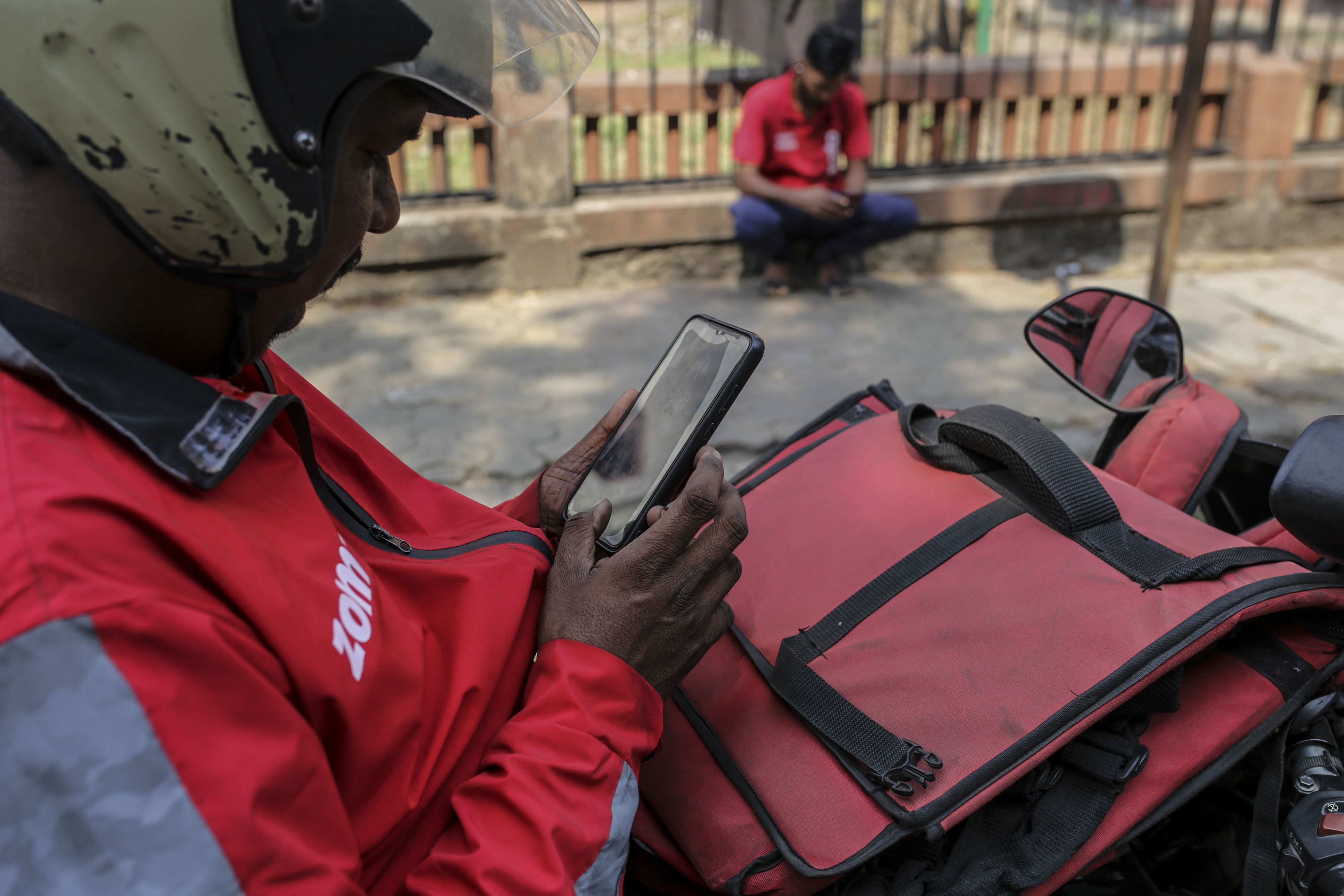
Zomato is scaling down grocery delivery as its prepares to exit the business nearly five months after launch because of poor unit economics and a gradual revival in its mainstay food delivery.
Zomato Market will continue to operate and service users who need on-demand delivery of essentials, a company spokesperson told BloombergQuint in an emailed response. As the country opens up, the firm is going to spend a large proportion of their time making food delivery service "the safest, and the most loved one in town", he said, adding that the firm has scaled down grocery business in a few cities.
A person in the know told BloombergQuint that the company realised it will burn more cash and there is not much money to be made in instant, two-hour grocery delivery model. As the food delivery market revives, the company now wants to focus on its core business, the person said on the condition of anonymity. In a blog last month, the company had said the food delivery is already back to 80% of the pre-covid level.
The online food ordering and delivering unicorn which had launched Zomato Market in April after the nation went into a complete lockdown as people stayed home, and demand for grocery and food delivery dipped. In May, the company expanded it to about 185 cities in India.
Ever since the lockdown restrictions have been eased, Swiggy and Zomato saw a decline in their grocery business. Swiggy, which too had aggressively expanded its grocery vertical, also scaled it down in a few of the smaller markets after the restrictions were eased, a person aware of the matter said on the condition of anonymity. Swiggy, however, continues to focus on the grocery vertical, and is largely pesent in top 100 cities.
Zomato is exiting the cities where it has seen no or muted demand in the last few weeks, the person quoted earlier said. Some of the customers, including in Nagpur, have already started receiving messages that Zomato Market is signing off.

Zomato, backed by Ant Financial, will however continue to operate in the top 15 cities, the second person said, adding that the company will exit those markets as and when the demand fizzles out. The firm, however, stopped partnerships and on-boarding of local grocery stores across all markets, the person said.
The online grocery market is already a hyper competitive space with big players like Big Basket, Reliance Retail Ltd. and Amazon India already fighting to grab a larger pie.
Zomato's foray was expected to be pitted against rival Swiggy, which set up a subscription-based grocery model in the last 12 months. The Ken had first reported in its newsletter in June that Zomato is looking to make a U-turn in the grocery business.
“It was expected and while it's a very competitive category, it takes a lot of time in building grocery vertical,” Satish Meena, a senior forecast analyst at Forrester Research said over the phone. “And when you are doing on-demand model, the average order value is low, and the players have no control over the inventory as well.”
“They don't have that kind of money to invest in grocery to scale, and there is also a funding crunch for Zomato which doesn't allow them to focus on building a separate grocery infrastructure to compete with the large grocery players,” Meena said.
China's Ant Group, which had announced an investment of $150 million earlier this year in its draft IPO prospectus, said it is now evaluating the timing of additional investment in Zomato.

-
We May Need Another Tukaram Mundhe To Fight Air Pollution | The Reason Why

Developers may install basic measures such as sprinklers and green nets, resume work, and continue violating rules when this equipment stops working.
-
Extracting Value From Battery Scrap Could Be Challenging For India | The Reason Why
A discarded lithium-ion battery still contains valuable materials such as lithium, nickel and cobalt. These can be recovered and reused. When such batteries are crushed and shredded, they produce a dark powder called black mass.
-
One El Nino, India Can Handle. Two Could Break The Granary
India's grain stocks can absorb one bad year, but a second El Nino could drain the buffer in two to three years, economists say.
-
India's Troika Of Good Luck | Joining The Dots
As Jensen Huang's exit drags Nvidia down, a cooling AI trade and resilient earnings have revived investor interest in India. A likely RBI rate hike looms.
-
Talking Points This Week: Leadership Shock At Nvidia, Earnings Strength, And The Fog Over Hormuz
The Anthropic IPO pricing and first trading day, Nvidia's upcoming earnings, and any fresh signals from Iran will set the tone for the following week.
-
Signature Play: The Classic Cocktail Is Dead. Or Is It?
Classic cocktails are disappearing from India's cocktail menus. But they're still being ordered, taught to bartenders and borrowed from. So, who's really having the last drink?
-
A New Samvat Wishlist: Inclusive Prosperity And Human Development
India has strengthened its economic foundations through infrastructure, digital access and enterprise. Its next growth chapter must deepen productivity, create better livelihoods and widen participation in prosperity.
-
Love, Sex Aur Dhokha: The Audacious Plot To Spy On Jensen Huang
A Taipei dinner, a Singapore chip buyer and a suspected Chinese asset: inside the alleged spy operation that got close to NVIDIA's Jensen Huang.
-
Ten Things I Learnt This Samvat
Patience can be a trap. Cheap stocks can stay cheap. Leverage can wipe you out. What did Samvat 2082 teach us? Niraj Shah writes on 10 lessons from the year gone by.
-
Talking Points This Week: Tech Nerves, FII Buying, And A Faraway Banking Shock
The global markets are not shining this Diwali. The exception in the large markets is, India.









