Wolverine-Style Self Healing Technology Is Now Real
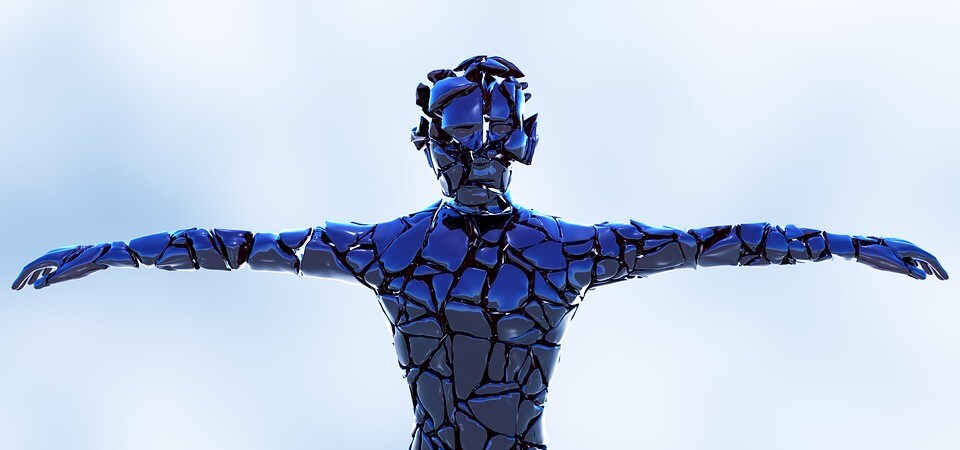
Scientists have developed a transparent, self-healing, highly stretchable conductive material that can be electrically activated to power artificial muscles and used to improve batteries, electronic devices and robots.
The low-cost, easy to produce soft rubber-like material can stretch 50 times its original length, researchers said.
After being cut, it can completely re-attach, or heal, in 24 hours at room temperature. In fact, after only five minutes of healing the material can be stretched two times its original length, they said.
The findings from researchers, including those from University of California, Riverside in the U.S., represent the first time scientists have created an ionic conductor - materials that ions can flow through, that is transparent, mechanically stretchable and self-healing.
The material could give robots the ability to self-heal after mechanical failure; extend the lifetime of lithium ion batteries used in electronics and electric cars and improve biosensors used in the medical field and environmental monitoring.
"Creating a material with all these properties has been a puzzle for years. We did that and now are just beginning to explore the applications," said Chao Wang, assistant professor at University of California.
Self-healing materials repair damage caused by wear and extend the lifetime, and lower the cost, of materials and devices.
Wang was inspired by Wolverine, the comic book character who has the ability to self-heal.
Ionic conductors are a class of materials with key roles in energy storage, solar energy conversion, sensors and electronic devices.
Conventionally, self-healing polymers make use of non-covalent bonds, which creates a problem because those bonds are affected by electrochemical reactions that degrade the performance of the materials.
Wang helped solve that problem by using a mechanism called ion-dipole interactions, which are forces between charged ions and polar molecules that are highly stabile under electrochemical conditions.
He combined a polar, stretchable polymer with a mobile, high-ionic-strength salt to create the material with the properties the researchers were seeking.
Researchers at the University of Colorado, Boulder in the U.S. demonstrated that the material could be used to power a so-called artificial muscle, also called dielectric elastomer actuator.
The research was published in the journal Advanced Material.

-
Getting To Work Costs Women More | The Reason Why

It is not just about women paying more than men. It is about women paying much more in cities than in villages.
-
AI Bias In Investing Cannot Be Eliminated, But It Can Be Governed
Framing is a particularly important example as identical financial information presented in terms of gains rather than losses can lead an LLM to reach a different assessment.
-
Joining The Dots | Dark Skies, Steady Diya: Why Hope Holds This Diwali
With war, a weak rupee and foreign outflows weighing on sentiment, policymakers at the NDTV World Summit and market veterans at NDTV Profit Ignite: Diwali Edition offered the same advice: stay invested and filter out the noise.
-
The Curious Case of Equitas Small Finance Bank And A CEO Who Quit For Stock
PN Vasudevan believes persistent investor concerns over a perceived conflict of interest had become a governance overhang on Equitas Small Finance Bank's stock, even as the lender improved profitability and asset quality.
-
Talking Points This Week: AI Cash Burn, A Tiger Comeback And An India That Still Finds Its Own Path
India is not immune to higher oil or tighter global liquidity, yet its earnings base is broader, its domestic policy levers are still available.
-
Foreign Investors Own Half Of HDFC Bank and ICICI Bank. An LTCG Cut Could Matter Most Here
Foreign portfolio investors have US$115 billion parked in HDFC Bank, ICICI Bank. If the government cuts long-term capital gains tax, Jefferies says returning foreign money could land here first.
-
'Never Seen This Level Of Negativity': Sandeep Tandon Says The Next Rally May Be Closer Than You Think
Veteran investor Sandeep Tandon says foreign selling is easing, large-caps are due a comeback and mid-caps are crowded, while he turns positive on gold, power and pharma this Diwali.
-
Indians Stay With Family, Not In Hotels | The Reason Why
India still lacks enough clean, reliable and affordable hotels for budget-conscious travellers.
-
The Economic Imperative: Analysing The Material Driving Force Behind India-Canada Strategic Reset
This economic complementarity is further reinforced by deep institutional investment ties and talent mobility, which form the bedrock of the bilateral framework.
-
Medicine Pricing: Where Must Profit Stop?
India must confront excessive margins, hidden incentives and regulatory gaps that threaten the integrity of medicine.










