This Year Hasn’t Been Great For Starting A Business In India
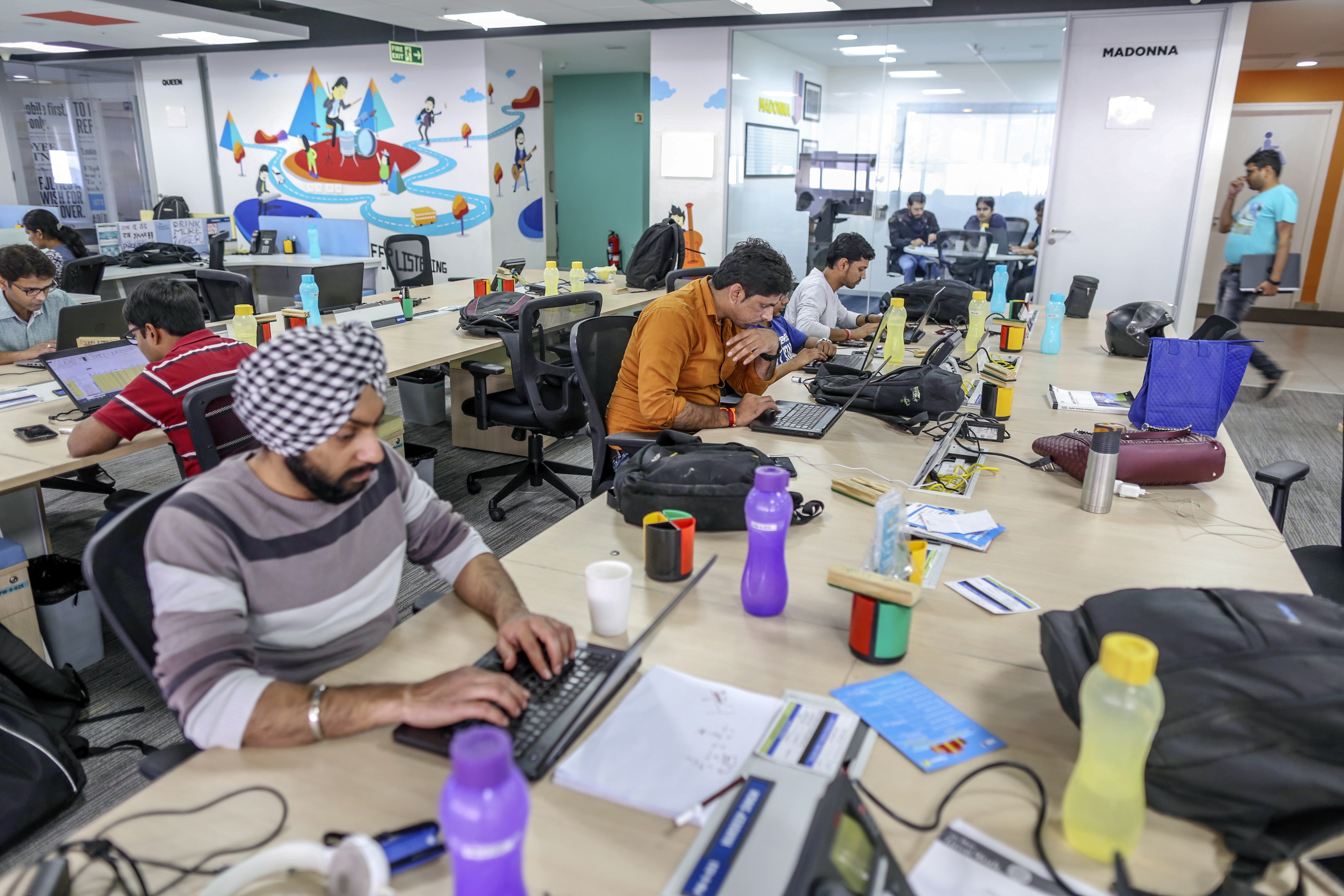
Difficulty in starting a business and tax concerns meant that fewer new startups came up and funding for such ventures declined by more than half in the first seven months of this year.
Early-stage funding of new internet and technology firms fell 53 percent because of difficulty in starting a business in India and the issue of angel taxation, R Chandrasekhar, president of industry lobby group Nasscom, told BloombergQuint in an interview. “Angel investments are taxed even before they have made a profit and this is a huge dampener. It also distorts the level playing field. A foreign investor doesn't face this tax. Clearly, it is a huge disincentive for the domestic investors.”
Angels are usually wealthy individuals who invest at an early stage and provide growth capital to new ventures. India in 2012 introduced a law to tax funds raised by an unlisted company by issuing shares at a price higher than the fair market value. The law exempted investments by venture capital firms. The government eased rules last year to exempt newbie companies raising funds from angel investors. But it also added another bureaucratic layer. Startups have to obtain a certificate from an inter-ministerial board to be eligible for the benefit.
Worldwide, countries are ensuring that a business can be set up in 24 hours or less and even remotely, while it takes much more time in India, Chandrasekhar said. “We need to focus on the ease of starting up in India. Also, domestic constraints, like regulatory provisions, have hampered homegrown startups, which doesn't impact foreign players.”

Prime Minister Narendra Modi's government has been easing rules and its efforts have started paying off as Asia's third-largest economy jumped 30 places to rank 100 on the World Bank's Ease of Doing Business index. The improvement was driven by eased rules for construction permits, landing credit, protecting minority investors, paying taxes, cross-border trade and resolving insolvency. Yet, it takes 30 days to set up a company in India. The country slipped one spot and ranks a lowly 156 among 190 nations in the ease of starting a business.
That was reflected in a 28 percent decline in the number of new startups founded in January to June this year. About 1,000 fresh ventures were set up compared to 1,400 in the year-ago period, according to Nasscom's startup report for 2017 released on the sidelines of its product conclave on Thursday.
Overall, 5,200 startups were founded in India in the last five years, according to the report. More than a third of them failed, said Chandrasekhar.
The government's Startup India initiative classifies ventures founded in the last five years as startups. Total funding for such companies in the first seven months of the year declined 14 percent year-on-year to $1.8 billion, according to Nasscom report.
Overall funding for the entire traditional startup ecosystem jumped 167 percent to $6.4 billion during the period. “That was because larger startups or unicorns soaked up a bulk of the investments,” the Nasscom chief said. Most of the startups valued a billion dollars or higher are more than five years old.
The technology industry lobby group said India continues to be the third-largest startup hub in the world. New firms in the areas of agricultural tech and energy are the next set of big bets, Chandrasekhar said.
Other Report Highlights
- The number of fintech startups grew 31 percent year-on-year to 360 in January to July, while 28 percent more ventures were founded in the health-tech space taking the tally to 320. The number of e-commerce firms and online aggregators grew 13 percent.
- Tier 2 and 3 cities accounted for 20 percent of the startups this year.
- The number of student startups increased to 450 from 350 a year ago.
- Around 50 M&A deals happened in the first half against 40 in the year-ago period.

-
One Battle After Another: India's Corporate Dynasties Battle For Control

2026 could go down as Corporate India's year of succession wars, governance battles and family fault lines.
-
Rs 50-Lakh Gold In Bank Locker, Rs 3 Lakh Of Protection: The Gap Most Families Don't Know About
The RBI ties a bank's liability to the annual locker rent and families who want to insure their jewellery face a separate question about how to prove what was inside.
-
The More Food Turns Into Fuel, The Harder It Is To Read Agricultural Markets | The Reason Why
A policy designed to reduce dependence on imported fuel can create new pressures elsewhere in the food economy.
-
Your iPhone Costs 12 Grams Of Gold, A Car About 100. What Does Your Life Weigh?
Measured in rupees, almost everything looks more expensive than it did a generation ago. Measured in grams of gold, a lot of it has become cheaper.
-
Gold Is Rs 22,000 Cheaper Than A Month Ago. Should You Buy Amid The Wedding Season?
Gold's potential slide to $3,500 could save around Rs 4,700 per 10 grams, but a soft inflation print could just as easily push prices back up. One way to split the risk is to buy in parts, some now and the rest after the Fed's Dec. 9 decision.
-
AI Agents Are Gaining Power. Who Governs Them?
Artificial intelligence agents promise to transform productivity by moving machines from assisting decisions to executing them. But as organisations delegate greater authority to these AI-agents, they must first establish who controls that authority and who remains accountable when things go wrong.
-
Why Swapping Your Old Gold Can Trigger A Rs 5 Lakh Tax Bill, And How You Can Avoid It Legally
Swapping old gold for new is taxed as a sale and a fresh purchase. Getting your own gold remade can cut most of that bill, though it has its own costs.
-
The AI Trade is Done. The Real Opportunity for Investors Starts in 2027 | Unhedged Position
As pureplay AI stocks plunge and circular, capex-led financing unwinds, 2027 is set to be a year of reckoning for AI companies. Yet the bust clears the way for a better opportunity for investors in 2027 -- shifting the spotlight from AI builders to the companies using AI.
-
Leadership As Mission: Why The Age Of AI Demands More Human Leadership
Debjani Ghosh examines how AI is changing leadership, arguing that its success must be measured by its impact on people and the accountability of those guiding its use.
-
We May Need Another Tukaram Mundhe To Fight Air Pollution | The Reason Why
Developers may install basic measures such as sprinklers and green nets, resume work, and continue violating rules when this equipment stops working.









