Superwomen In Lab Coats: Let’s Give Women Scientists Their Due?

Can Rajinikanth speak Punjabi if he tried? Why can some people learn five languages in a day and others have to slog for years to say “enthund vishesham?” (That's Malayalam, by the way.)
Meet Dr Nandini Singh, a neuroscientist at the National Brain Research Centre who is trying to answer exactly those questions. But as an Indian woman in STEM (Science, Technology, Engineering and Mathematics), she is one of the few.
Clearly, Indian women scientists are doing exceptional work, but why are their numbers so dismal?
Choosing Between a Family and a Career
Women scientists in India often have to choose between motherhood and a research career. If they don't have enough support, then they might drop-off in between. It becomes a dual responsibility. If you have a good support system in family and in the university, only then would you be able to continue.Dr Nandini Singh, Assistant Professor, National Brain Research Centre
When you are a woman scientist, your career is expected to have an expiry date. Which inevitably, is defined by the moment you become pregnant.
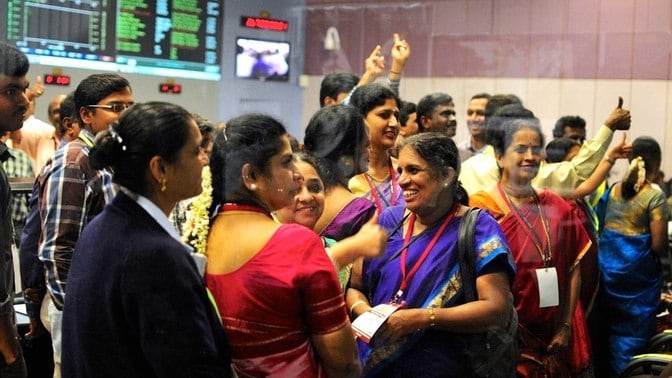
The fact that most research universities and laboratories in STEM are unable to create an encouraging environment for woman scientists to return is one of the main reasons why young women don't consider it a viable career.
Not because pregnancy affects the research skills of a woman in a lab, but because of inefficient support from research laboratories and universities which would enable them to rejoin the workforce.
Imagine you're a young woman who wants to pursue a career in science. By the time you finish your MSc, you're 23 years old. If you choose to study without taking a break, by the time you complete your PhD, you're 28 years old. Which means that just as women scientists are reaching a peak academically, they are expected to ‘settle' down.
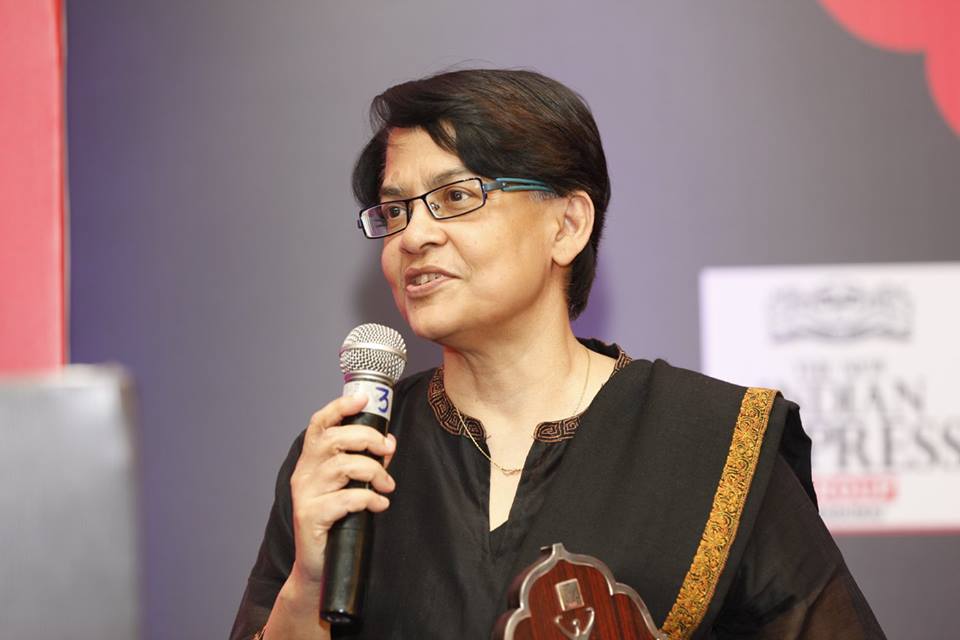 Prabhu Chawla) ">
Still An Old Boys' Club?
In its 58-year-long history, the Shanti Swarup Bhatnagar Prize for Science and Technology has been awarded to 514 recipients. Out of which only 15 women have won it. Yes, there could be a possibility that enough women scientists have not been nominated, but 3% seems like a suspiciously low figure.
Nandita Jayaraj is one of the women behind ‘The Life of Science', a project which documents women scientists across the country. Based on her ‘lab hopping' experiences, she told The Quint:
It is easier for men to get into influential positions. One cannot deny that its a boys' club. If a committee does not have some sort of female representation, then there will be fewer women who will join.Nandita Jayaraj, The Life of Science
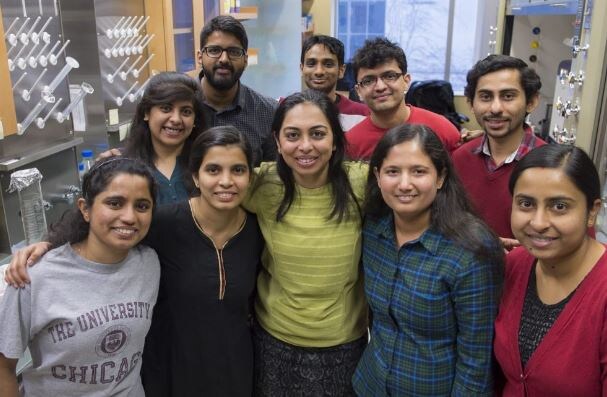 UChicago) ">
Glass ceilings exist everywhere. But in science, the ceiling is that much harder to break, precisely because there are sexist attitudes, lack of female representation on grant committees and hostile work culture in laboratories.
In May 2016, the top 11 woman researchers and scientists in India were asked by the Centre to submit a report to better working conditions for women scientists in India. The Standing Committee pointed out that the issue is in attitudes of senior male colleagues in the laboratory.
In fact, sexist attitudes start early, with many women discouraged from pursuing a long-term career in science at the entry level, despite high levels of enrolment in undergraduate science courses.
Why Labs Need Flexi-Hours and Day Care Centres
What can universities do? Introduce mechanisms for child support like day care centres, allow flexible working hours, gender audits and hire more women.

The Department of Science and Technology launched a ‘Women Scientists Scheme', which is aimed at providing opportunities to women scientists and technologists who have had a break in their career, but are looking to return. In fact, it introduced a scheme which aids women scientists in relocation because of marriage, husband moving countries etc.
But apart from the government, for Dr Nandini Singh the solution lies within.
A combination of flexibility and accountability is the way forward. Research as a career option isn't made evident for women, they often take it as a last resort. If we can improve pay scales, give young women scientists flexible working hours, more women would want to take up science.Dr Nandini Singh, Assistant Professor, National Brain Research Centre
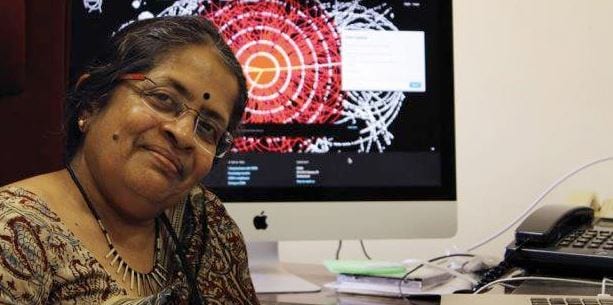 Shailja) ">
Cue The Rockstar Applause, Anyway
Some superheroes don't wear capes. They wear lab coats, and they are changing the world one pipette or microscope at a time.
Dr Rohini Godbole is a professor at the Centre for High Energy Physics at the Indian Institute of Science in Bangalore. She is the foremost authority in India on high energy photon colliders, an elected fellow of all there academies of science in India and an active advocate on increasing the number of women in India.
And she is not the only one making phenomenal discoveries in physics, chemistry, engineering and mathematics in India.
Women scientists in India are foremost, scientists. They are goddamn brilliant at what they do. And it's time we recognise, encourage and nurture the brilliance.
(Sources: The Times of India, British Council report on Women in STEM, Livemint)

-
Indians Are Travelling, But Not Every Journey Is A Holiday | The Week In Whys

Pilgrims, patients and working women are the real travellers, and the system hasn't quite caught up with them.
-
Getting To Work Costs Women More | The Reason Why
It is not just about women paying more than men. It is about women paying much more in cities than in villages.
-
AI Bias In Investing Cannot Be Eliminated, But It Can Be Governed
Framing is a particularly important example as identical financial information presented in terms of gains rather than losses can lead an LLM to reach a different assessment.
-
Joining The Dots | Dark Skies, Steady Diya: Why Hope Holds This Diwali
With war, a weak rupee and foreign outflows weighing on sentiment, policymakers at the NDTV World Summit and market veterans at NDTV Profit Ignite: Diwali Edition offered the same advice: stay invested and filter out the noise.
-
The Curious Case of Equitas Small Finance Bank And A CEO Who Quit For Stock
PN Vasudevan believes persistent investor concerns over a perceived conflict of interest had become a governance overhang on Equitas Small Finance Bank's stock, even as the lender improved profitability and asset quality.
-
Talking Points This Week: AI Cash Burn, A Tiger Comeback And An India That Still Finds Its Own Path
India is not immune to higher oil or tighter global liquidity, yet its earnings base is broader, its domestic policy levers are still available.
-
Foreign Investors Own Half Of HDFC Bank and ICICI Bank. An LTCG Cut Could Matter Most Here
Foreign portfolio investors have US$115 billion parked in HDFC Bank, ICICI Bank. If the government cuts long-term capital gains tax, Jefferies says returning foreign money could land here first.
-
'Never Seen This Level Of Negativity': Sandeep Tandon Says The Next Rally May Be Closer Than You Think
Veteran investor Sandeep Tandon says foreign selling is easing, large-caps are due a comeback and mid-caps are crowded, while he turns positive on gold, power and pharma this Diwali.
-
Indians Stay With Family, Not In Hotels | The Reason Why
India still lacks enough clean, reliable and affordable hotels for budget-conscious travellers.
-
The Economic Imperative: Analysing The Material Driving Force Behind India-Canada Strategic Reset
This economic complementarity is further reinforced by deep institutional investment ties and talent mobility, which form the bedrock of the bilateral framework.










