Streaming A Movie Abroad May Soon Come With Taxes At The Border

(Bloomberg) -- The decades-old global consensus that's allowed e-commerce and a growing tidal wave of data to cross borders without tolls is at risk of falling apart.
Every couple of years since 1998, ministers at the World Trade Organization have renewed a moratorium on digital customs charges. It's kept online transactions — a Netflix movie streamed in South Africa, an international Zoom call with a doctor in India, an e-book downloaded on a beach in Bali – free of tariffs throughout the internet age.
Maybe not for much longer. The WTO meets in Abu Dhabi next week with the latest moratorium set to expire in March. At least three large developing economies are signaling they'll oppose another extension. Because the WTO operates on consensus, all it takes is one to kill it.
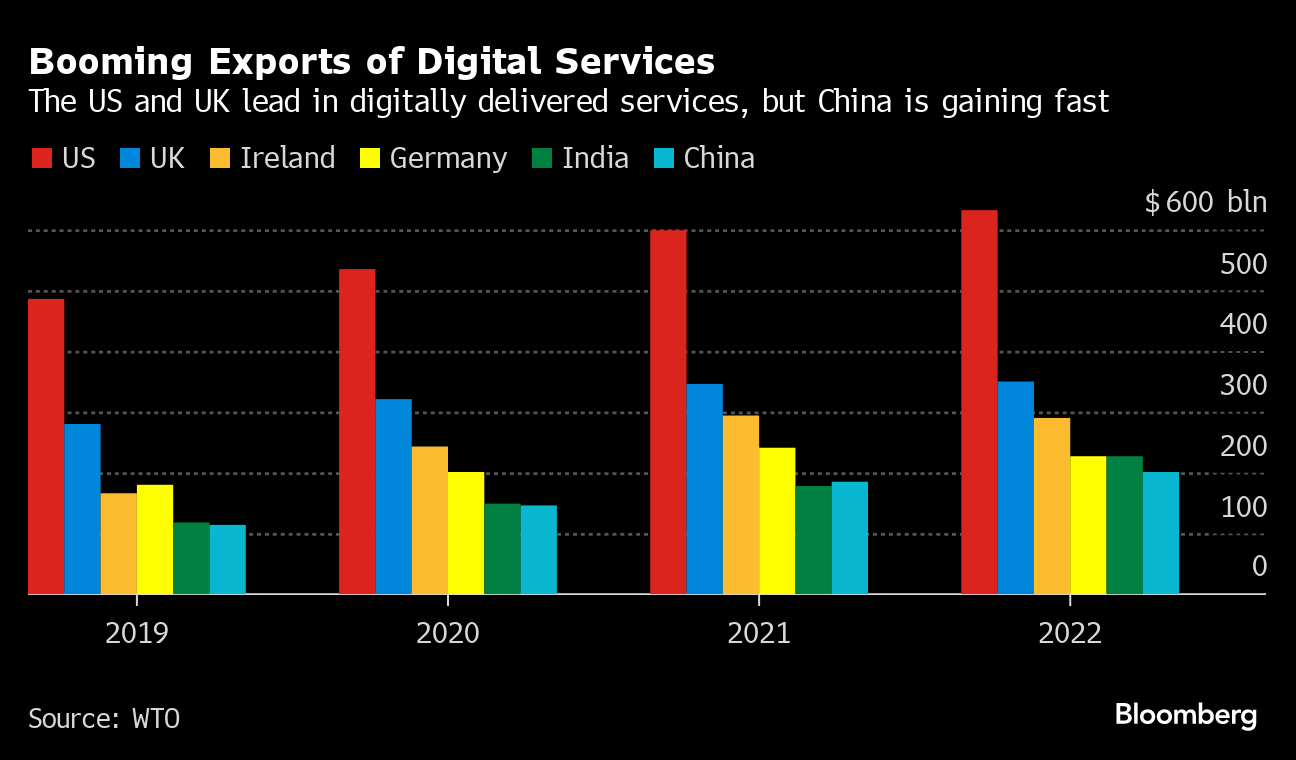
The tariff ban has helped fuel the fastest-growing segment of world trade: digital goods and services. They're key to the success not just of tech companies like Amazon.com Inc. and Netflix Inc. but also the growing number of traditional firms that collect data and conduct e-commerce in foreign markets.
Now, emerging economies cite concerns about the dominance of US-based Big Tech – and other worries including risks from artificial intelligence, the need to protect data privacy, and the loss of customs revenue into the ether of the digital economy.
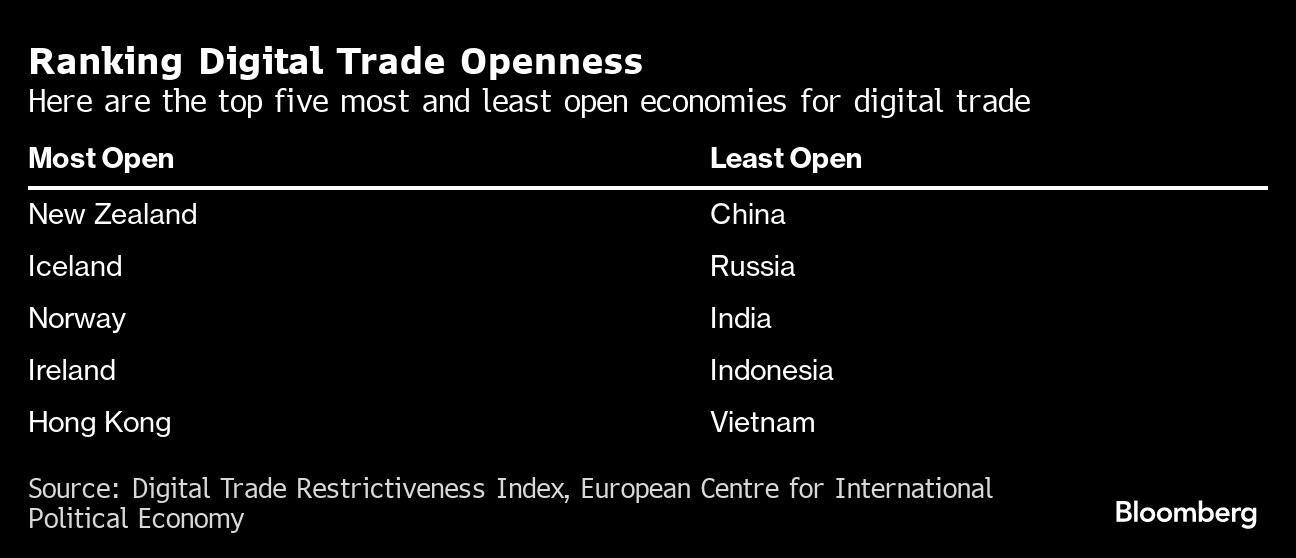
“It's not a done deal,” John Denton, secretary general of the International Chamber of Commerce, said of efforts to renew the arrangement. He cited Indonesia, the largest economy in southeast Asia, as a major holdout, with South Africa and India likely to follow.
“We think this will go down to the wire,” Denton said.
World Trade ‘Shockwave'
It's not the first time countries have threatened to let the moratorium lapse to win concessions from major exporters of digital services like the US. But there's a sense they're not bluffing this time.
Indonesia believes governments need to be free to impose tariffs in response to rapid change in the digital world, said Askolani, director general of customs and excise at the country's Ministry of Finance. India has signaled a similar position. A spokesman for South Africa's trade ministry declined to comment.
One difficulty is the lack of an international legal framework or standard definitions for digital trade. That means it's not clear how governments would apply tariffs — whether they'd charge per transaction, per byte or per digital product, like a song, for instance.
The sums they'd raise aren't huge. An October study by the Organization for Economic Cooperation and Development found that taxing digital transfers would only add about 0.1% to government revenue.
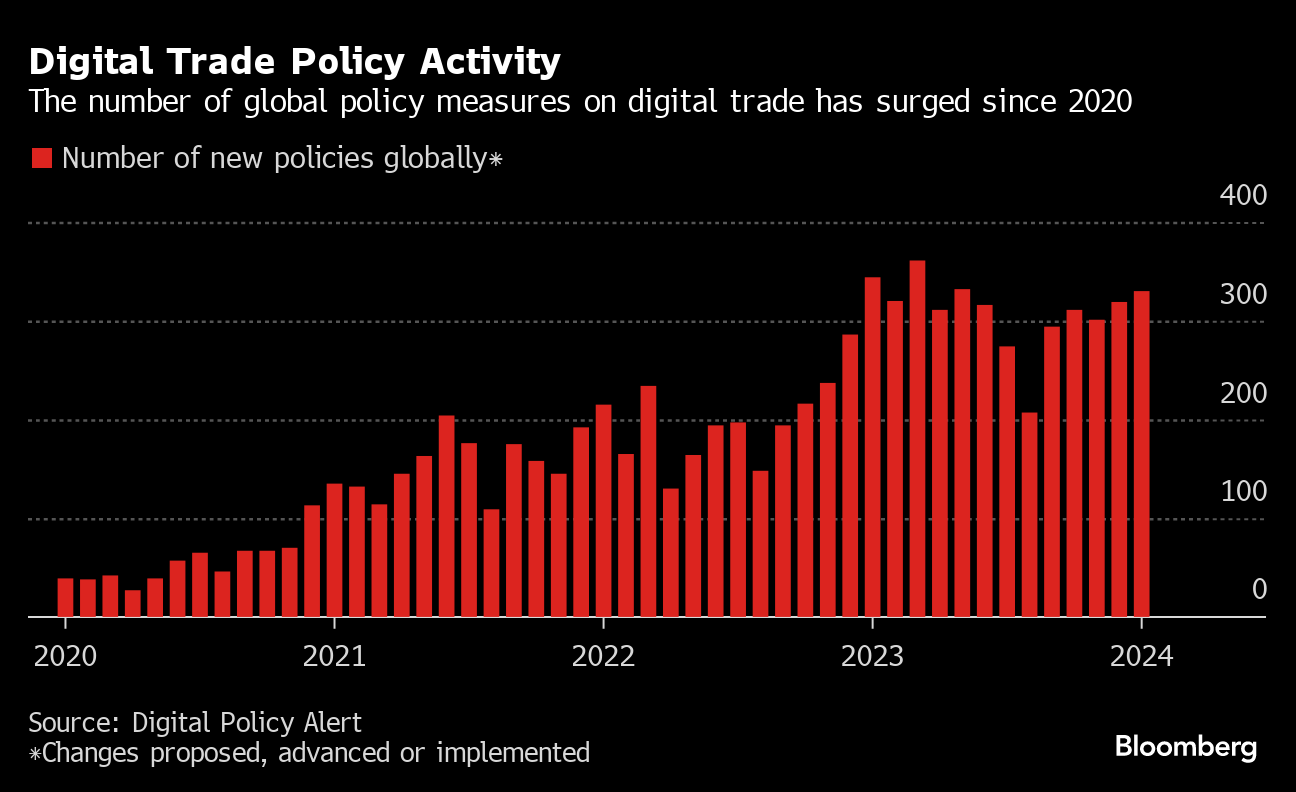
Still, ending the moratorium “will send a shockwave through the WTO,” an organization dedicated to lowering trade barriers, said Keith Rockwell, its longtime spokesman.
“For the first time since the WTO's founding, members will have opened the door to applying new tariffs,” said Rockwell, who's now a Geneva-based senior research fellow for the Hinrich Foundation.
More than 180 business groups around the world, including the US Chamber of Commerce, wrote an open letter backing the status quo. They said countries seeking to impose tariffs will harm themselves in the long run, by sending a negative signal about their business climates and openness to investment.
Prospects ‘Uncertain'
Some corporations worry that the Biden administration isn't fully committed to defending the tariff ban. The US in October pulled a negotiating proposal from related WTO e-commerce talks about the flow of data across borders. Earlier it withdrew its text for the digital chapter of a trade pact with allies in the Indo-Pacific.
Read More: US Debates Data Policy to Avoid a Fragmented Global Internet
US Trade Representative Katherine Tai recognizes that there's a debate going on within the WTO about the moratorium, and looks forward to working with members on a solution, according to a senior US trade official.
European Union Vice President Valdis Dombrovskis, who oversees the bloc's trade policy, told a parliamentary committee this week that the prospects of extending the moratorium in Abu Dhabi “remain uncertain.”
‘Break the Internet'
Among the government agencies pushing for renewal is the United Nations Conference on Trade and Development, which promotes the interests of developing countries in world trade. UNCTAD says digital inequality widened during the pandemic.
It's “increasingly important to countries and businesses to be able to adapt to digital trade,” said Torbjörn Fredriksson, head of the agency's e-commerce group. “Unfortunately, the rapid speed of digitalization tends to outpace the ability of many countries to do so.”
With global trade increasingly fragmented amid growing great-power competition between China's national firewall model and the more open US system, getting a deal in Abu Dhabi to keep the internet tariff-free won't be easy.
“It's a bad time for multilateralism,” said Martina Ferracane, a research fellow with the European University Institute, which recently launched a digital trade database. “It's not a moment in which countries are willing to create a new global consensus on almost anything.”
Denton, who represents 45 million companies with the international chamber, made trips to Indonesia and Brazil in recent weeks arguing the case for keeping the moratorium.
Scrapping it, he said, could open up a protectionist abyss with “the capacity to break the internet.”
--With assistance from Grace Sihombing and Ntando Thukwana.
More stories like this are available on bloomberg.com
©2024 Bloomberg L.P.

-
Why Swapping Your Old Gold Can Trigger A Rs 5 Lakh Tax Bill, And How You Can Avoid It Legally

Swapping old gold for new is taxed as a sale and a fresh purchase. Getting your own gold remade can cut most of that bill, though it has its own costs.
-
The AI Trade is Done. The Real Opportunity for Investors Starts in 2027 | Unhedged Position
As pureplay AI stocks plunge and circular, capex-led financing unwinds, 2027 is set to be a year of reckoning for AI companies. Yet the bust clears the way for a better opportunity for investors in 2027 -- shifting the spotlight from AI builders to the companies using AI.
-
Leadership As Mission: Why The Age Of AI Demands More Human Leadership
Debjani Ghosh examines how AI is changing leadership, arguing that its success must be measured by its impact on people and the accountability of those guiding its use.
-
We May Need Another Tukaram Mundhe To Fight Air Pollution | The Reason Why
Developers may install basic measures such as sprinklers and green nets, resume work, and continue violating rules when this equipment stops working.
-
Extracting Value From Battery Scrap Could Be Challenging For India | The Reason Why
A discarded lithium-ion battery still contains valuable materials such as lithium, nickel and cobalt. These can be recovered and reused. When such batteries are crushed and shredded, they produce a dark powder called black mass.
-
One El Nino, India Can Handle. Two Could Break The Granary
India's grain stocks can absorb one bad year, but a second El Nino could drain the buffer in two to three years, economists say.
-
India's Troika Of Good Luck | Joining The Dots
As Jensen Huang's exit drags Nvidia down, a cooling AI trade and resilient earnings have revived investor interest in India. A likely RBI rate hike looms.
-
Talking Points This Week: Leadership Shock At Nvidia, Earnings Strength, And The Fog Over Hormuz
The Anthropic IPO pricing and first trading day, Nvidia's upcoming earnings, and any fresh signals from Iran will set the tone for the following week.
-
Signature Play: The Classic Cocktail Is Dead. Or Is It?
Classic cocktails are disappearing from India's cocktail menus. But they're still being ordered, taught to bartenders and borrowed from. So, who's really having the last drink?
-
A New Samvat Wishlist: Inclusive Prosperity And Human Development
India has strengthened its economic foundations through infrastructure, digital access and enterprise. Its next growth chapter must deepen productivity, create better livelihoods and widen participation in prosperity.









