Startup Street: Only 6% Of Startup India Action Plan Fund Released
This week on Startup Street we find out how India's Startup India Action Plan has performed over the last two years. A Bangalore-based ride rental startup Wheelstreet has launched a dock-less commute service which allows people to pick up and drop a scooter anywhere. A total of 31 startups have been chosen for funding under the Kerela Startup Mission for their innovative solutions. Here's what went on.
India's Underwhelming Startup Hub
India, the third-largest startup ecosystem in the world seems to have a startup hub that hasn't really taken off. While over 32,000 startups have popped up across the country, only 5,350 startups have been recognised by the programme so far.
In 2015, the central government had set up a Rs 10,000 crore fund of funds under the Startup India Action Plan, to be deployed over four years. So far, only around Rs 600 crore, or 6 percent, has been released to the Small Industries Development Bank of India (SIDBI), which is in charge of distributing the assigned amount to startups. The data was released by CR Chaudhary, Minister of State for Commerce and Industry, in response to a question put to the government in the Lok Sabha last week.
Till date, a total amount of Rs 600 crore has been released to SIDBI for the FFS (Fund of Funds for Startups). Rs. 605.7 crore has been committed by SIDBI and Rs 90.62 crore disbursed to 17 alternative investment funds (AIFs), who in turn have invested Rs 337.02 crore in 75 startups.CR Chaudhary, Minister of State for Commerce and Industry
A part of Prime MInister Narendra Modi's Startup India initiative, the establishment of the hub had prompted a number of state governments to establish their own hubs to promote entrepreneurship.
A recent poll by LocalCircles, a community-based social networking platform, showed that 80 percent of nearly 3,000 startups polled said that they received no benefits from the Startup India Initiative, news website Quartz reported in a blogpost.
Wheelstreet Launches ‘GO'
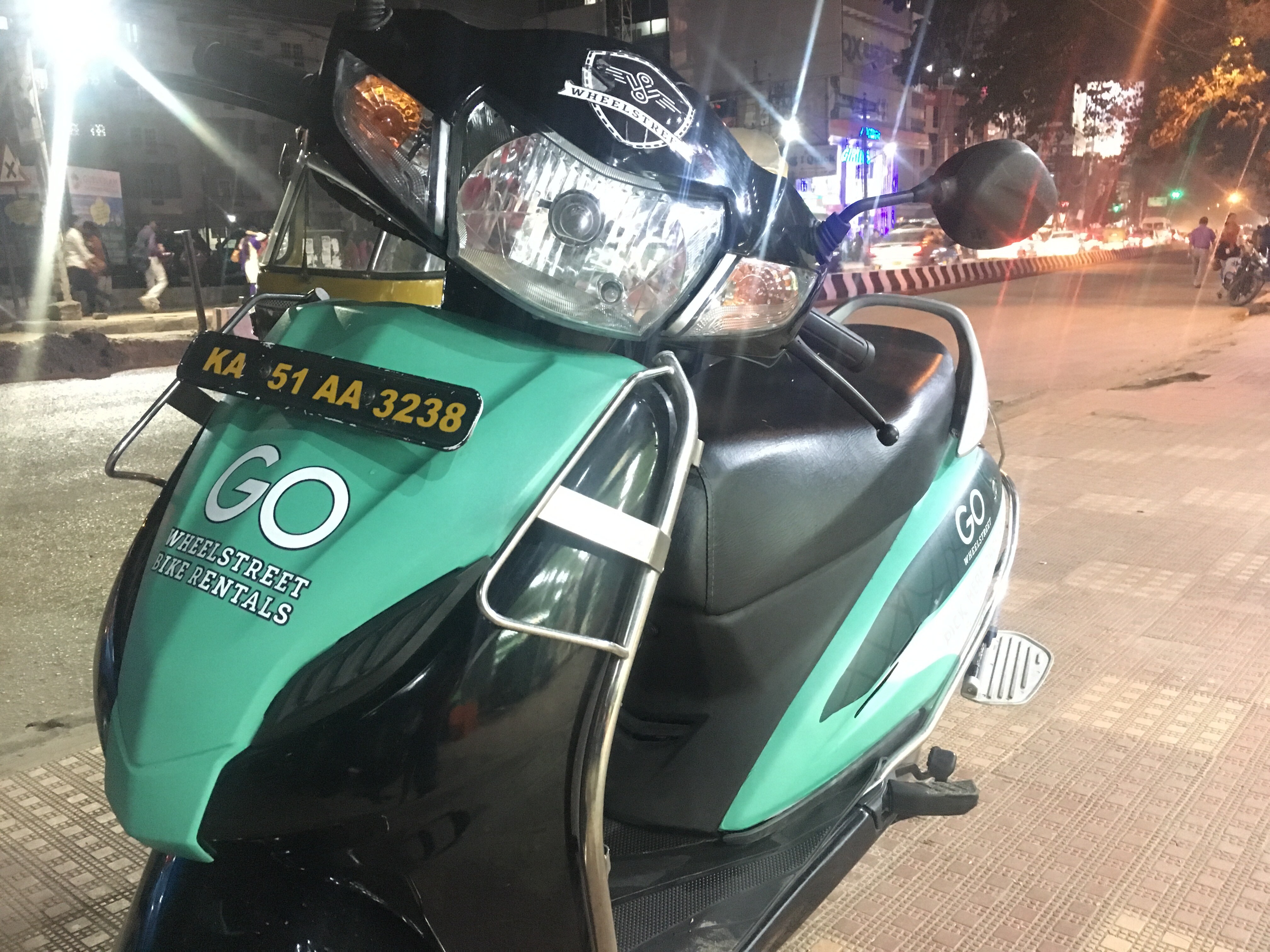
Bengaluru-based ride rental startup Wheelstreet is making most of its recent fundraising from U.S. accelerator Y Combinator as it expands its offering to a new dockless commute service.
The startup has launched Wheelstreet GO, that lets you pick up a scooter and drop it off anywhere you like without any human intervention. All you need to do is book a ride through a mobile application and the user would be able to pick up a bike within 100 metres. The bikes would be unlocked by scanning a QR code.
Wheelstreet already offered a variety of two-wheelers for rent ranging from scooters to sports motorcycles, and now the dock-less service offers users “maximum convenience”, the startup said in an emailed response to BloombergQuint. Customers can pick up scooters like the popular Honda Activa for rentals as low as Rs 11 an hour, along with a refundable security deposit.
The scooters for hire will be fitted with technological enhancements such smart locks, immobilisers and can also be tracked through GPS for security, the company said.
Currently, the service is available only in Bengaluru and it will stay that way for at least the next six months.
“The aim is to have one GO bike at every 100 meters. While that is the objective, we will naturally scale depending on demand,” it said in the email interaction.
The startup said that they will “definitely” have an overlap with the existing customers of ride-hailing services like Ola and Uber, but that's not the only target audience. “User preferences and demands are diverse. There are a lot of opportunities yet to be tapped in India and there is room for various offerings,” the company added.
Wheelstreet had won a spot in Y Combinator's summer batch of 2017 startups. Following that, it received a $125,000 investment for its GO platform which has been launched. Other investors include Broadbean Capital which has put in $500,000.
Dock-less commute is not new. It is already popular among startups in the U.S. and China, but with bicycles rather than scooters. “We are also looking at adding 25,000 scooters to our existing fleet in the upcoming quarter,” Wheelstreet said in a media statement. It added that an average repeat user books a bike at least 7 times a month using the app. It has also seen a 40 percentage point increase in repeat booking since 2016 to 70 percent right now.
Kerala's Chosen 31
A total of 31 startups including student teams from Kerala will receive financial assistance to the tune of Rs 2.64 crore after they showcased their innovative technology solutions at the eighth ‘Grand Idea Day' conducted by Kerala Startup Mission (KSUM).
With over 241 applications, 49 startups were chosen to present their solutions across fields such as hardware, Internet of things, Enterprise Resource Planning, Platforms and Aggregators, Blockchain, Virtual Reality and Artificial Intellegence, news agency PTI reported.
Kerela's ‘Idea Day' has so far released grants to more than 25 startups and individuals in a bid to encourage starting up new ventures across the state. The Next Ídea Day will be held in January 2018.
“The Idea Day is a solution for the startups, which were finding it hard to find a source for funding and promote their products,” KSUM manager Ashok Panjikaran said in a statement.
The amount allocated to each startup will be decided according to the nature of the projects and their potential.
Other Developments:
Elon Musk's SpaceX Caps Record Year With Satellite Launch
SoftBank Leads $120 Million Funding in Fintech Startup Lemonade
Here's What Happens to a Startup When Google Gets All Up in Its Business
Silicon Valley Is Bringing the Startup Hub to the Vatican
Chinese EV Startup NIO Undercuts Tesla With $67,783 Debut Model

-
We May Need Another Tukaram Mundhe To Fight Air Pollution | The Reason Why

Developers may install basic measures such as sprinklers and green nets, resume work, and continue violating rules when this equipment stops working.
-
Extracting Value From Battery Scrap Could Be Challenging For India | The Reason Why
A discarded lithium-ion battery still contains valuable materials such as lithium, nickel and cobalt. These can be recovered and reused. When such batteries are crushed and shredded, they produce a dark powder called black mass.
-
One El Nino, India Can Handle. Two Could Break The Granary
India's grain stocks can absorb one bad year, but a second El Nino could drain the buffer in two to three years, economists say.
-
India's Troika Of Good Luck | Joining The Dots
As Jensen Huang's exit drags Nvidia down, a cooling AI trade and resilient earnings have revived investor interest in India. A likely RBI rate hike looms.
-
Talking Points This Week: Leadership Shock At Nvidia, Earnings Strength, And The Fog Over Hormuz
The Anthropic IPO pricing and first trading day, Nvidia's upcoming earnings, and any fresh signals from Iran will set the tone for the following week.
-
Signature Play: The Classic Cocktail Is Dead. Or Is It?
Classic cocktails are disappearing from India's cocktail menus. But they're still being ordered, taught to bartenders and borrowed from. So, who's really having the last drink?
-
A New Samvat Wishlist: Inclusive Prosperity And Human Development
India has strengthened its economic foundations through infrastructure, digital access and enterprise. Its next growth chapter must deepen productivity, create better livelihoods and widen participation in prosperity.
-
Love, Sex Aur Dhokha: The Audacious Plot To Spy On Jensen Huang
A Taipei dinner, a Singapore chip buyer and a suspected Chinese asset: inside the alleged spy operation that got close to NVIDIA's Jensen Huang.
-
Ten Things I Learnt This Samvat
Patience can be a trap. Cheap stocks can stay cheap. Leverage can wipe you out. What did Samvat 2082 teach us? Niraj Shah writes on 10 lessons from the year gone by.
-
Talking Points This Week: Tech Nerves, FII Buying, And A Faraway Banking Shock
The global markets are not shining this Diwali. The exception in the large markets is, India.