Startup Street: Christmas Comes Early For Startups, Courtesy SEBI
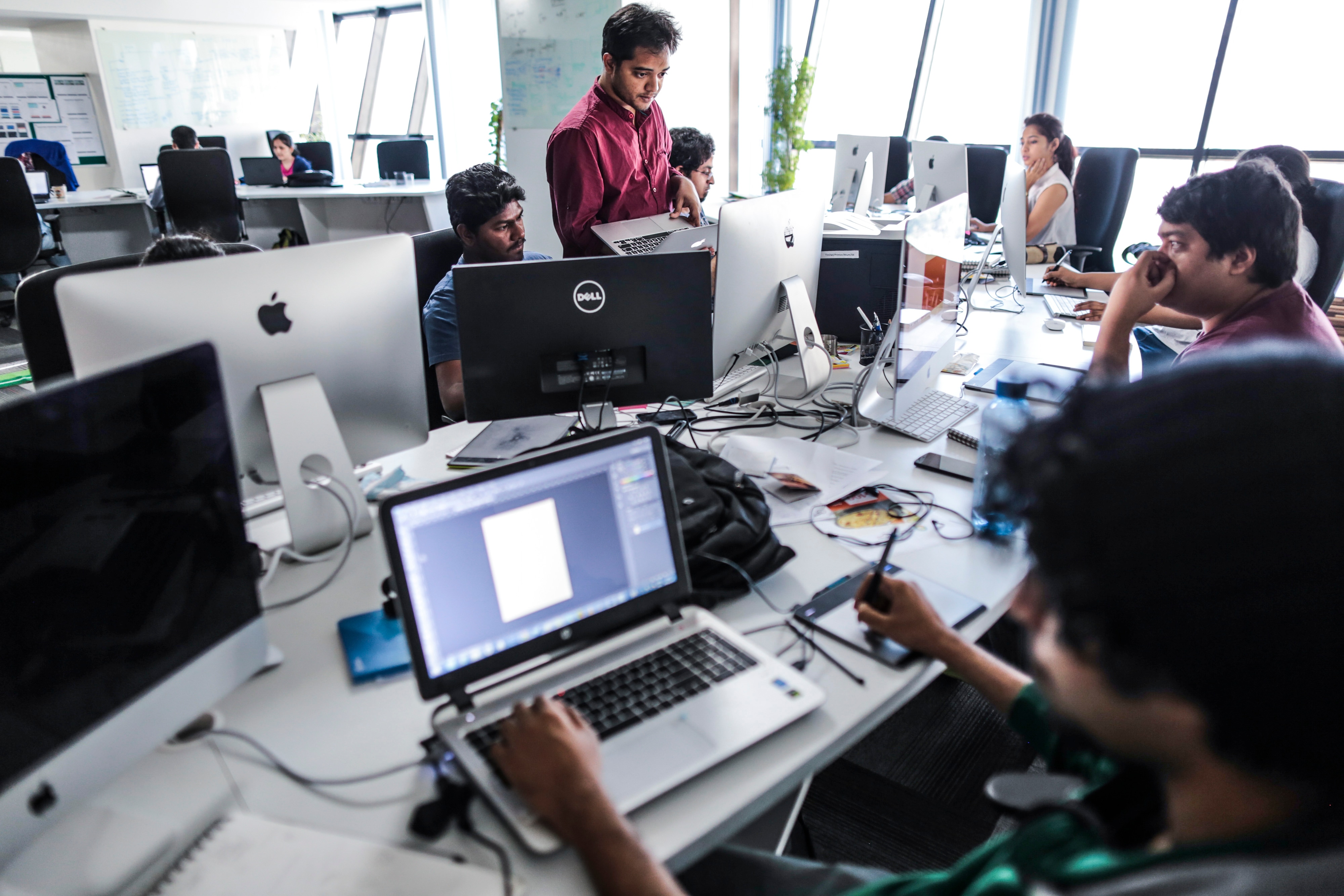
Dear startups, this week there's good news from the government as new efforts are unveiled to boost your prospects. Read on...
SEBI Makes It Easier For Startups To Score

In great news for startups, India's securities regulator SEBI (Securities and Exchange Board of India) has relaxed funding rules for ‘angel' investments.
A single startup can now have as many as 200 angel investors, four times the earlier limit of 49.
The minimum investment cap has been brought down to Rs 25 lakh from the earlier Rs 50 lakh. What's more, startups also get more time to tap into angel investments. SEBI has now allowed startups to receive angel investments till they are five years old. The earlier age limit was three years.
Angel investors have been given more ‘exit' flexibility. The lock-in requirement for venture capital undertakings has been reduced from three years to one year. Add to that the modification that now allows Indian angel funds to invest up to 25 percent of their ‘investable corpus' in overseas venture capital undertakings.
Most of these changes had been recommended by a panel set up by SEBI, under the chairmanship of Infosys co-founder, Narayana Murthy, and are expected boost the startup sector and the government's ‘Startup India, Standup India' drive.
India Needs Better B-Schools, Says President Mukherjee

Education and growth are feathers of the same bird. For India's startup space to grow and prosper, it is important for the contributors to receive education and training and a chance to develop their skills.
That is exactly what President Pranab Mukherjee suggested in his speech at the 15th anniversary of the Indian Business School (ISB) on November 20.
Soon after the address, the President also shared his comments on social media.
Universities & Institutions of higher learning have the huge responsibility of providing quality education to the youth #PresidentMukherjee
November 20, 2016Students should take risks, innovate, create and make a difference #PresidentMukherjee
November 20, 20167 Startups Accelerate to Silicon Valley
Seven Indian startups will join the third class of the Google Launchpad Accelerator programme in January 2017, in San Francisco.
Flyrobe, RentoMojo, Hashlearn, Curofy, Happy Adda Studios, Playment and Kapture CRM, are the lucky seven, according to a PTI news report.
The startups will receive training and free equity worth $50,000 from Google. Moreover, the technology giant will also take them to its headquarters, in the “heart of Silicon Valley”, for the training, according to the programme's website. Other perks include marketing opportunities and a chance to work with Google for six months.
The Indian tech startups will be joined by others from Latin American and Asian countries.
Over the last one year, 13 Indian startups have participated in the programme and many have already gained from the programme and have successfully raised funding.Paul Ravindranath G, manager, Launchpad Accelerator ProgramA Startup ‘Gurukul' On Facebook
Prime Minister Narendra Modi's Startup India initiative reached out to the masses through a Facebook live on Wednesday to answer whatever questions or queries people had.
The open-to-all forum was joined by Reetu Jain, director concern of startups in the Department of Industrial Policy and Promotion (DIPP), Rajat Tandon, senior director, Nasscom who also looks after the 10,000 startups initiative, R Raghunandan with the International Society Of Business Administrators and Padmaja Ruparel co-founder and president of the Indian Angel Network.
During the 40 minute long Facebook live broadcast, they addressed questions ranging from 'what does innovation truly mean' to patent filing and prospects of startups in different sectors.
Key takeaways from that conversation
- There is a lot of scope in the dairy sector as India is primarily an agrarian economy. In fact, the segment has a lot of scope for innovation, said Ruparel.
- Nasscom will soon be holding an event to promote healthcare startups, similar to the way the government has been supporting fintech startups, said Tandon. This event is aimed at providing clarity and opportunity to startups in the segment.
- When it comes to innovation, the team and its skills hold the most value and can make or break the startup, said Jain.
Responding to the questions posed, Jain also said that the government has made it easier for startups to be recognised and registered through real-time recognition on the DIPP page.
Also Read: Libraries Of Leaders: On The Bookshelves Of Leading Scientists


-
The Economic Imperative: Analysing The Material Driving Force Behind India-Canada Strategic Reset

This economic complementarity is further reinforced by deep institutional investment ties and talent mobility, which form the bedrock of the bilateral framework.
-
Medicine Pricing: Where Must Profit Stop?
India must confront excessive margins, hidden incentives and regulatory gaps that threaten the integrity of medicine.
-
Why Amazon And Flipkart Are Struggling To Beat Meesho In India's Smaller Cities
With 274 million users and lowest-cost logistics, Meesho is defending its value commerce crown against giants like Amazon and Flipkart.
-
High US Salaries, No Green Card Certainty: The Financial Calculation Facing Indian H-1B Families
The suspension of PERM processing at eight technology employers does not cancel existing H-1B visas. What it does is force a question many Indian families have been avoiding: is the US salary worth tying your career and family plans to one employer?
-
Swiggy vs Eternal: Food Delivery's Two Rivals Are No Longer In The Same Race
Eternal is building a private AI assistant, dark.ai. Swiggy is still working out how to make Instamart pay, with an operating loss of Rs 895 crore in the July-September quarter while Blinkit stayed profitable.
-
Where You Live Shapes How You Get To Work | The Reason Why
Two-wheelers are the most popular way to get to work in India, accounting for nearly 43% of workplace commutes.
-
Unhedged Position: Can India See An Indonesia-Style Time Correction?
The Nifty is trading below levels it first clocked in 2024. Is there, then, as I have suggested in the headline, potential that the current time correction drags on painfully for the next three-five, even ten years?
-
Navigating Friction And Energy Realities: An Analysis Of Marco Rubio's October Visit To India
Occurring at a critical juncture marked by stalled trade negotiations and escalating geopolitical pressures over global energy supplies, the visit offers a profound window into modern US-India relations.
-
India Exports Capital. Why Not Export Trusteeship?
The big question, then, is whether India can build an institution that global borrowers, investors, banks, and lawyers can trust, even without an Indian connection.
-
France's Economy & Politics Are In Crisis | The Reason Why
Let's look at how the French economy and politics evolved under Nicolas Sarkozy, Franois Hollande and Emmanuel Macron.










