Pichai Says Google Still Mulling A Censored Search Engine In China
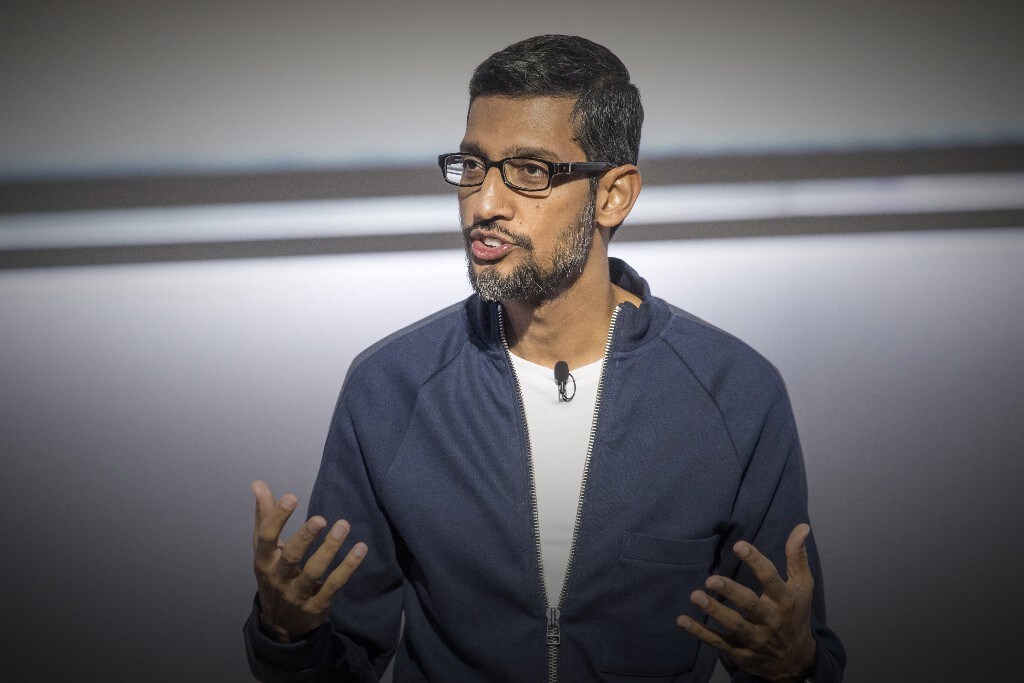
Google is still considering whether to launch a censored version of its search engine in China, Chief Executive Officer Sundar Pichai said in a rare public commentary about the controversial secret project.
“It's very early. We don't know whether we could or would do this in China, but we felt it was important for us to explore,” Pichai said at the Wired25 conference in San Francisco. “I think it's important for us given how important the market is and how many users there are.”
Google's possible return to China—a market it abandoned over censorship concerns in 2010—was first leaked in August by The Intercept which reported that the tech giant was secretly developing “Dragonfly”, a custom-made search engine for the Chinese market.
Through internal tests, Pichai said Google found it would be able serve “well over 99 percent of queries”.
The prospect of Google returning to China has fuelled criticism from human rights groups that the company, which has long advocated a free and open internet, would be doing the bidding of the ruling Chinese Communist Party, which runs a vast censorship apparatus that stifles dissent. Since news of the Dragonfly project first leaked, hundreds of Google employees signed a letter saying that it raised “urgent moral and ethical issues,” CNBC reported.
Pichai described the Dragonfly as an exploratory internal project. He said Google's absence in China, a country with 20 percent of the world's population weighed heavily on the company, which has a mission to bring information to everyone.
We wanted to learn what it would look like if Google were in China. So that's what we built internally. If Google were to operate in China, what would it look like?Sundar Pichai, CEO, Google.
Google had a search engine in China from 2006 to 2010. The tech giant quit China eight years ago in protest at the country's censorship laws and alleged government hacks. Earlier this month, U.S. Vice-President Mike Pence called for Google to immediately halt work on Dragonfly, saying in a speech that it would “strengthen Communist Party censorship and compromise the privacy of Chinese customers”.
Pichai said that by offering a search engine in China again, Google would be able to provide some 800 million users with better information than what is available on important subjects, such as cancer treatment.
The 46-year-old Pichai also played down the influence employee protests had over the company's decision making. “Throughout Google's history we have given our employees a lot of voice and say in it, but we don't run the company by holding referendums.”

-
The Curious Case of Equitas Small Finance Bank And A CEO Who Quit For Stock

PN Vasudevan believes persistent investor concerns over a perceived conflict of interest had become a governance overhang on Equitas Small Finance Bank's stock, even as the lender improved profitability and asset quality.
-
Talking Points This Week: AI Cash Burn, A Tiger Comeback And An India That Still Finds Its Own Path
India is not immune to higher oil or tighter global liquidity, yet its earnings base is broader, its domestic policy levers are still available.
-
Foreign Investors Own Half Of HDFC Bank and ICICI Bank. An LTCG Cut Could Matter Most Here
Foreign portfolio investors have US$115 billion parked in HDFC Bank, ICICI Bank. If the government cuts long-term capital gains tax, Jefferies says returning foreign money could land here first.
-
'Never Seen This Level Of Negativity': Sandeep Tandon Says The Next Rally May Be Closer Than You Think
Veteran investor Sandeep Tandon says foreign selling is easing, large-caps are due a comeback and mid-caps are crowded, while he turns positive on gold, power and pharma this Diwali.
-
Indians Stay With Family, Not In Hotels | The Reason Why
India still lacks enough clean, reliable and affordable hotels for budget-conscious travellers.
-
The Economic Imperative: Analysing The Material Driving Force Behind India-Canada Strategic Reset
This economic complementarity is further reinforced by deep institutional investment ties and talent mobility, which form the bedrock of the bilateral framework.
-
Medicine Pricing: Where Must Profit Stop?
India must confront excessive margins, hidden incentives and regulatory gaps that threaten the integrity of medicine.
-
Why Amazon And Flipkart Are Struggling To Beat Meesho In India's Smaller Cities
With 274 million users and lowest-cost logistics, Meesho is defending its value commerce crown against giants like Amazon and Flipkart.
-
High US Salaries, No Green Card Certainty: The Financial Calculation Facing Indian H-1B Families
The suspension of PERM processing at eight technology employers does not cancel existing H-1B visas. What it does is force a question many Indian families have been avoiding: is the US salary worth tying your career and family plans to one employer?
-
Swiggy vs Eternal: Food Delivery's Two Rivals Are No Longer In The Same Race
Eternal is building a private AI assistant, dark.ai. Swiggy is still working out how to make Instamart pay, with an operating loss of Rs 895 crore in the July-September quarter while Blinkit stayed profitable.










