Peter Thiel, Ajay Royan’s Firm Backs Warehousing Robotics Startup GreyOrange
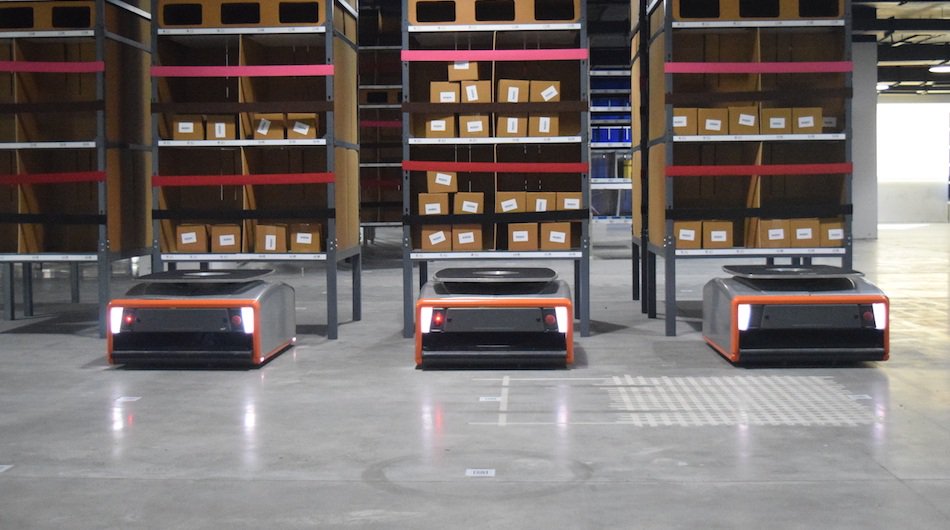
GreyOrange raised $140 million in a round led by Silicon Valley investors Peter Thiel and Ajay Royan's Mithril Capital as the warehousing robotics startup plans to enter the U.S. market.
Flipkart co-founder Binny Bansal along with existing investors, including Blume Ventures, also participated in the largest fundraise by an Indian hardware startup, according to the company statement. The funds will be used for research and development and for developing the supply chain system, Co-Founder Akash Gupta said.
The startup, which operates from Singapore and Gurugram, is setting up its U.S. headquarters in Atlanta, Georgia and an R&D centre in Boston, Massachusetts. The company said it will deploy 740 robots in Atlanta and aims to add 20,000 in the U.S. in the next five years—the home turf for Amazon robotics. The Jeff Bezos-led retail giant drove automation in the U.S. warehousing industry after acquiring Kiva Systems in a $775-million deal in 2012.
GreyOrgane is also looking to expand operations across Asia and Europe. Founded in 2011, GreyOrange handles warehousing for e-commerce firms like Myntra, Flipkart and Pepperfry. It deploys artificially intelligent robots that can automate routine tasks at warehouses and fulfillment centres to improve efficiency and reduce operational costs.
GreyOrange has two flagship products—Butler and Sorter. Butler is a storage and retrieval robot that moves on warehouse floors and Sorter is a conveyor belt system fitted with robotic arms. It also launched The Butler PickPal, an automated picking system.

-
Joining The Dots | Dark Skies, Steady Diya: Why Hope Holds This Diwali

With war, a weak rupee and foreign outflows weighing on sentiment, policymakers at the NDTV World Summit and market veterans at NDTV Profit Ignite: Diwali Edition offered the same advice: stay invested and filter out the noise.
-
The Curious Case of Equitas Small Finance Bank And A CEO Who Quit For Stock
PN Vasudevan believes persistent investor concerns over a perceived conflict of interest had become a governance overhang on Equitas Small Finance Bank's stock, even as the lender improved profitability and asset quality.
-
Talking Points This Week: AI Cash Burn, A Tiger Comeback And An India That Still Finds Its Own Path
India is not immune to higher oil or tighter global liquidity, yet its earnings base is broader, its domestic policy levers are still available.
-
Foreign Investors Own Half Of HDFC Bank and ICICI Bank. An LTCG Cut Could Matter Most Here
Foreign portfolio investors have US$115 billion parked in HDFC Bank, ICICI Bank. If the government cuts long-term capital gains tax, Jefferies says returning foreign money could land here first.
-
'Never Seen This Level Of Negativity': Sandeep Tandon Says The Next Rally May Be Closer Than You Think
Veteran investor Sandeep Tandon says foreign selling is easing, large-caps are due a comeback and mid-caps are crowded, while he turns positive on gold, power and pharma this Diwali.
-
Indians Stay With Family, Not In Hotels | The Reason Why
India still lacks enough clean, reliable and affordable hotels for budget-conscious travellers.
-
The Economic Imperative: Analysing The Material Driving Force Behind India-Canada Strategic Reset
This economic complementarity is further reinforced by deep institutional investment ties and talent mobility, which form the bedrock of the bilateral framework.
-
Medicine Pricing: Where Must Profit Stop?
India must confront excessive margins, hidden incentives and regulatory gaps that threaten the integrity of medicine.
-
Why Amazon And Flipkart Are Struggling To Beat Meesho In India's Smaller Cities
With 274 million users and lowest-cost logistics, Meesho is defending its value commerce crown against giants like Amazon and Flipkart.
-
High US Salaries, No Green Card Certainty: The Financial Calculation Facing Indian H-1B Families
The suspension of PERM processing at eight technology employers does not cancel existing H-1B visas. What it does is force a question many Indian families have been avoiding: is the US salary worth tying your career and family plans to one employer?










