NASA’s Cassini Spacecraft Ends 20-Year-Long Journey With Death Plunge Into Saturn
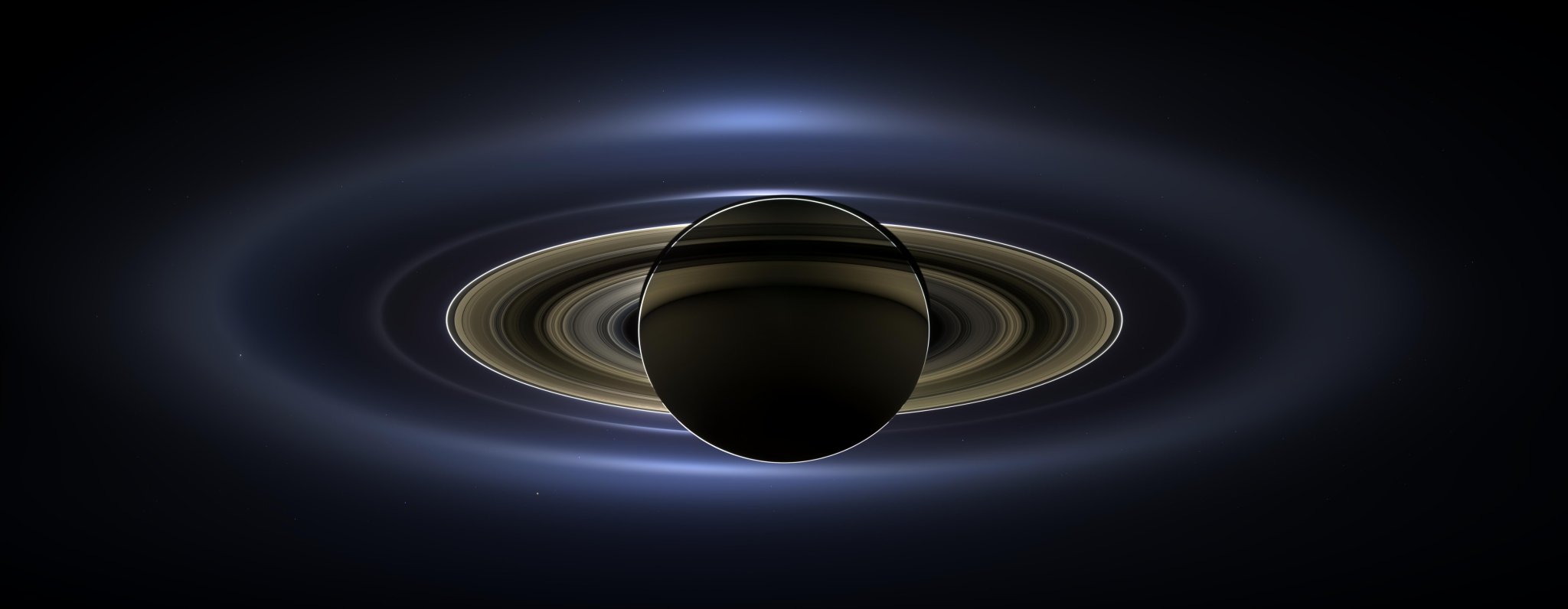
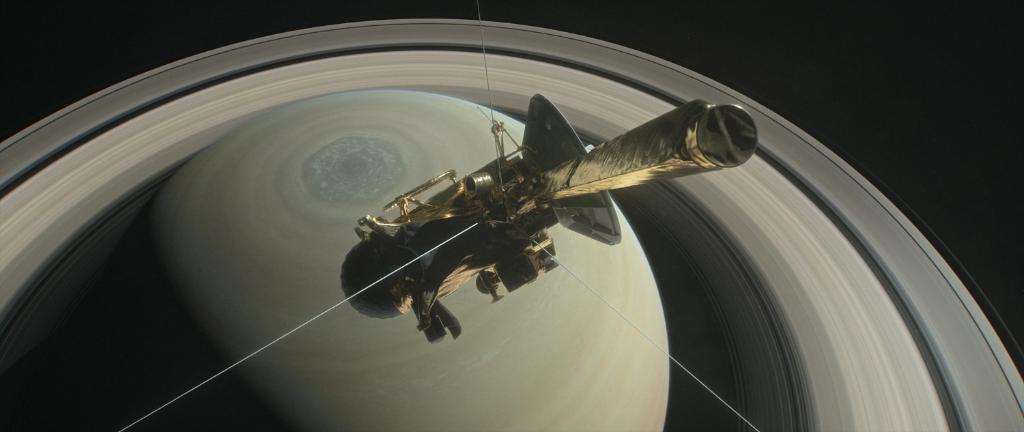
NASA's $3.9-billion Cassini spacecraft on Friday ended its 20-year-long groundbreaking journey with a fiery plunge into the Saturn's crushing atmosphere, beaming back never-before-seen images of the ringed planet and its mysterious moons until the last moment.
Operators deliberately made Cassini, the first spacecraft to orbit Saturn, dive into the gas giant to ensure that the planet's moons – in particular Enceladus, with its subsurface ocean and signs of hydrothermal activity – remain pristine for future exploration.
“Our spacecraft has entered Saturn's atmosphere, and we have received its final transmission,” NASA said in a tweet. “Every time we see Saturn in the night sky, we'll remember. We'll smile. And we'll want to go back,” the U.S. space agency said.
The spacecraft's fateful dive was the final beat in the mission's Grand Finale, 22 weekly dives, which began in late April, through the gap between Saturn and its rings.
To truly reveal the wonders of Saturn, we had to go there. Look back at @CassiniSaturn's 13 amazing years exploring the planet pic.twitter.com/oApb3UJSSF
September 15, 2017No spacecraft has ever ventured so close to the planet before, NASA said.
“I hope you are all as deeply proud of this amazing accomplishment. Congratulations to you all. This has been an incredible mission, incredible spacecraft and you were all incredible team,” Earl Maize, Cassini mission manager, said while announcing the end of the mission at 5:25 pm India time.
The $3.9-billion mission continued to transmit data back to the Earth till the last minute before it came apart and was burned up like a meteor in Saturn's atmosphere. The unmanned orbiter tore through the atmosphere at the speed of 113,000 kilometres per hour.
Contact was lost with the Cassini spacecraft a minute after it reached an altitude of about 1,500 kilometres above the planet's estimated cloud tops. Within about 30 seconds following loss of signal, the spacecraft came apart; and within a couple of minutes, all remnants of the spacecraft were consumed in the atmosphere of Saturn, NASA said.
One last look…Explore the final @CassiniSaturn pics, taken just hours before its fateful plunge into the planet: https://t.co/dyewjqLoiZ pic.twitter.com/NeOxO8EFHR
September 15, 2017The Cassini mission gave scientists an unprecedented view of the sixth planet from the Sun. The probe discovered seasonal changes on Saturn, a hexagon-shaped pattern on the north pole and the moon Titan's resemblance to a primordial Earth.
Scientists found deep, liquid-filled canyons on Saturn's moon Titan for the first time. They also found a global ocean on the moon Enceladus, with ice plumes spouting from its surface. Thanks to these observations, Enceladus has become a promising target in the search for life outside Earth.
A joint endeavour of NASA, the European Space Agency (ESA) and the Italian space agency, Agenzia Spaziale Italiana (ASI), Cassini was a sophisticated robotic spacecraft orbiting the ringed planet and studying the Saturnian system in detail.
The spacecraft has produced 450,000 images and 635 gigabytes of data since it began probing Saturn and its 62 known moons in July 2004. Cassini also carried a probe called Huygens, which parachuted to the surface of Saturn's largest moon, Titan, in January 2005 and returned spectacular results.
Launched in October 1997, Cassini completed its initial four-year mission to explore the Saturn system in June 2008, and the first extension, called the Cassini Equinox Mission, in September 2010.
In a second extension called the Cassini Solstice Mission, the spacecraft made new exciting discoveries.
Late last year, the Cassini spacecraft executed a daring set of ring-grazing orbits. The spacecraft repeatedly climbed high above Saturn's poles, flying just outside its narrow F ring 20 times.
"Earth received CassiniSaturn's final signal at 7:55 am ET. Cassini is now part of the planet it studied. Thanks for the science," NASA tweeted.
Earth received @CassiniSaturn's final signal at 7:55am ET. Cassini is now part of the planet it studied. Thanks for the science #GrandFinale pic.twitter.com/YfSTeeqbz1
September 15, 2017

-
One El Nino, India Can Handle. Two Could Break The Granary

India's grain stocks can absorb one bad year, but a second El Nino could drain the buffer in two to three years, economists say.
-
India's Troika Of Good Luck | Joining The Dots
As Jensen Huang's exit drags Nvidia down, a cooling AI trade and resilient earnings have revived investor interest in India. A likely RBI rate hike looms.
-
Talking Points This Week: Leadership Shock At Nvidia, Earnings Strength, And The Fog Over Hormuz
The Anthropic IPO pricing and first trading day, Nvidia's upcoming earnings, and any fresh signals from Iran will set the tone for the following week.
-
Signature Play: The Classic Cocktail Is Dead. Or Is It?
Classic cocktails are disappearing from India's cocktail menus. But they're still being ordered, taught to bartenders and borrowed from. So, who's really having the last drink?
-
A New Samvat Wishlist: Inclusive Prosperity And Human Development
India has strengthened its economic foundations through infrastructure, digital access and enterprise. Its next growth chapter must deepen productivity, create better livelihoods and widen participation in prosperity.
-
Love, Sex Aur Dhokha: The Audacious Plot To Spy On Jensen Huang
A Taipei dinner, a Singapore chip buyer and a suspected Chinese asset: inside the alleged spy operation that got close to NVIDIA's Jensen Huang.
-
Ten Things I Learnt This Samvat
Patience can be a trap. Cheap stocks can stay cheap. Leverage can wipe you out. What did Samvat 2082 teach us? Niraj Shah writes on 10 lessons from the year gone by.
-
Talking Points This Week: Tech Nerves, FII Buying, And A Faraway Banking Shock
The global markets are not shining this Diwali. The exception in the large markets is, India.
-
Midterm Rally Lasted A Day. The Hard Reality Of A Divided US May Last Two Years | Opinion
Between a contested AI boom, a debt ceiling that arrives in 2027 and a president with every incentive to act alone, the next two years may prove more volatile than the first day's rally suggests.
-
Blue Wave Will Derail the AI Trade but Won't Dismantle the AI Era | Unhedged Position
The Democrats' sweep of the US Congress will see politics collide with economic forces both over the long and short term.









