India’s Tech Leaders Jockey For Slice Of $300 Billion AI Market
(Bloomberg) --
From the US to China, internet giants and startups are spending billions to stake out a spot in a rapidly expanding AI sphere. India too can become a formidable contestant in that race, industry experts say.
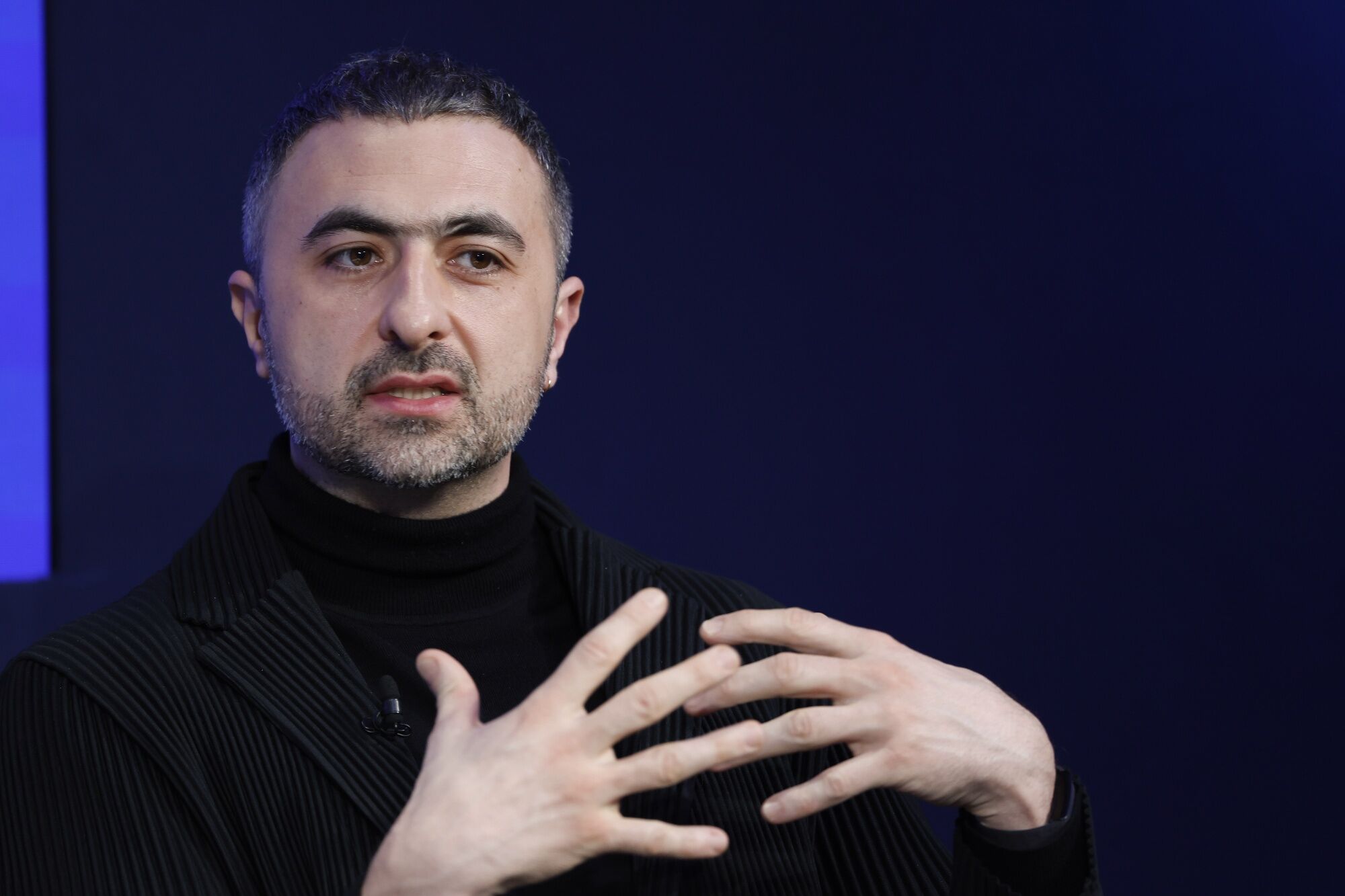
From DeepMind Technologies co-founder Mustafa Suleyman to Stanford researcher Fei-Fei Li, some of the field's biggest names debated this week in Mumbai how India — the country that pioneered the $250 billion IT outsourcing industry — can become a player in the transformative technology.
The country has several advantages, including one of the world's largest pools of IT and engineering talent and a fast-growing domestic market, they concluded. The market for AI software globally could reach $297 billion by 2027, Gartner estimates. In India, demand for AI services alone could be worth $17 billion that year, according to a report issued this week by IT industry body Nasscom and consultancy BCG.
First though, India will have to weather unpredictable disruptions from AI, which threatens to displace jobs from call-center outsourcing to programming. On another front, unlike the US and China, a lack of infrastructure for training large-language generative AI models will force local aspirants to build smaller platforms — though in the longer-term, Indian firms can still compete with the likes of OpenAI and China's Baidu Inc.
“We will see two trends: eye-wateringly large LLMs, a thousand times larger, will get built. But bigger is not necessarily better,” Suleyman said via live video link during Nasscom's annual conference, a summit of executives from IT pioneers such as Infosys Ltd. and Tata Consultancy Services Ltd. “Smaller, cheaper-to-run models, open-source models, will work very well.”
Read More: AI Model Backed by Asia's Richest Person to Launch in March
Some of India's highest-profile companies and New Delhi itself are supporting that broader effort. A consortium backed by Mukesh Ambani's Reliance Industries Ltd. and India's top engineering schools aim to launch its first ChatGPT-style service next month.
Startups such as Sarvam and Krutrim, backed by prominent VC investors such as Lightspeed Venture Partners and billionaire Vinod Khosla, are building open-sourced AI models customized for India. While Silicon Valley companies like OpenAI are building ever-larger LLMs, Indian efforts involve workarounds because of computational and cost constraints for smaller businesses and government departments.
“People and talent is India's biggest advantage,” said K. Krithivasan, chief executive officer at TCS. But “there will be some dislocation of jobs, some disruption. We need to change the way we train. The kind of people we hire also needs to change: critical thinking, ability to strategically plan, creativity are all going to be important.”
Read More: Microsoft's Nadella Calls on India to Seize Opportunity of AI
Artificial intelligence is stirring up industries around the globe, revamping traditional processes and driving change. That's of particular concern to India's IT industry, which serves many of the world's biggest enterprises from banks to manufacturers, accounts for about 8% of the country's GDP and employs 5.5 million.
“Every technology and business leader must use AI as a tool,” said Li, a computer scientist regarded as a trailblazer in the specialty of computer vision. “How we think, how we learn, how we are taught, how we are assessed, all need to change.”
The world's most populous country is already grappling with employment shortages. The fear is that artificial intelligence could exacerbate the situation.
Last week, Nasscom said India's IT industry would add merely 60,000 employees in the year ending March. Just two years ago, a single company like TCS would have taken on that headcount. Revenues are projected by Nasscom to slow sharply this fiscal year.
Longer term, India has an unprecedented opportunity to drive economic growth, Microsoft Corp. CEO Satya Nadella said in Mumbai this month. Countries that adopt the technology will have the chance to expand their expertise and push up economic growth, he said.
“AI is the perfect storm for India,” said Nasscom president Debjani Ghosh.
More stories like this are available on bloomberg.com
©2024 Bloomberg L.P.

-
Gold Is Rs 22,000 Cheaper Than A Month Ago. Should You Buy Amid The Wedding Season?

Gold's potential slide to $3,500 could save around Rs 4,700 per 10 grams, but a soft inflation print could just as easily push prices back up. One way to split the risk is to buy in parts, some now and the rest after the Fed's Dec. 9 decision.
-
AI Agents Are Gaining Power. Who Governs Them?
Artificial intelligence agents promise to transform productivity by moving machines from assisting decisions to executing them. But as organisations delegate greater authority to these AI-agents, they must first establish who controls that authority and who remains accountable when things go wrong.
-
Why Swapping Your Old Gold Can Trigger A Rs 5 Lakh Tax Bill, And How You Can Avoid It Legally
Swapping old gold for new is taxed as a sale and a fresh purchase. Getting your own gold remade can cut most of that bill, though it has its own costs.
-
The AI Trade is Done. The Real Opportunity for Investors Starts in 2027 | Unhedged Position
As pureplay AI stocks plunge and circular, capex-led financing unwinds, 2027 is set to be a year of reckoning for AI companies. Yet the bust clears the way for a better opportunity for investors in 2027 -- shifting the spotlight from AI builders to the companies using AI.
-
Leadership As Mission: Why The Age Of AI Demands More Human Leadership
Debjani Ghosh examines how AI is changing leadership, arguing that its success must be measured by its impact on people and the accountability of those guiding its use.
-
We May Need Another Tukaram Mundhe To Fight Air Pollution | The Reason Why
Developers may install basic measures such as sprinklers and green nets, resume work, and continue violating rules when this equipment stops working.
-
Extracting Value From Battery Scrap Could Be Challenging For India | The Reason Why
A discarded lithium-ion battery still contains valuable materials such as lithium, nickel and cobalt. These can be recovered and reused. When such batteries are crushed and shredded, they produce a dark powder called black mass.
-
One El Nino, India Can Handle. Two Could Break The Granary
India's grain stocks can absorb one bad year, but a second El Nino could drain the buffer in two to three years, economists say.
-
India's Troika Of Good Luck | Joining The Dots
As Jensen Huang's exit drags Nvidia down, a cooling AI trade and resilient earnings have revived investor interest in India. A likely RBI rate hike looms.
-
Talking Points This Week: Leadership Shock At Nvidia, Earnings Strength, And The Fog Over Hormuz
The Anthropic IPO pricing and first trading day, Nvidia's upcoming earnings, and any fresh signals from Iran will set the tone for the following week.









