How To Insure The Most Expensive Car In The World
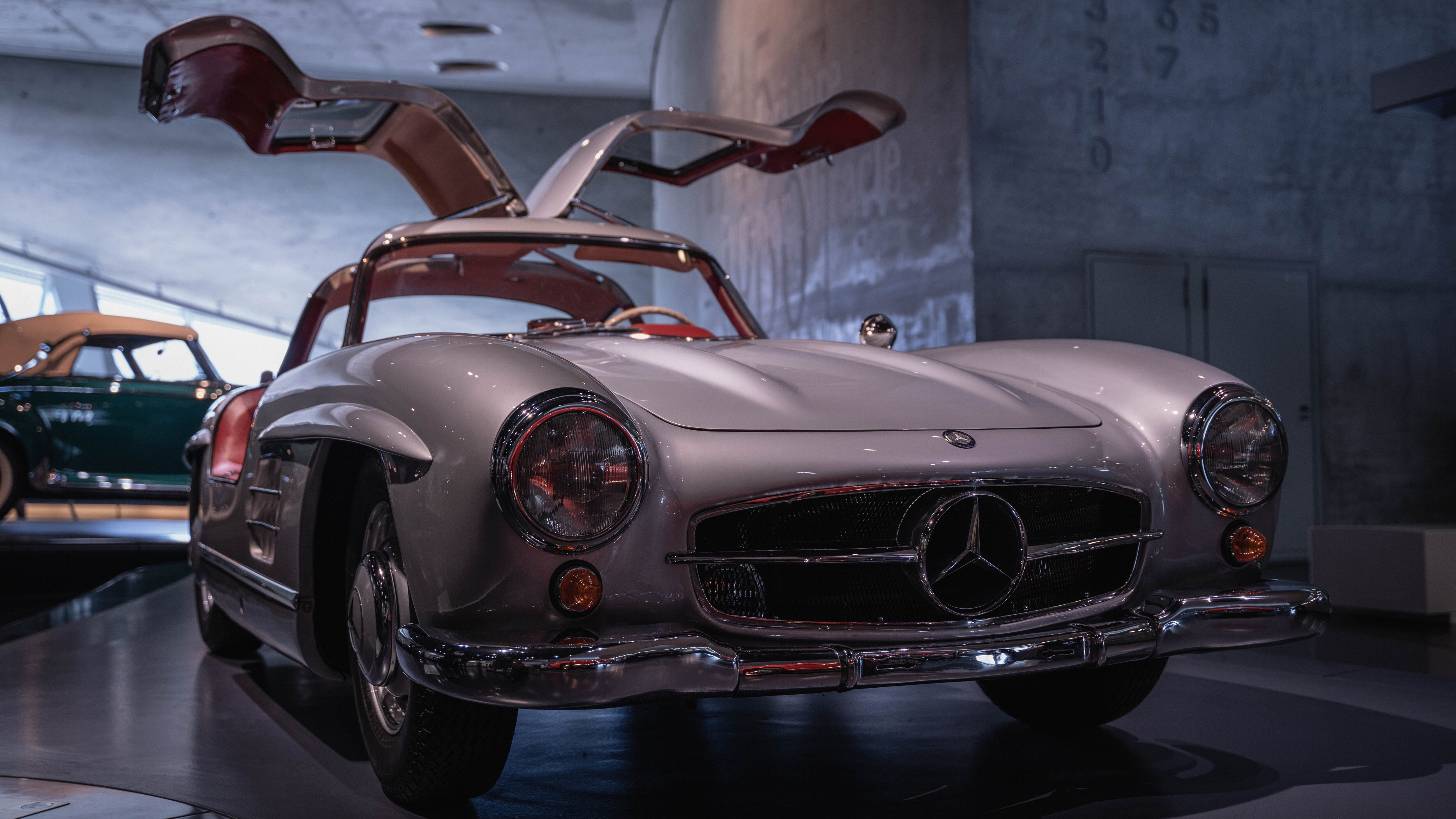
(Bloomberg) -- On May 5, a 1955 Mercedes-Benz 300 SLR Uhlenhaut Coupe sold for $142 million during an auction at the Mercedes-Benz Museum in Stuttgart, Germany. It was the highest price ever paid for a car at auction, soundly beating the eight-figure Ferrari sales that had long topped the blue-chip billing.
The identity remains a mystery of the person who bought the one-of-two silver stunner with gullwing doors and shiny exhaust pipes protruding from its right side. Notwithstanding persistent industry rumors, representatives for Ernesto Bertarelli, a Swiss-Italian billionaire, have strongly denied to Bloomberg that the longtime Mercedes-Benz connoisseur made the lucky bid.
“The buyer is an enthusiast first and foremost, and not an investor,” says Simon Kidston, who placed the winning bid on behalf of a client, whom he declines to identify. “It is somebody who the car. The buyer has never once asked me what I think the car might be worth in the future.”

What is certain is that an object of such value will require a rock-solid insurance policy—if the new owner plans to drive it. Technically, if the car is never driven it will not legally require insurance, according to analysts from Hagerty, a firm that provides insurance for collectable vehicles and collections that are valued as high as $1 billion.
“There are some parts of the world where people won't insure high-value vehicles,” says Jack Butcher, Hagerty's president of global markets. “They want to keep them off the books.”

Like a Piece of Fine Art
A spokesperson for Mercedes-Benz said the company would not comment on insurance with regard to the record-setting coupé. But according to Abe Barnett, vice president of Signature Services, Hagerty's highest-end insurance segment, the most obvious bet for the new owner would be to protect it under an inland marine insurance policy, which covers high-value items typically excluded in proper coverage.
Numerous factors go into finalizing the rates and structure of such a policy—things like location, storage, and vehicle type—but in general, insuring a $100 million vehicle costs well over $100,000 to insure annually.
“That would treat it essentially like a piece of jewelry or art,” says Barnett. “It provides a much broader form of coverage, as opposed to a standard auto policy, which would be comprehensive and collision coverage. When they take their vehicle around, whether they want to take it to a concours or take it on a road rally or tour, that policy that will cover it appropriately.”
Galleries and art fairs often use this form of coverage to protect paintings, sculptures, prints, collections, and cultural artifacts, and elite garages do it with cars. This includes protection from damage or loss due to theft, accident, or mishandling, or in the event of an undetermined cause for property to have gone missing. It would also help meet the costs to repair or replace property damaged by fire, wind, hail, or water.

Inland Marine policies do not, however, cover damage from war, nuclear or otherwise. They do not cover mechanical failure or issues that happen due to regular use, such as tire blowouts, hose repairs, or brake replacements. If you (or, more likely, your garage manager) should forget to change the oil in your multimillion-dollar Mercedes, that's on you. Yearly upkeep on such vehicles can cost tens of thousands of dollars in storage, fuel, parts, and service.
“It's customary for insurance generally to not try to insure what they consider normal wear and tear,” Butcher says.
How Much Is It Worth … to You?
Most important when underwriting such a policy is to agree upon the value for which the vehicle will be insured. That number can be far above what was paid for it; it may also rise as a car is restored. Kidston declined to discuss specifics about the value for which his client's vehicle would be insured.
The preservation or restoration of a single million-dollar vehicle can enhance its value significantly, although this wasn't the case with the Uhlenhaut Coupé.
“Given that the car has always been a jewel of the Mercedes-Benz Museum, it had always been meticulously maintained in outstanding condition,” Haynes says. “There was really no work to be done on the car prior to it being offered for sale, as far as we are aware.”
For vehicles that do need work, the insurance provider will often check in with high-net-worth owners on a quarterly basis to determine the progress of the project and adjust the value of the insurance policy accordingly.

Keeping It Safe
How and where the car will be stored will probably affect the price of the insurance policy more than anything else. “Many wealthy people live in beautiful areas that tend to be catastrophically exposed,” Butcher says, citing private islands, forested mountains, and sheer cliffs.
Keeping a vehicular asset away from wildfire areas and hurricane zones is vital. So is storing it in a temperature-controlled environment with effective security cameras, burglar alarms, and sprinkler systems that can spray fire-retardant foam. Some collectors go so far as to preemptively clear brush in a radius of 200 feet around where they store the car and to dig retaining ponds to dampen flames should a fire creep close—anything to protect the investment.
An additional consideration:
A deductible typically does not apply in cases of ultra-rare cars. If an owner insists on one, it could be 1% or 5% or 10% of the total insured value of the car, Butcher says. Having a deductible is one way to avoid having to submit an insurance claim for smaller incidents such as dings or cracked wheels.
“If someone feels comfortable absorbing the cost, they might want repair it on their own,” Barnett says. “They might say, ‘Well, it's $50,000 or $100,000 dollars. I'm comfortable paying that out of pocket.'”
As with your everyday car insurance policy, not having to submit a claim helps keeps the insurance premium as low as possible. “Not a crazy amount, but it lowers it enough,” says Barnett. (A single claim on a policy would probably not increase rates.) Ethically, anyone selling a vehicle should disclose even small incidents that happened to it—whether or not the incident was reported to insurance.
A post shared by Road Scholars (@roadscholars1)
Rising From the Ashes
Even if the unthinkable happens and the car is damaged in a catastrophic event like a plane crash or flood, not all will necessarily be lost—assuming it can be repaired.
In rare cases, car values have risen to greater heights after superficial damage. In 2019 in Durham, N.C., a gas pipe exploded in front of a warehouse storing roughly half of the prestigious Ingram Collection of cars. An extremely rare 1961 Porsche 356 B Carrera GTL Abarth—so valuable that an original toolkit alone is worth $10,000—was one of many vehicles harmed when the roof collapsed.
More stories like this are available on bloomberg.com
©2022 Bloomberg L.P.

-
Talking Points This Week: Leadership Shock At Nvidia, Earnings Strength, And The Fog Over Hormuz

The Anthropic IPO pricing and first trading day, Nvidia's upcoming earnings, and any fresh signals from Iran will set the tone for the following week.
-
Signature Play: The Classic Cocktail Is Dead. Or Is It?
Classic cocktails are disappearing from India's cocktail menus. But they're still being ordered, taught to bartenders and borrowed from. So, who's really having the last drink?
-
A New Samvat Wishlist: Inclusive Prosperity And Human Development
India has strengthened its economic foundations through infrastructure, digital access and enterprise. Its next growth chapter must deepen productivity, create better livelihoods and widen participation in prosperity.
-
Love, Sex Aur Dhokha: The Audacious Plot To Spy On Jensen Huang
A Taipei dinner, a Singapore chip buyer and a suspected Chinese asset: inside the alleged spy operation that got close to NVIDIA's Jensen Huang.
-
Ten Things I Learnt This Samvat
Patience can be a trap. Cheap stocks can stay cheap. Leverage can wipe you out. What did Samvat 2082 teach us? Niraj Shah writes on 10 lessons from the year gone by.
-
Talking Points This Week: Tech Nerves, FII Buying, And A Faraway Banking Shock
The global markets are not shining this Diwali. The exception in the large markets is, India.
-
Midterm Rally Lasted A Day. The Hard Reality Of A Divided US May Last Two Years | Opinion
Between a contested AI boom, a debt ceiling that arrives in 2027 and a president with every incentive to act alone, the next two years may prove more volatile than the first day's rally suggests.
-
Blue Wave Will Derail the AI Trade but Won't Dismantle the AI Era | Unhedged Position
The Democrats' sweep of the US Congress will see politics collide with economic forces both over the long and short term.
-
It's Time To Take The GST Council's Bet On Trust Global
Payment records can prove India's services exports, and clear, proportionate rules can bring foreign digital sellers into the tax net.
-
Opinion | India at 38: From Innovation Overperformer to Innovation Powerhouse
India now has 453 VC-backed deep science startups, 18 of them late-stage, after 117 percent growth since 2020. Laurus Labs, at USD 9.3 billion, is the most valuable deep science company in any middle-income economy outside China.









