Can Online Grocer Grofers Turn Into A Consumer Goods Maker?
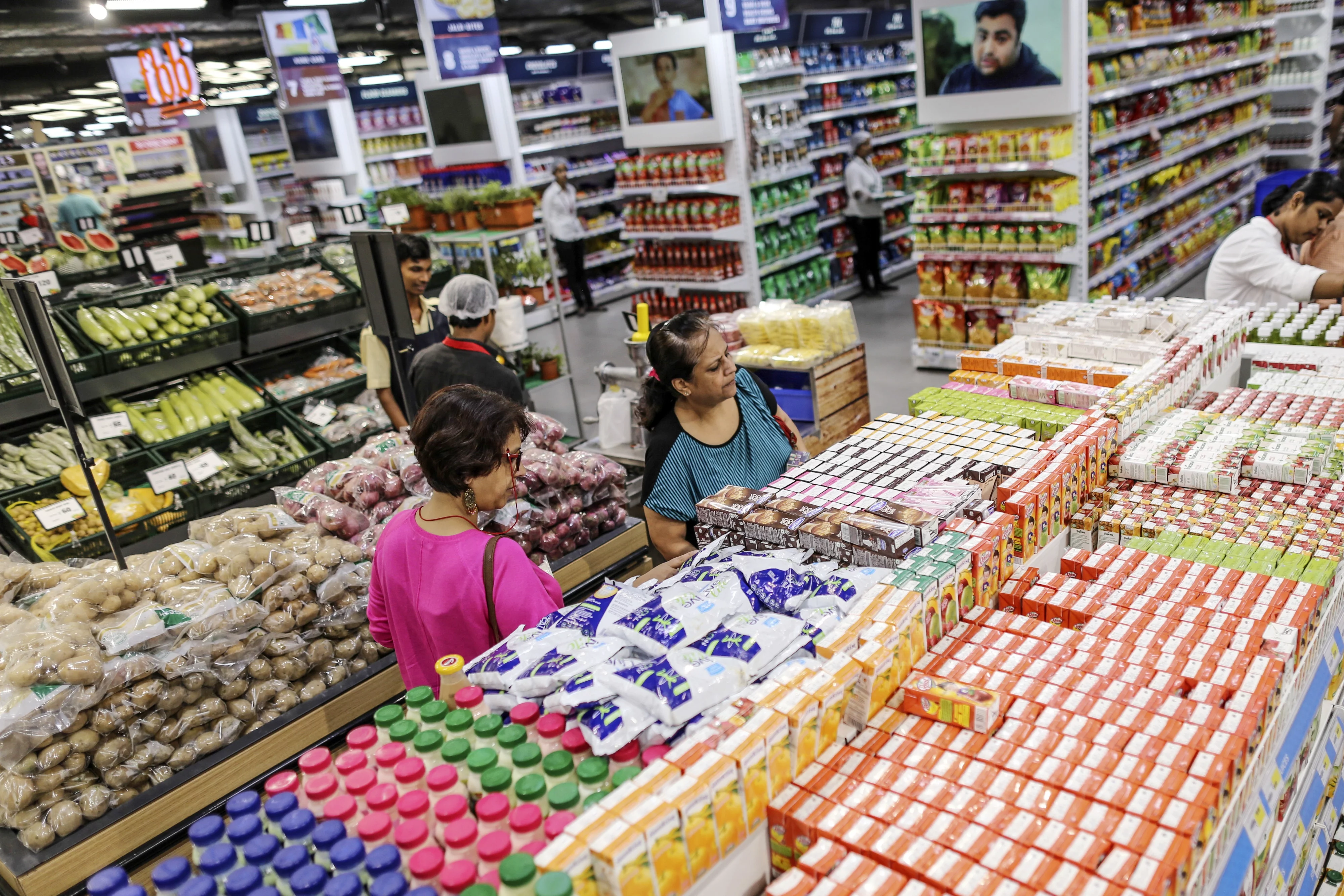
Online grocer Grofers wants to become a consumer goods maker as it looks to stand out in a crowded market.
“We want to completely move to a 100 percent private label firm in two to three years,” Co-Founder Saurabh Kumar told BloombergQuint. Customers are shifting towards private labels, which account for 25 percent of the revenue for Grofers, he said. “Our strategy is to invest more in private labels, and slowly shift towards them.”
From selling its own tea to detergents and toothpastes, Grofers is betting on low-priced brands. Its products will be about 5 to 50 percent cheaper than the market price of popular brands, Kumar said.
Grofers senses opportunity as more Indians buy online, driven by cheaper data and growing smartphone use. Fast-moving consumer goods, the fourth largest sector in India's economy, is poised to touch $104 billion in revenues by 2020, according to a report by India Brand Equity Foundation citing Dabur India and AC Nielsen. And about 40 percent of all FMCG purchases in India, the report said, will be online by 2020.
Backed by Japan's SoftBank Group Corp, the online grocer will invest nearly $30 million this year to boost the business and will tie up with contract manufacturers. “We will set our own standards and formulations and manufacturing will be done by a third party,” he said. For the year through March 2019, it expects private labels to contribute half of its Rs 2,500 crore revenue target.

‘Easier Said Than Done'
Yet, Grofers will need some transformation to achieve that. Even the world's biggest retailer Amazon.com Inc's own FMCG brands contribute just 5 percent of its global private label business, according to Coresight Research. And in India, it's yet to go down that route.
It's easier said than done, according to Arvind Singhal, chairman of retail consultancy Technopak Advisors. “To build a supply chain in FMCG is not at all easy. Second, heavy investment is needed in brand building.”
Even if the pricing is lower, customers won't buy until they can relate to a product, Singhal said. Even Patanjali Ayurved Ltd. was heavily marketed, he said, adding that it was sold through various touch points for customers. And above all, it had Baba Ramdev as a brand ambassador.
Albinder Dhindsa, cofounder of Grofers, said the private label business gives them on an average 5 percent better margins over products of other brands. Their strategy will be to pass on the difference to customers.
To be sure, all retailers push private labels because they have higher margins. Reliance Retail Ltd., Big Bazaar owner Future Retail Ltd. have their own brands. Grofers' bigger online rival BigBasket gets about 40 percent of its sales through private labels. Besides staples, it counts fruits and vegetables sold under its Fresho brand among private labels.
“Private labels make sense where big brands are not there; like meat products, bread,” Singhal said. “Going completely into private labels is a challenge. You have to replace an existing established brand.”
Grofers does about 35,000 orders a day. It last raised Rs 400 crore in a round led by SoftBank at a lower valuation. The investment also came nearly after a gap of two years.
Grofers' private label push is an attempt to find niche and relevance in a market where it's surrounded by giants like Amazon and BigBasket, said Satish Meena, analyst at Forrester Research. “It's trying to figure out a model because it has limited backing and is looking to offer some value and justify the valuations.”
K Ganesh, a promoter of venture building platform Growth Story and an investor in BigBasket, said that may not be easy. To build a private label, one needs to understand the category, build deep domain expertise, and develop products that can compete with established brands in the category, he said.
“It's a game of micro battles to make your brand in each category stand out.” For a tech firm to become an FMCG company is a big pivot, he said.
(Updates an earlier version after Grofers clarified its revenue target for 2018-19)

-
Indians Are Travelling, But Not Every Journey Is A Holiday | The Week In Whys

Pilgrims, patients and working women are the real travellers, and the system hasn't quite caught up with them.
-
Getting To Work Costs Women More | The Reason Why
It is not just about women paying more than men. It is about women paying much more in cities than in villages.
-
AI Bias In Investing Cannot Be Eliminated, But It Can Be Governed
Framing is a particularly important example as identical financial information presented in terms of gains rather than losses can lead an LLM to reach a different assessment.
-
Joining The Dots | Dark Skies, Steady Diya: Why Hope Holds This Diwali
With war, a weak rupee and foreign outflows weighing on sentiment, policymakers at the NDTV World Summit and market veterans at NDTV Profit Ignite: Diwali Edition offered the same advice: stay invested and filter out the noise.
-
The Curious Case of Equitas Small Finance Bank And A CEO Who Quit For Stock
PN Vasudevan believes persistent investor concerns over a perceived conflict of interest had become a governance overhang on Equitas Small Finance Bank's stock, even as the lender improved profitability and asset quality.
-
Talking Points This Week: AI Cash Burn, A Tiger Comeback And An India That Still Finds Its Own Path
India is not immune to higher oil or tighter global liquidity, yet its earnings base is broader, its domestic policy levers are still available.
-
Foreign Investors Own Half Of HDFC Bank and ICICI Bank. An LTCG Cut Could Matter Most Here
Foreign portfolio investors have US$115 billion parked in HDFC Bank, ICICI Bank. If the government cuts long-term capital gains tax, Jefferies says returning foreign money could land here first.
-
'Never Seen This Level Of Negativity': Sandeep Tandon Says The Next Rally May Be Closer Than You Think
Veteran investor Sandeep Tandon says foreign selling is easing, large-caps are due a comeback and mid-caps are crowded, while he turns positive on gold, power and pharma this Diwali.
-
Indians Stay With Family, Not In Hotels | The Reason Why
India still lacks enough clean, reliable and affordable hotels for budget-conscious travellers.
-
The Economic Imperative: Analysing The Material Driving Force Behind India-Canada Strategic Reset
This economic complementarity is further reinforced by deep institutional investment ties and talent mobility, which form the bedrock of the bilateral framework.










