Apple Weighs Using Anthropic Or OpenAI To Power Siri In Major Reversal
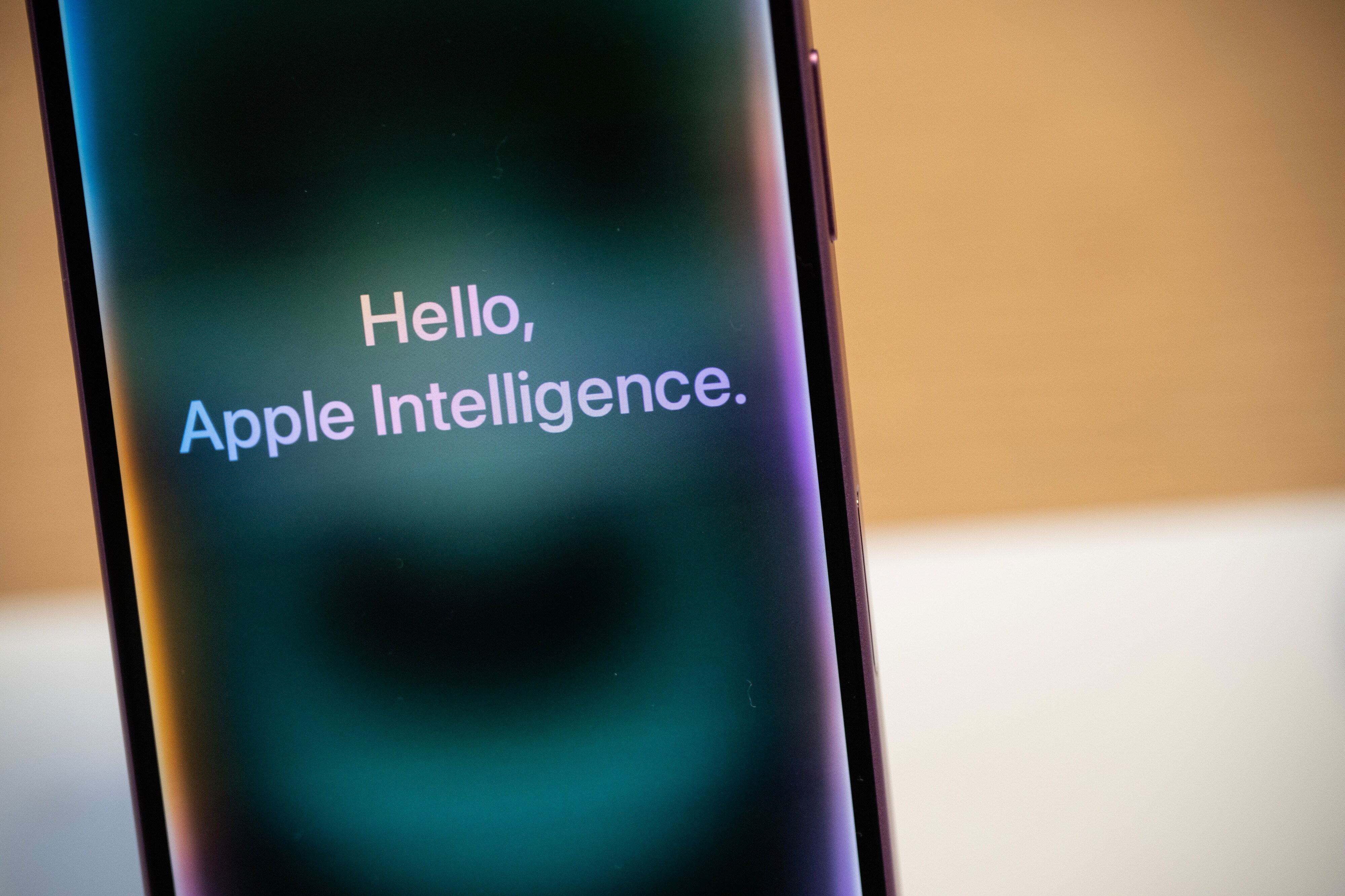
Apple Inc. is considering using artificial intelligence technology from Anthropic PBC or OpenAI to power a new version of Siri, sidelining its own in-house models in a potentially blockbuster move aimed at turning around its flailing AI effort.
The iPhone maker has talked with both companies about using their large language models for Siri, according to people familiar with the discussions. It has asked them to train versions of their models that could run on Apple's cloud infrastructure for testing, said the people, who asked not to be identified discussing private deliberations.
If Apple ultimately moves forward, it would represent a monumental reversal. The company currently powers most of its AI features with homegrown technology that it calls Apple Foundation Models and had been planning a new version of its voice assistant that runs on that technology for 2026.
A switch to Anthropic's Claude or OpenAI's ChatGPT models for Siri would be an acknowledgment that the company is struggling to compete in generative AI — the most important new technology in decades. Apple already allows ChatGPT to answer web-based search queries in Siri, but the assistant itself is powered by Apple.
Apple's investigation into third-party models is at an early stage, and the company hasn't made a final decision on using them, the people said. A competing project internally dubbed LLM Siri that uses in-house models remains in active development.
Making a change — which is under discussion for next year — could allow Cupertino, California-based Apple to offer Siri features on par with AI assistants on Android phones, helping the company shed its reputation as an AI laggard.
Representatives for Apple, Anthropic and OpenAI declined to comment. Shares of Apple closed up over 2% after Bloomberg reported on the deliberations.
Siri Struggles
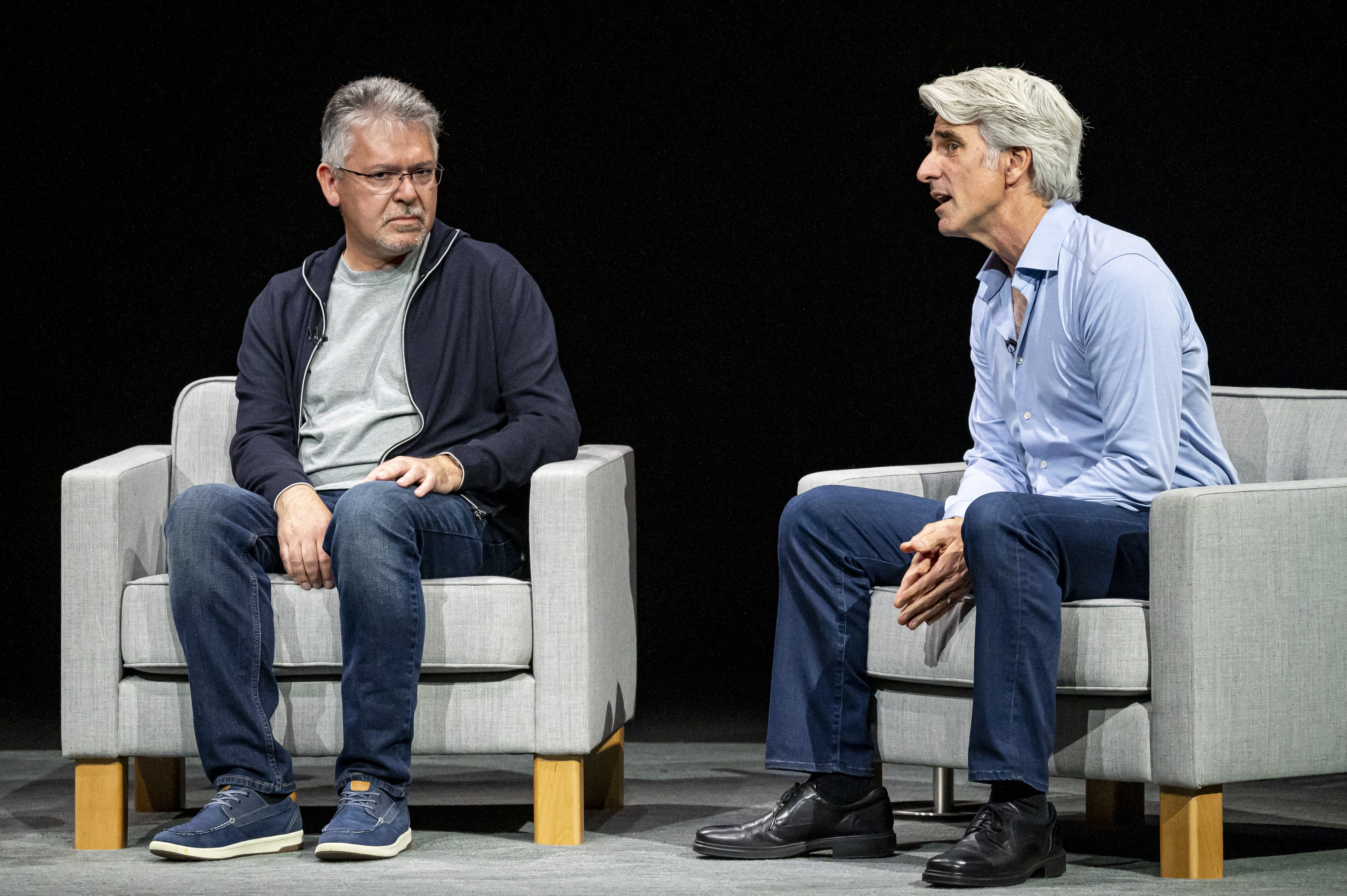
The project to evaluate external models was started by Siri chief Mike Rockwell and software engineering head Craig Federighi. They were given oversight of Siri after the duties were removed from the command of John Giannandrea, the company's AI chief. He was sidelined in the wake of a tepid response to Apple Intelligence and Siri feature delays.
Rockwell, who previously launched the Vision Pro headset, assumed the Siri engineering role in March. After taking over, he instructed his new group to assess whether Siri would do a better job handling queries using Apple's AI models or third-party technology, including Claude, ChatGPT and Alphabet Inc.'s Google Gemini.
After multiple rounds of testing, Rockwell and other executives concluded that Anthropic's technology is most promising for Siri's needs, the people said. That led Adrian Perica, the company's vice president of corporate development, to start discussions with Anthropic about using Claude, the people said.
The Siri assistant — originally released in 2011 — has fallen behind popular AI chatbots, and Apple's attempts to upgrade the software have been stymied by engineering snags and delays.
A year ago, Apple unveiled new Siri capabilities, including ones that would let it tap into users' personal data and analyze on-screen content to better fulfill queries. The company also demonstrated technology that would let Siri more precisely control apps and features across Apple devices.
The enhancements were far from ready. Apple initially announced plans for an early 2025 release but ultimately delayed the launch indefinitely. They are now planned for next spring, Bloomberg News has reported.
AI Uncertainty
People with knowledge of Apple's AI team say it is operating with a high degree of uncertainty and a lack of clarity, with executives still poring over a number of possible directions. Apple has already approved a multibillion dollar budget for 2026 for running its own models via the cloud but its plans for beyond that remain murky.
Still, Federighi, Rockwell and other executives have grown increasingly open to the idea that embracing outside technology is the key to a near-term turnaround. They don't see the need for Apple to rely on its own models — which they currently consider inferior — when it can partner with third parties instead, according to the people.
Licensing third-party AI would mirror an approach taken by Samsung Electronics Co. While the company brands its features under the Galaxy AI umbrella, many of its features are actually based on Gemini. Anthropic, for its part, is already used by Amazon.com Inc. to help power the new Alexa+.
In the future, if its own technology improves, the executives believe Apple should have ownership of AI models given their increasing importance to how products operate. The company is working on a series of projects, including a tabletop robot and glasses that will make heavy use of AI.
Apple has also recently considered acquiring Perplexity in order to help bolster its AI work, Bloomberg has reported. It also briefly held discussions with Thinking Machines Lab, the AI startup founded by former OpenAI Chief Technology Officer Mira Murati.
Souring Morale
Apple's models are developed by a roughly 100-person team run by Ruoming Pang, an Apple distinguished engineer who joined from Google in 2021 to lead this work. He reports to Daphne Luong, a senior director in charge of AI research.
Luong is one of Giannandrea's top lieutenants, and the foundation models team is one of the few significant AI groups still reporting to Giannandrea. Even in that area, Federighi and Rockwell have taken a larger role.
Regardless of the path it takes, the proposed shift has weighed on the team, which has some of the AI industry's most in-demand talent.
Some members have signaled internally that they are unhappy that the company is considering technology from a third-party, creating the perception that they are to blame, at least partially, for the company's AI shortcomings. They've said that they could leave for multimillion-dollar packages being floated by Meta Platforms Inc. and OpenAI.
Meta, the owner of Facebook and Instagram, has been offering some engineers annual pay packages between $10 million and $40 million — or even more — to join its new Superintelligence Labs group, according to people with knowledge of the matter. Apple is known, in many cases, to pay its AI engineers half — or even less — than what they can get on the open market.
One of Apple's most senior large language model researchers, Tom Gunter, left last week. He had worked at Apple for about eight years, and some colleagues see him as difficult to replace given his unique skillset and the willingness of Apple's competitors to pay exponentially more for talent.
Apple this month also nearly lost the team behind MLX, its key open-source system for developing machine learning models on the latest Apple chips. After the engineers threatened to leave, Apple made counteroffers to retain them — and they're staying for now.
Anthropic and OpenAI Discussions
In its discussions with both Anthropic and OpenAI, the iPhone maker requested a custom version of Claude and ChatGPT that could run on Apple's Private Cloud Compute servers — infrastructure based on high-end Mac chips that the company currently uses to operate its more sophisticated in-house models.
Apple believes that running the models on its own chips housed in Apple-controlled cloud servers — rather than relying on third-party infrastructure — will better safeguard user privacy. The company has already internally tested the feasibility of the idea.
Other Apple Intelligence features are powered by AI models that reside on consumers' devices. These models — slower and less powerful than cloud-based versions — are used for tasks like summarizing short emails and creating Genmojis.
Apple is opening up the on-device models to third-party developers later this year, letting app makers create AI features based on its technology.
The company hasn't announced plans to give apps access to the cloud models. One reason for that is the cloud servers don't yet have the capacity to handle a flood of new third-party features.
The company isn't currently working on moving away from its in-house models for on-device or developer use cases. Still, there are fears among engineers on the foundation models team that moving to a third-party for Siri could portend a move for other features as well in the future.
Last year, OpenAI offered to train on-device models for Apple, but the iPhone maker was not interested.
Since December 2024, Apple has been using OpenAI to handle some features. In addition to responding to world knowledge queries in Siri, ChatGPT can write blocks of text in the Writing Tools feature. Later this year, in iOS 26, there will be a ChatGPT option for image generation and on-screen image analysis.
While discussing a potential arrangement, Apple and Anthropic have disagreed over preliminary financial terms, according to the people. The AI startup is seeking a multibillion-dollar annual fee that increases sharply each year. The struggle to reach a deal has left Apple contemplating working with OpenAI or others if it moves forward with the third-party plan, they said.
Management Shifts
If Apple does strike an agreement, the influence of Giannandrea, who joined Apple from Google in 2018 and is a proponent of in-house large language model development, would continue to shrink.
In addition to losing Siri, Giannandrea was stripped of responsibility over Apple's robotics unit. And, in previously unreported moves, the company's Core ML and App Intents teams — groups responsible for frameworks that let developers integrate AI into their apps — were shifted to Federighi's software engineering organization.
Apple's foundation models team had also been building large language models to help employees and external developers write code in Xcode, its programming software. The company killed the project — announced last year as Swift Assist — about a month ago.
Instead, Apple later this year is rolling out a new Xcode that can tap into third-party programming models. App developers can choose from ChatGPT or Claude.

-
One Battle After Another: India's Corporate Dynasties Battle For Control

2026 could go down as Corporate India's year of succession wars, governance battles and family fault lines.
-
Rs 50-Lakh Gold In Bank Locker, Rs 3 Lakh Of Protection: The Gap Most Families Don't Know About
The RBI ties a bank's liability to the annual locker rent and families who want to insure their jewellery face a separate question about how to prove what was inside.
-
The More Food Turns Into Fuel, The Harder It Is To Read Agricultural Markets | The Reason Why
A policy designed to reduce dependence on imported fuel can create new pressures elsewhere in the food economy.
-
Your iPhone Costs 12 Grams Of Gold, A Car About 100. What Does Your Life Weigh?
Measured in rupees, almost everything looks more expensive than it did a generation ago. Measured in grams of gold, a lot of it has become cheaper.
-
Gold Is Rs 22,000 Cheaper Than A Month Ago. Should You Buy Amid The Wedding Season?
Gold's potential slide to $3,500 could save around Rs 4,700 per 10 grams, but a soft inflation print could just as easily push prices back up. One way to split the risk is to buy in parts, some now and the rest after the Fed's Dec. 9 decision.
-
AI Agents Are Gaining Power. Who Governs Them?
Artificial intelligence agents promise to transform productivity by moving machines from assisting decisions to executing them. But as organisations delegate greater authority to these AI-agents, they must first establish who controls that authority and who remains accountable when things go wrong.
-
Why Swapping Your Old Gold Can Trigger A Rs 5 Lakh Tax Bill, And How You Can Avoid It Legally
Swapping old gold for new is taxed as a sale and a fresh purchase. Getting your own gold remade can cut most of that bill, though it has its own costs.
-
The AI Trade is Done. The Real Opportunity for Investors Starts in 2027 | Unhedged Position
As pureplay AI stocks plunge and circular, capex-led financing unwinds, 2027 is set to be a year of reckoning for AI companies. Yet the bust clears the way for a better opportunity for investors in 2027 -- shifting the spotlight from AI builders to the companies using AI.
-
Leadership As Mission: Why The Age Of AI Demands More Human Leadership
Debjani Ghosh examines how AI is changing leadership, arguing that its success must be measured by its impact on people and the accountability of those guiding its use.
-
We May Need Another Tukaram Mundhe To Fight Air Pollution | The Reason Why
Developers may install basic measures such as sprinklers and green nets, resume work, and continue violating rules when this equipment stops working.









