Apple Shuffles AI Executive Ranks In Bid To Turn Around Siri
Apple Inc. is undergoing a rare shake-up of its executive ranks, aiming to get its artificial intelligence efforts back on track after months of delays and stumbles, according to people familiar with the situation.
Chief Executive Officer Tim Cook has lost confidence in the ability of AI head John Giannandrea to execute on product development, so he's moving over another top executive to help: Vision Pro creator Mike Rockwell. In a new role, Rockwell will be in charge of the Siri virtual assistant, according to the people, who asked not to be identified because the moves haven't been announced.
Rockwell will report to software chief Craig Federighi, removing Siri completely from Giannandrea's command. Apple announced the changes to employees on Thursday following Bloomberg News' initial report.
The iPhone maker's senior leaders — a group known as the Top 100 — just met at a secretive, annual offsite gathering to discuss the future of the company. Its AI efforts were a key talking point at the summit, Bloomberg has reported.
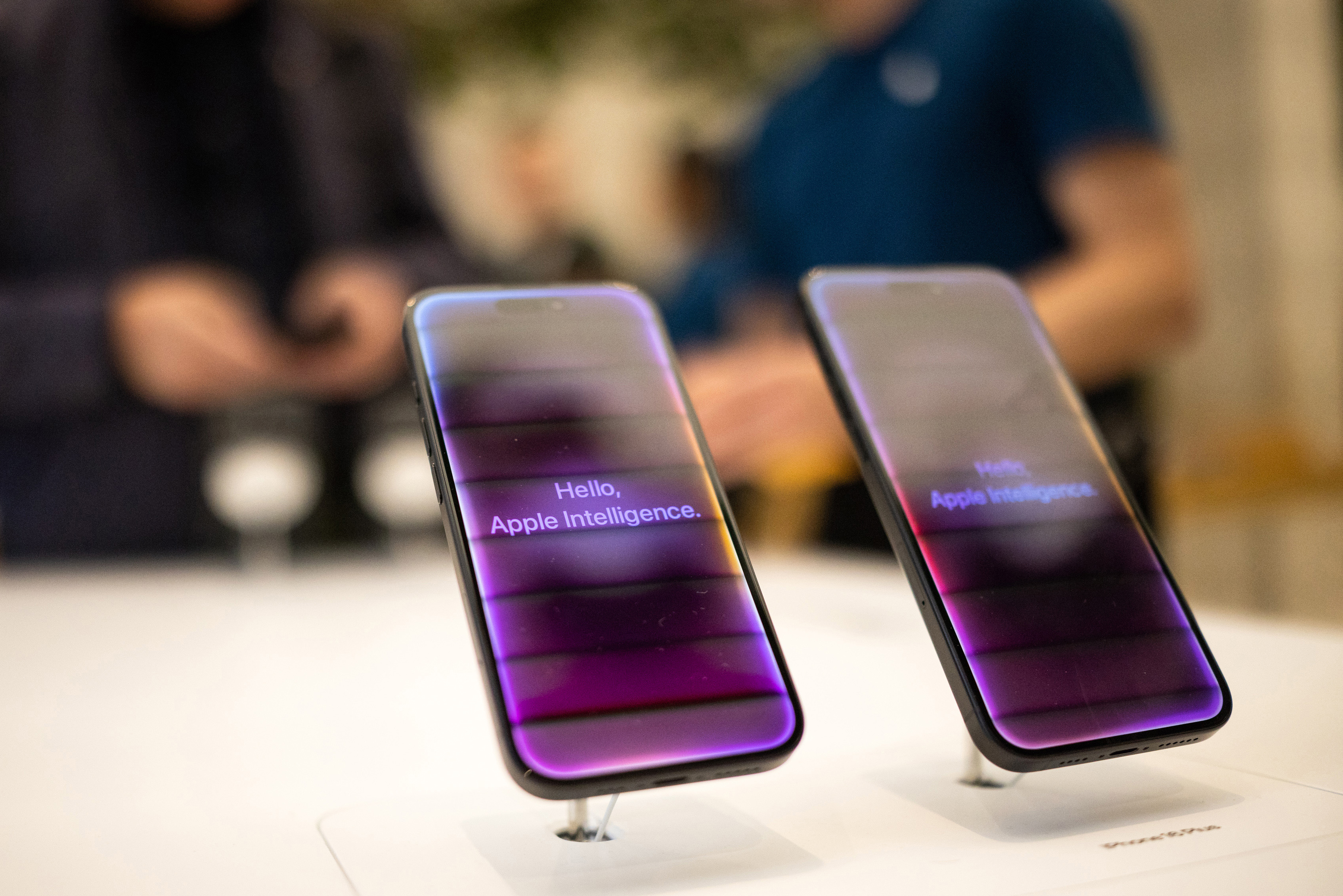
The moves underscore the plight facing Apple: Its AI technology is severely lagging industry rivals, and the company has shown little sign of catching up. The Apple Intelligence platform was late to arrive and largely a flop, despite being the main selling point for the iPhone 16.
Rockwell is currently the vice president in charge of the Vision Products Group, or VPG, the division that developed Apple's headset. As part of the changes, he'll be leaving that team, though the Vision Pro software groups will follow him to Federighi's software engineering group. The hardware team will remain under John Ternus and report to Paul Meade, a hardware engineering executive who worked on the Vision Pro.
A spokeswoman for Cupertino, California-based Apple declined to comment on the moves.
The need to rescue Siri is especially urgent. The company has struggled to release new features that were announced last June, including the ability to tap into a user's data to fulfill queries. Despite the technology not being ready, Apple advertised the enhancements for months on TV in order to sell the iPhone 16. Following development snags, the company further delayed the features earlier this month.
The Apple manager who has led Siri until now told his team in a recent meeting that the delays were “ugly” and that staffers may be angry and embarrassed. The executive, Robby Walker, also said he was unsure when the features would actually arrive due to competing development priorities. Apple has publicly stated that the features will be ready sometime in the “coming year.”
Apple shares have declined 15% this year, part of a broader retreat for tech stocks. They fell less than 1% to $214.10 on Thursday in New York.
By tapping Rockwell, Apple is betting on an executive with proven technical experience. He has demonstrated the ability to ship new products and run an engineering organization with thousands of people. Rockwell has a knack for solving problems and often takes the role of evangelist for futuristic technologies.
Rockwell is known as the brains behind the Vision Pro, which is considered a technical marvel but not a commercial hit. Getting the headset to market required a number of technical breakthroughs, some of which leveraged forms of artificial intelligence. He is now moving away from the Vision Pro at a time when that unit is struggling to plot a future for the product.
Over the last decade, Rockwell has been one of the few Apple executives to take a major hardware device from “zero to one” — industry parlance for conceiving a new product and bringing it to market. He joined Apple's hardware engineering group in 2015, and the company released the Vision Pro in February of last year.
Giannandrea has a different background. A former Google star, he was hired in 2018 to run Apple's AI work. Giannandrea had been one of Alphabet Inc.'s most senior executives, overseeing the search and AI divisions. Rockwell, in contrast, doesn't have prior experience as an AI leader or clout within the burgeoning machine-learning community.
Apple has set the stage for the change by increasingly referring internally to the Vision Pro and VPG initiatives as “AI products.” Rockwell's experience with hardware also could help the company more deeply embed AI into its future devices. Already, the company is exploring the idea of AirPods with outward-facing cameras that could feed data to AI.
Siri — the AI division's main consumer product — has had a number of bosses over the years. When Apple first launched the voice assistant in 2011, it was overseen by software executive Scott Forstall. It was then given to services chief Eddy Cue in 2012 and transferred to the current software head, Federighi, in 2017. Giannandrea took it over a year later. Now it will be led by Rockwell, with oversight returning again to Federighi.

Tim Cook, chief executive officer, from left, John Giannandrea, senior vice president of machine learning and AI strategy, and Craig Federighi, senior vice president of software engineering at Apple.
Giannandrea will remain at the company, even with Rockwell taking over Siri. An abrupt departure would signal publicly that the AI efforts have been tumultuous — something Apple is reluctant to acknowledge. Giannandrea's other responsibilities include oversight of research, testing and technologies related to AI. The company also has a team reporting to Giannandrea investigating robotics.
Federighi, Rockwell's new manager, is the company's senior vice president of software engineering. He oversees development of Apple's iOS, iPadOS and macOS operating systems, as well as development tools. Along with Giannandrea, he was a key figure in the development of Apple Intelligence. Right now, he's also orchestrating an extensive revamp of the company's core software.
Siri had been plagued by engineering and quality problems long before Giannandrea arrived on the scene. Though he struggled to turn around that technology, he's made headway in other areas. That includes luring top AI researchers to Apple, which hadn't been known for such work in the past. He also unified the company's AI work under one roof, pulling in related technologies from across Apple into a single division.
The AI management shift has been months in the making and predates Apple announcing the Siri delays. Last year, the company tapped Rockwell deputy Kim Vorrath to help advise the Siri team. She's known for bringing order and execution to troubled development programs. In January, she was officially moved over to the AI group as a top lieutenant to Giannandrea to oversee AI program management. She is now moving to Federighi's division.
In the past several days, Apple started moving over another senior manager from Rockwell's team — Aimee Nugent — to the Siri group. Like Vorrath, she has a reputation for fixing challenging projects. The changes allowed two of Rockwell's trusted executives to evaluate the organization before he became heavily involved.
Inside Apple, Rockwell hasn't been shy about criticizing Siri, according to people familiar with the matter. For years, he has pitched senior vice presidents on ideas for overhauling the voice assistant to make it more personalized. He has also been advising the AI group in recent weeks. Even before the management changes, Giannandrea long considered Rockwell a potential successor.
When developing the Vision Pro, Rockwell believed that Siri could be a central way to control the $3,499 device. Now, it's only a limited element, with the company primarily focusing on hand-and-eye control.
Rockwell has had more experience with the AI team in recent months as the company worked to bring Apple Intelligence to the Vision Pro. The features are launching on the headset in April as part of a visionOS software upgrade.

-
Talking Points This Week: Leadership Shock At Nvidia, Earnings Strength, And The Fog Over Hormuz

The Anthropic IPO pricing and first trading day, Nvidia's upcoming earnings, and any fresh signals from Iran will set the tone for the following week.
-
Signature Play: The Classic Cocktail Is Dead. Or Is It?
Classic cocktails are disappearing from India's cocktail menus. But they're still being ordered, taught to bartenders and borrowed from. So, who's really having the last drink?
-
A New Samvat Wishlist: Inclusive Prosperity And Human Development
India has strengthened its economic foundations through infrastructure, digital access and enterprise. Its next growth chapter must deepen productivity, create better livelihoods and widen participation in prosperity.
-
Love, Sex Aur Dhokha: The Audacious Plot To Spy On Jensen Huang
A Taipei dinner, a Singapore chip buyer and a suspected Chinese asset: inside the alleged spy operation that got close to NVIDIA's Jensen Huang.
-
Ten Things I Learnt This Samvat
Patience can be a trap. Cheap stocks can stay cheap. Leverage can wipe you out. What did Samvat 2082 teach us? Niraj Shah writes on 10 lessons from the year gone by.
-
Talking Points This Week: Tech Nerves, FII Buying, And A Faraway Banking Shock
The global markets are not shining this Diwali. The exception in the large markets is, India.
-
Midterm Rally Lasted A Day. The Hard Reality Of A Divided US May Last Two Years | Opinion
Between a contested AI boom, a debt ceiling that arrives in 2027 and a president with every incentive to act alone, the next two years may prove more volatile than the first day's rally suggests.
-
Blue Wave Will Derail the AI Trade but Won't Dismantle the AI Era | Unhedged Position
The Democrats' sweep of the US Congress will see politics collide with economic forces both over the long and short term.
-
It's Time To Take The GST Council's Bet On Trust Global
Payment records can prove India's services exports, and clear, proportionate rules can bring foreign digital sellers into the tax net.
-
Opinion | India at 38: From Innovation Overperformer to Innovation Powerhouse
India now has 453 VC-backed deep science startups, 18 of them late-stage, after 117 percent growth since 2020. Laurus Labs, at USD 9.3 billion, is the most valuable deep science company in any middle-income economy outside China.









