A Bengaluru Startup Uses Cane To Build Prosthetic Legs

Cane is usually used to build lightweight furniture. Robotics engineer Arun Cherian makes cost-effective prosthetic legs out of it.
“It was curiosity. If cane is a spring and human leg is a spring, can I make a leg out of it? One thing led to an another,” said Cherian, 32.
The Journey
After a master's degree in mechanical engineering from Columbia University, Cherian was pursuing a doctorate in mechanical engineering at Purdue University when he quit to start Rise Legs.
Cherian came up with the idea during a vacation back home and reached out to local artisans to find out if cane could indeed be used to make prosthetic legs. Once the craftsmen gave him the desired mould, the next step was to run mechanical trials, he told BloombergQuint in an interview.
“I ended up at the aerospace department of Indian Institute of Science (IISC) in Bengaluru and they had the right machines to test it. The results turned out to be far better than we had expected,” he added.
Rise Legs tied up with a non-governmental organisation (NGO) – Association of People With Disability – in Bengaluru and started making prototypes tested by volunteers from the association.
They performed very well. An adult who had lost both the legs started kicking a football on the third day and went on to participate in a marathon.Arun Cherian, Founder, Rise Legs
Now, just over a year old and with 50 customers, Rise Legs can also customise prosthetic legs for the agile or those interested in sports.
“Prosthetic leg is not just a functional device but an extension of oneself and has a human element to it. We give the customer choices from having a naked structure to the one that is cosmetically covered and can be colour-matched to the skin tones or art works,” said Cherian.
While the basic prosthetic leg made by Rise Legs costs Rs 4,000 and is far cheaper compared to the imported ones, a Jaipur-based non-profit organisation -- Bhagwan Mahaveer Viklang Sahayata Samiti -- offers prosthetic legs fabricated from polyethylene pipes free.
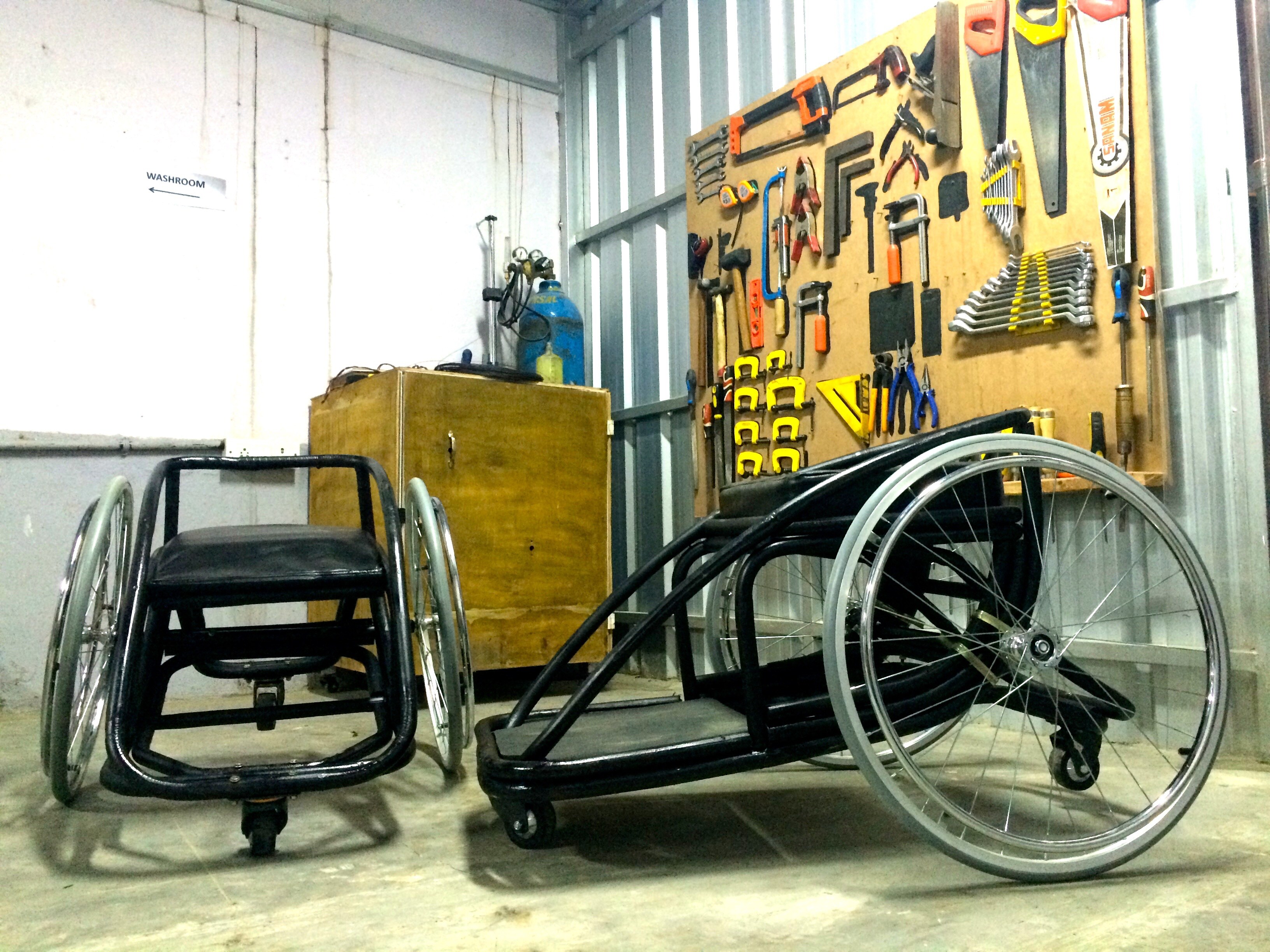
Rise Legs is now also working on developing wheelchairs for athletes and dancers.
Building An Ecosystem
People from as far as Australia, the West Indies, Uganda, Tunisia Mexico and Argentina are now reaching out, said Cherian. The aim is to grow in a phased manner and not at the cost of quality or after-sales, he said.
The objective, he said, was to build an ecosystem which would create awareness programmes to encourage users to take up activities like dancing, sports and fitness. He did concede though that its still hard to get doctors, cane artisans and amputees in the same room and get them to agree to do such a thing. But technology, said Cherian, talks for itself.

-
Indians Stay With Family, Not In Hotels | The Reason Why

India still lacks enough clean, reliable and affordable hotels for budget-conscious travellers.
-
The Economic Imperative: Analysing The Material Driving Force Behind India-Canada Strategic Reset
This economic complementarity is further reinforced by deep institutional investment ties and talent mobility, which form the bedrock of the bilateral framework.
-
Medicine Pricing: Where Must Profit Stop?
India must confront excessive margins, hidden incentives and regulatory gaps that threaten the integrity of medicine.
-
Why Amazon And Flipkart Are Struggling To Beat Meesho In India's Smaller Cities
With 274 million users and lowest-cost logistics, Meesho is defending its value commerce crown against giants like Amazon and Flipkart.
-
High US Salaries, No Green Card Certainty: The Financial Calculation Facing Indian H-1B Families
The suspension of PERM processing at eight technology employers does not cancel existing H-1B visas. What it does is force a question many Indian families have been avoiding: is the US salary worth tying your career and family plans to one employer?
-
Swiggy vs Eternal: Food Delivery's Two Rivals Are No Longer In The Same Race
Eternal is building a private AI assistant, dark.ai. Swiggy is still working out how to make Instamart pay, with an operating loss of Rs 895 crore in the July-September quarter while Blinkit stayed profitable.
-
Where You Live Shapes How You Get To Work | The Reason Why
Two-wheelers are the most popular way to get to work in India, accounting for nearly 43% of workplace commutes.
-
Unhedged Position: Can India See An Indonesia-Style Time Correction?
The Nifty is trading below levels it first clocked in 2024. Is there, then, as I have suggested in the headline, potential that the current time correction drags on painfully for the next three-five, even ten years?
-
Navigating Friction And Energy Realities: An Analysis Of Marco Rubio's October Visit To India
Occurring at a critical juncture marked by stalled trade negotiations and escalating geopolitical pressures over global energy supplies, the visit offers a profound window into modern US-India relations.
-
India Exports Capital. Why Not Export Trusteeship?
The big question, then, is whether India can build an institution that global borrowers, investors, banks, and lawyers can trust, even without an Indian connection.










