FIFA World Cup 2022: Politics Aside, It's About Substance Over Style
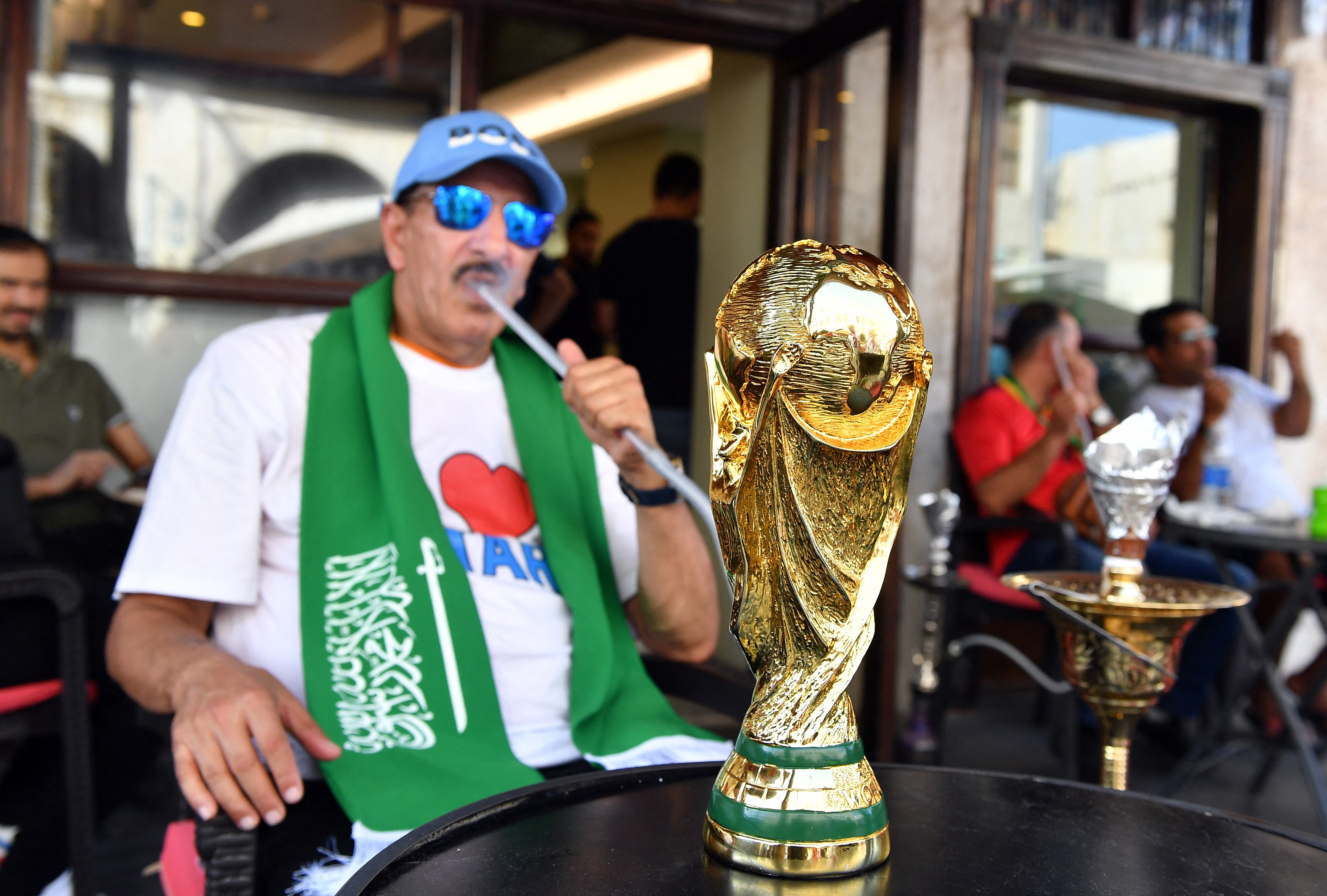
In football-soaked Kerala, there was a premonitory video clip that was shared on social media days prior to the Qatar 2022 World Cup kickoff. In it, a giant 65-metre cutout of Lionel Messi was being hauled up by a dribble of fans, a trickle of Lilliputians hauling up their humongous god in anticipation of glorious victories contrived by their genius. Fate, however, had different plans both for the cutout and the real Messi in their opener against the Kingdom of Saudi Arabia. The flimsy cutout defied the laws of gravity and principles of physics for a few seconds before twisting in half, undercut halfway, a spine bender of epic proportions as the trailing rope fasteners, overwrought by the legend's weight, came crashing down. Eerily similar to the manner in which Argentina tottered and collapsed against the less fancied Saudis, puncturing the hopes of millions of a diaspora beholden to the Albiceleste spread across the length and breadth of God's own country.
It has been a whirlwind week so far as the 32 top nations in football descended on the water-guzzling green top-beds strewn across the desert country of Qatar this past week. The kickoff generated immense interest, with eyeballs glued with intent to watch which one of the G.O.A.T. would be able to successfully lead their country to the prized podium final on Dec. 18 at the Lusail stadium in Al Daayen, a municipality north of Doha. Would it be Argentina's Lionel Messi or Portugal's Cristiano Ronaldo, or would it be a France redux with Kylian Mbappé, or will some other nation ride on a surge and surprise the world?
It was clear from the matches in the first few days that the fragile form pages and world rankings would have to be rewritten with unheralded nations trumping much-fancied ones and displaying amazing skill and cunning to stretch games to respectable draws with sides much ahead in the FIFA team ratings.
Herald The New Heroes
With reams being written on the wizardry of Ronaldo and the magic of Messi, sports writers indulged them in their postscripts after their opening matches. The exploits of less famous footballers somehow do not seem to ignite them. André Ayew or Osman Bukari of Ghana, goal scorers in the 3-2 loss to Portugal, do not figure in a match analysis that fawns over and over a Ronaldo who is feted endlessly. There were copious tears for Messi, but few appreciated the dazzling stars Saleh Alshehri and Salem Aldawsari, who thundered in the winner for Saudi Arabia. The 53rd-minute scorcher from Aldawsari took the wind out of the Argentinians' sails. And the way in which Aldawsari celebrated is a tale in itself. As he ran to the far post with his jubilant teammates scampering after him, he motioned for them to wait, and as he ran, he trapezed into a head over heel tumble as he landed on a perfect two feet, announcing his arrival on the world stage.
It is past time then to focus on the new emerging football stars on the horizon, like Breel Embolo, who scored the lone goal against the country of his birth, Cameroon, wearing Switzerland colours, standing rooted in his place with pangs of conflicting emotions churning within.
Let the drum rolls be heard for the irrepressible Gavi and Ferran Torres of Spain, bang the cymbals for Rouzbeh Cheshmi and Ramin Rezaeian of Iran, and sound the bugle for Romain Saïss and Zakaria Aboukhlal of Morocco. Reluctant heroes maybe, but the spotlight search now has to be on discovering new heroes.
Politicking On The Sidelines
There was the usual convergence of politics too in Qatar. Western countries cried hoarse about the human rights situation in the host country, with FIFA President Gianni Infantino tearing into these criticisms by asking these countries to go and look into their own moral mirrors and, if possible, to come across as squeaky clean. With alcohol and beer banned in football stadiums during the course of the matches, European fans, especially those from England, displayed fine camaraderie sitting with the fans of opposing teams both off the stadium precincts and within. However, the plan to sport "One Love" armbands by the captains of England, Wales, Belgium, the Netherlands, Switzerland, Germany, and Denmark to protest Qatar's laws prohibiting same-sex relationships did not quite work with yellow card threats from FIFA.
What did succeed was the Iran men's team's deafening silence as their country's national anthem was played prior to their opener against England—a symbolic protest to display their support for the public revolt taking place in their country after the death of Mahsa Amini in custody. This was in stark contrast to what had taken place in New Delhi during the Asian Games in 1982, when anti-Khomeini protestors clashed with the Iranian national team, which supported the then ruling establishment in Iran. However, the Iranian team was asked to sing the national anthem for their second match against Wales by their football federation or face disciplinary action as Iranian fans stood stoically behind their helpless national team.
Qatar in effect became the microcosm of all that was happening in the world, and surely it did take a while before football took center stage from the contemporary interludes drifting from the global sidelines.
One can only fervently hope that as the U.S., Canada, and Mexico prepare themselves to be the next hosts of the quadrennial tournament, the world does its best and gives it all to be a more inclusive and peaceful place. As Herve Renard, the manager of the Saudi team, exhorted his exhausted and dispirited players during halftime against Argentina when they were a goal down, "This is the World Cup; give it everything." That they did it and turned the tables is a fascinating story for future generations.
Anand Mathew is a social development consultant based in New Delhi.

-
Signature Play: The Classic Cocktail Is Dead. Or Is It?

Classic cocktails are disappearing from India's cocktail menus. But they're still being ordered, taught to bartenders and borrowed from. So, who's really having the last drink?
-
A New Samvat Wishlist: Inclusive Prosperity And Human Development
India has strengthened its economic foundations through infrastructure, digital access and enterprise. Its next growth chapter must deepen productivity, create better livelihoods and widen participation in prosperity.
-
Love, Sex Aur Dhokha: The Audacious Plot To Spy On Jensen Huang
A Taipei dinner, a Singapore chip buyer and a suspected Chinese asset: inside the alleged spy operation that got close to NVIDIA's Jensen Huang.
-
Ten Things I Learnt This Samvat
Patience can be a trap. Cheap stocks can stay cheap. Leverage can wipe you out. What did Samvat 2082 teach us? Niraj Shah writes on 10 lessons from the year gone by.
-
Talking Points This Week: Tech Nerves, FII Buying, And A Faraway Banking Shock
The global markets are not shining this Diwali. The exception in the large markets is, India.
-
Midterm Rally Lasted A Day. The Hard Reality Of A Divided US May Last Two Years | Opinion
Between a contested AI boom, a debt ceiling that arrives in 2027 and a president with every incentive to act alone, the next two years may prove more volatile than the first day's rally suggests.
-
Blue Wave Will Derail the AI Trade but Won't Dismantle the AI Era | Unhedged Position
The Democrats' sweep of the US Congress will see politics collide with economic forces both over the long and short term.
-
It's Time To Take The GST Council's Bet On Trust Global
Payment records can prove India's services exports, and clear, proportionate rules can bring foreign digital sellers into the tax net.
-
Opinion | India at 38: From Innovation Overperformer to Innovation Powerhouse
India now has 453 VC-backed deep science startups, 18 of them late-stage, after 117 percent growth since 2020. Laurus Labs, at USD 9.3 billion, is the most valuable deep science company in any middle-income economy outside China.









