Coronavirus Lockdown: For Mumbai’s Civic Schools, Classroom Is On WhatsApp
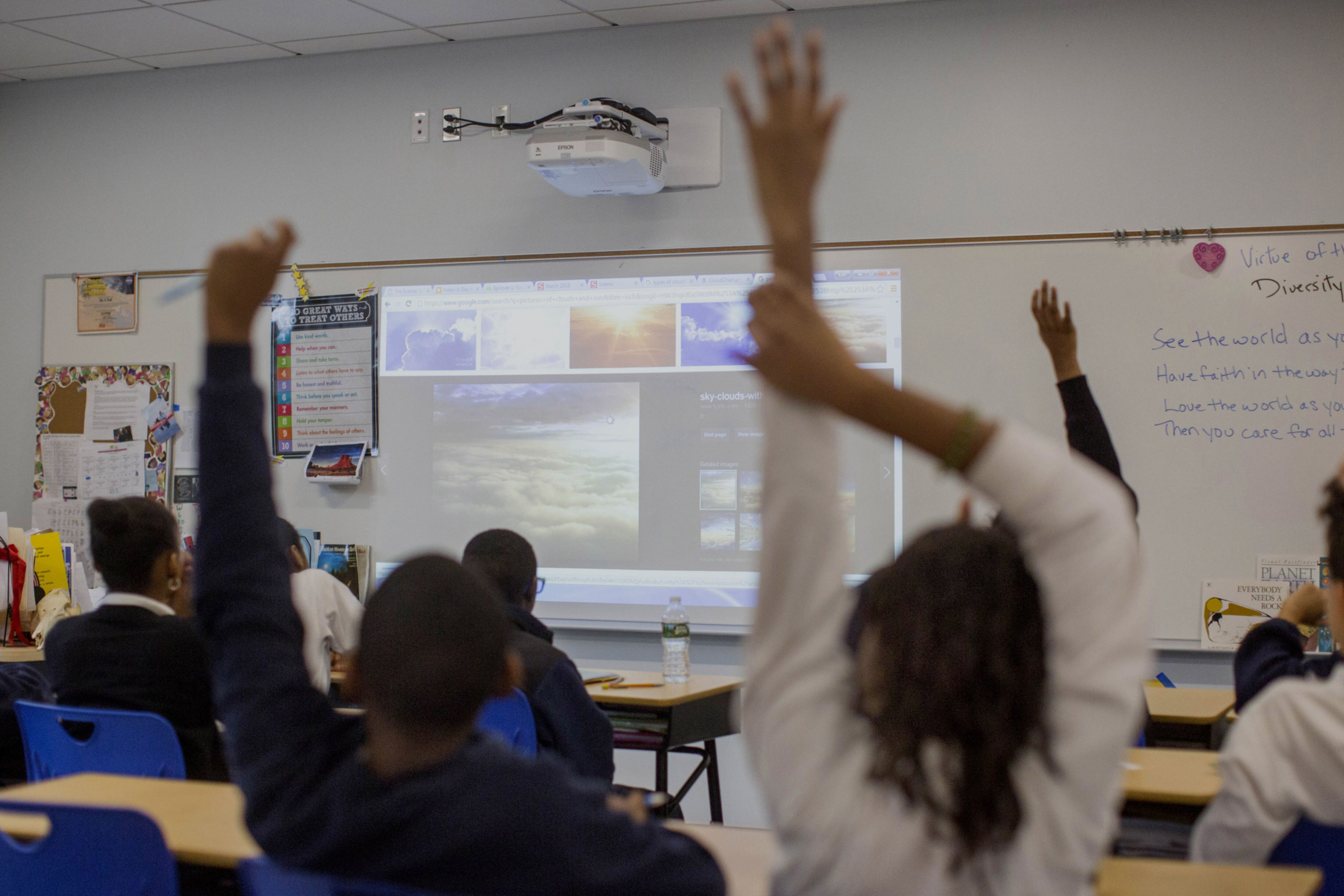
Anjali Sahu, 13, can't leave her home in Sion area of Mumbai after India went into a lockdown to contain the novel coronavirus outbreak. School's shut and exams cancelled but she still spends time brushing up on her lessons and learning new things every day.
Her class teacher at the Brihanmumbai Municipal Corporation school in Mumbai's Bandra East has created a group on social media platform WhatsApp to share new concepts. In the absence of school, the group, called ‘Alexa Friends'. is her gateway to learning.
Anjali, a standard 8 student who aspires to be a banker, uses her mother's smartphone to access the weblinks her teacher shares. “From meditation to quizzes to learning new words, we have everything that keeps us engaged through the day.”

Schools closed over a month earlier than annual summer vacations as the government announced a 21-day lockdown to contain the spread of Covid-19 pandemic. And Anjali is among thousands of students of public and private institutions in Mumbai who are taking lessons online through apps or video sessions to make up for the loss. Hearteningly, public schools seem just as geared to reach students online, as private schools have been in Mumbai. And teachers have had a big role to play in that.

The intent behind the WhatsApp group was to share important articles with students, Pooja Sankhe, Sahu's teacher, told BloombergQuint. “It's only now that I have started sharing homework and activities that will keep students engaged during this difficult time,” Sankhe, who won a national award in 2017 and a state award a year later for introducing Amazon's voice assistant Alexa in classrooms for learning. That helped improve attendance and sparked a trend in other schools.
Sankhe's phone hasn't stopped buzzing. Students keep sharing updates—pictures of them meditating or reciting essays and poems composed by them, she said. “This makes us absolutely sure that students are serious and are participating in all activities with enthusiasm.”
Schools run by Mumbai's civic authority have been using technology to impart education for more than five to six years, according to Mahesh Palkar, education officer for BMC schools. “All our teachers are constantly trained in using platforms like Zoom, Telegram, Twitter, etc.,” he told BloombergQuint. “Although the schools are shut and exams for certain classes have been cancelled, teachers continue to engage with students through WhatsApp and Telegram.”
Students in BMC schools mostly come from low-income families but applications like WhatsApp, Telegram and Google Drive have made it easy to share content through low-cost smartphones. And the education department has its own app.
“Teachers send homework, practice questions, drawings and other assignments via WhatsApp. Students are also trained in using Diksha app (that aids learning),” said Madhukar Bhosale, a BMC schoolteacher who specialises in education data analysis.
All textbooks come with QR codes that must be scanned using the app. Students can then select the chapter they want to study. They can also access old question papers loaded on Google Drive.Madhukar Bhosale, BMC Schoolteacher
Teachers also use Google forms to track students' scores, Bhosale said, adding they make educational videos and share them through WhatsApp. “Some teachers also run educational blogs and YouTube channels. Incredible as it may sound, when it comes to use of technology, our students are as good as those studying in international boards of education,” Bhosale said.
Government-aided and semi-aided schools too are keeping students busy as they remain confined to their homes.
“Though the summer vacation has begun for classes 1-8, we still engage with students to keep them active during this lockdown,” said Priyanka Rajani, principal of Vidyanidhi High School and Junior College of Science, which runs a government-funded Marathi medium school and an unaided English medium school in Juhu area of the city. “By using WhatsApp, we encourage students to participate in various activities. We conduct quizzes for students using Google documents.”
“Students learn to make short videos on informative topics including creating awareness about the new coronavirus,” Rajani said. “Our computer department is helping with a worksheet for classes 1 to 9.”
Private Schools Go Online Too
Several private schools have also switched to daily online classes since they already had the required infrastructure like smart classrooms and online portals with profiles and logins for students and teachers.
Billabong High International School in Andheri allowed its faculty and administrative staff to work from home, Principal Padma Negi told BloombergQuint. “We've been using technology to our advantage from smart classrooms to enterprise resource planning systems,” she said, adding that the shift to online classes wasn't much of a challenge. The ERP systems are generally used in schools to share kids' progress with their parents and manage admissions, among other tasks.
Similarly, Thakur International School Cambridge in suburban Kandivali is using the Google Classroom application for sharing worksheets, presentations and assignments, according to Director and Trustee Karishmma Mangal.
“Revision worksheets and syllabus material are given everyday. E-learning modules are being used to create a sense of classroom routine,” Mangal said.
We're connecting with parents online and through our social media platforms to spread awareness and engage them and students in activities that will help them get through this social distancing phase.Karishmma Mangal, Director, Thakur International School Cambridge
“Apart from internet connectivity and bandwidth issues, we've been successfully conducting online classes,” Mangal said, adding that online classes for grade 9, 10 and A levels began from March 29.
The Dhirubhai Ambani International School, too, went online. “The school converted all classroom material to make it suitable for online teaching and trained its teachers over the last few days,” the school said in a statement. “All the training and preparatory work was done online with teachers participating from their own homes.”

Conducting full-day online classes may not be a viable option for municipal or government-run schools and the regular session may only start when they re-open in June, provided the virus outbreak is contained. Anjali Sahu said she is loving it and will continue her learning on WhatsApp.

-
Extracting Value From Battery Scrap Could Be Challenging For India | The Reason Why

A discarded lithium-ion battery still contains valuable materials such as lithium, nickel and cobalt. These can be recovered and reused. When such batteries are crushed and shredded, they produce a dark powder called black mass.
-
One El Nino, India Can Handle. Two Could Break The Granary
India's grain stocks can absorb one bad year, but a second El Nino could drain the buffer in two to three years, economists say.
-
India's Troika Of Good Luck | Joining The Dots
As Jensen Huang's exit drags Nvidia down, a cooling AI trade and resilient earnings have revived investor interest in India. A likely RBI rate hike looms.
-
Talking Points This Week: Leadership Shock At Nvidia, Earnings Strength, And The Fog Over Hormuz
The Anthropic IPO pricing and first trading day, Nvidia's upcoming earnings, and any fresh signals from Iran will set the tone for the following week.
-
Signature Play: The Classic Cocktail Is Dead. Or Is It?
Classic cocktails are disappearing from India's cocktail menus. But they're still being ordered, taught to bartenders and borrowed from. So, who's really having the last drink?
-
A New Samvat Wishlist: Inclusive Prosperity And Human Development
India has strengthened its economic foundations through infrastructure, digital access and enterprise. Its next growth chapter must deepen productivity, create better livelihoods and widen participation in prosperity.
-
Love, Sex Aur Dhokha: The Audacious Plot To Spy On Jensen Huang
A Taipei dinner, a Singapore chip buyer and a suspected Chinese asset: inside the alleged spy operation that got close to NVIDIA's Jensen Huang.
-
Ten Things I Learnt This Samvat
Patience can be a trap. Cheap stocks can stay cheap. Leverage can wipe you out. What did Samvat 2082 teach us? Niraj Shah writes on 10 lessons from the year gone by.
-
Talking Points This Week: Tech Nerves, FII Buying, And A Faraway Banking Shock
The global markets are not shining this Diwali. The exception in the large markets is, India.
-
Midterm Rally Lasted A Day. The Hard Reality Of A Divided US May Last Two Years | Opinion
Between a contested AI boom, a debt ceiling that arrives in 2027 and a president with every incentive to act alone, the next two years may prove more volatile than the first day's rally suggests.









