IndusInd Bank Q4 Results: Loss Widens As Lender Fights Additional Discrepancies
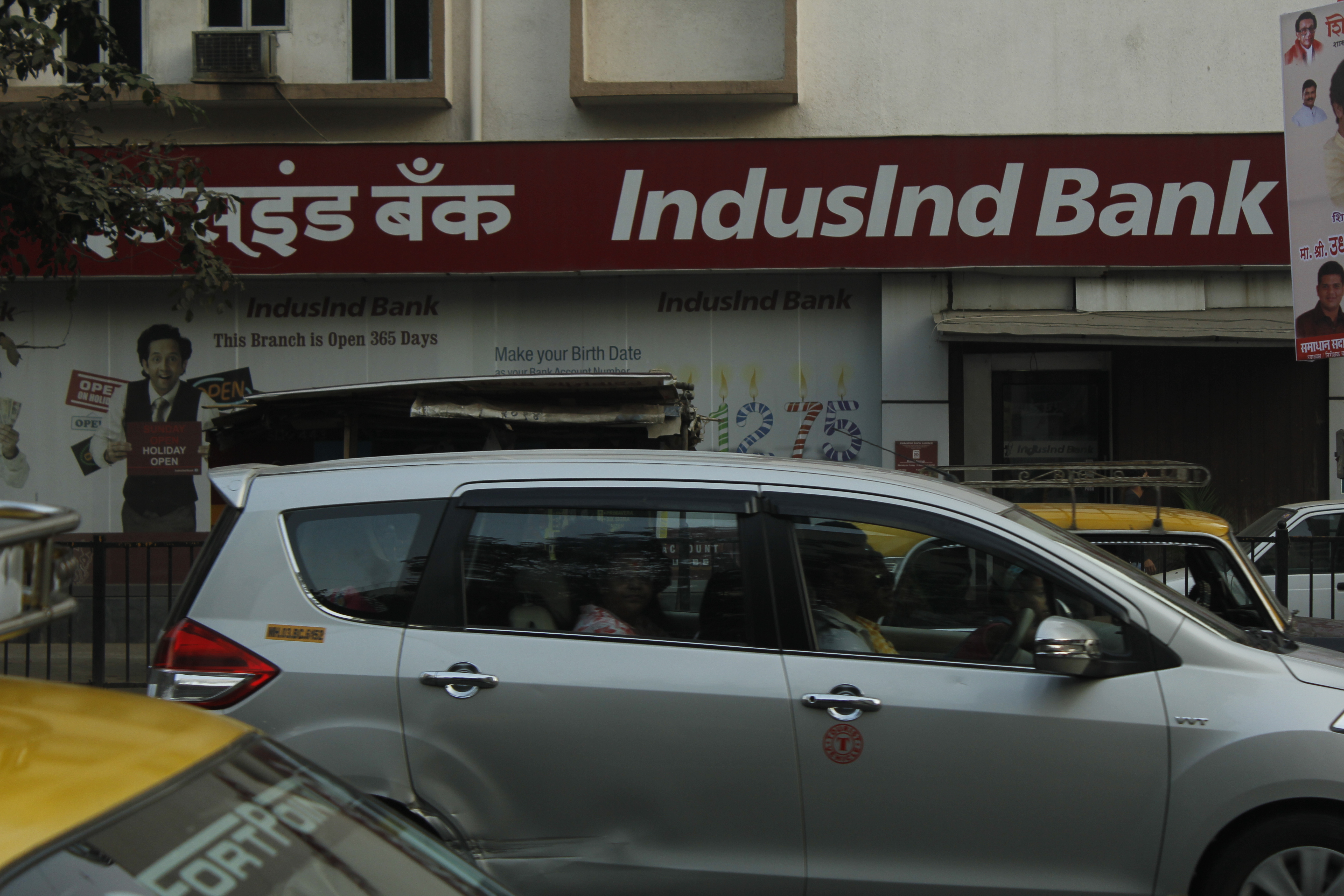
IndusInd Bank's net loss widened more than estimated in the January-March quarter, as the private lender disclosed that it is dealing with additional accounting discrepancies.
The bank posted a consolidated net loss of Rs 2,329 crore for the quarter under review, as against a net profit of Rs 2,349 crore a year ago.
Analysts polled by Bloomberg had estimated the bank to report a net loss of Rs 410.85 crore. For the quarter ended December, the bottomline had stood at Rs 1,402 crore.
In the post-earnings analysts call, the bank disclosed that it is dealing with more accounting discrepancies, other than the ones that came to the fore earlier. This includes Rs 173 crore incorrectly recorded in the microfinance portfolio.
"...the Board suspects the occurrence of fraud against the Bank and the involvement therein of certain employees having a significant role in the accounting and financial reporting of the Bank," it said in an exchange filing.
The accounting issues in the bank's derivatives portfolio, which were disclosed in March, were expected to have an impact of Rs 1,960 crore on its balance sheet for fiscal 2025. Also, the two more accounting discrepancies in interest income—discovered in the internal audits last week—worth Rs 674 crore and Rs 595 crore also reflected in the March quarter results.
According to the bank's note of accounts, the investigation into derivatives portfolio indicated that the bank entered several internal trades between financial years 2015-16 and 2023-24. Accounting followed in these transactions were improper and was not in consonance with accounting guidelines.
It also said that there were unsubstantiated balances in other assets that do not have any impact on fiscal 2025 results. Further, the review found out incorrect interest and fee income in MFI portfolio to have Rs 422.56-crore financial impact.
This has come as the bank found misclassification of certain microfinance loans as standard and corrected classification resulted in additional NPA of Rs 1,885.19 crore.
The bank said that it has made 95% provisions against these loans and this resulted in an adverse impact of Rs 1,969.2 crore.
The investigations and reviews found involvement of senior officials and former managerial persons in overriding key internal controls.
The bank has also found concealment from board and statutory auditors and has reason to believe that suspected offences involving frauds may have been committed.
As a direct result of these various investigations and accounting issues, IndusInd Bank Managing Director and Chief Executive Officer Sumanth Kathpalia and Deputy CEO Arun Khuranna announced their immediate resignations in April.
The lender's Chief Financial Officer Gobind Jain had resigned in January, just days before reporting the December quarter results.
Post the earnings call, Chairman Sunil Mehta said that the bank has taken several measures to understand the root cause of the identified irregularities and has taken corrective actions as well as fixed accountability.
Statutory auditors have done substantive checks with wider sample sizes to analyse any anomalies in financial reporting and given an unqualified opinion. Mehta also said that a conservative approach has been adopted in financial reporting to ensure the accuracy and robustness of the financial statements.
Furthermore, the board is also in the process of taking necessary steps to assess roles and responsibilities and fixing staff accountability as per the extant laws and internal code of conduct in all the identified irregularities.
In the March quarter, provisions of the bank rose to Rs 2,522 crore from Rs 950 crore a year ago. Amid continuous stress in the microfinance portfolio, asset quality of the bank worsened.
The gross non-performing assets ratio of the bank rose to 3.13% at the end of March as against 2.25% a quarter ago. Net NPA ratio also increased to 0.95% from 0.68% in the prior quarter.
The bank's net interest income fell 43% on-year to Rs 3,048 crore, lower than Rs 5,030 crore polled by Bloomberg. Consequently, the bank's net interest margin narrowed to 2.25% from 3.96% a quarter ago.
The bank's loan book grew 1% on-year to Rs 3.45 lakh crore during the quarter under review. The MFI segment continued to contribute 9% to the bank's overall loan book at Rs 30,909 crore. Deposits grew nearly 7% on-year to Rs 4.10 lakh crore.
Before the quarterly results were declared, shares of IndusInd Bank settled 1.39% lower at Rs 771.1 apiece on the BSE, compared to 0.51% rise in the benchmark Sensex.

-
One Battle After Another: India's Corporate Dynasties Battle For Control

2026 could go down as Corporate India's year of succession wars, governance battles and family fault lines.
-
Rs 50-Lakh Gold In Bank Locker, Rs 3 Lakh Of Protection: The Gap Most Families Don't Know About
The RBI ties a bank's liability to the annual locker rent and families who want to insure their jewellery face a separate question about how to prove what was inside.
-
The More Food Turns Into Fuel, The Harder It Is To Read Agricultural Markets | The Reason Why
A policy designed to reduce dependence on imported fuel can create new pressures elsewhere in the food economy.
-
Your iPhone Costs 12 Grams Of Gold, A Car About 100. What Does Your Life Weigh?
Measured in rupees, almost everything looks more expensive than it did a generation ago. Measured in grams of gold, a lot of it has become cheaper.
-
Gold Is Rs 22,000 Cheaper Than A Month Ago. Should You Buy Amid The Wedding Season?
Gold's potential slide to $3,500 could save around Rs 4,700 per 10 grams, but a soft inflation print could just as easily push prices back up. One way to split the risk is to buy in parts, some now and the rest after the Fed's Dec. 9 decision.
-
AI Agents Are Gaining Power. Who Governs Them?
Artificial intelligence agents promise to transform productivity by moving machines from assisting decisions to executing them. But as organisations delegate greater authority to these AI-agents, they must first establish who controls that authority and who remains accountable when things go wrong.
-
Why Swapping Your Old Gold Can Trigger A Rs 5 Lakh Tax Bill, And How You Can Avoid It Legally
Swapping old gold for new is taxed as a sale and a fresh purchase. Getting your own gold remade can cut most of that bill, though it has its own costs.
-
The AI Trade is Done. The Real Opportunity for Investors Starts in 2027 | Unhedged Position
As pureplay AI stocks plunge and circular, capex-led financing unwinds, 2027 is set to be a year of reckoning for AI companies. Yet the bust clears the way for a better opportunity for investors in 2027 -- shifting the spotlight from AI builders to the companies using AI.
-
Leadership As Mission: Why The Age Of AI Demands More Human Leadership
Debjani Ghosh examines how AI is changing leadership, arguing that its success must be measured by its impact on people and the accountability of those guiding its use.
-
We May Need Another Tukaram Mundhe To Fight Air Pollution | The Reason Why
Developers may install basic measures such as sprinklers and green nets, resume work, and continue violating rules when this equipment stops working.









