Bangladesh PM To Extend Her Rule In Polls Shunned By Rivals
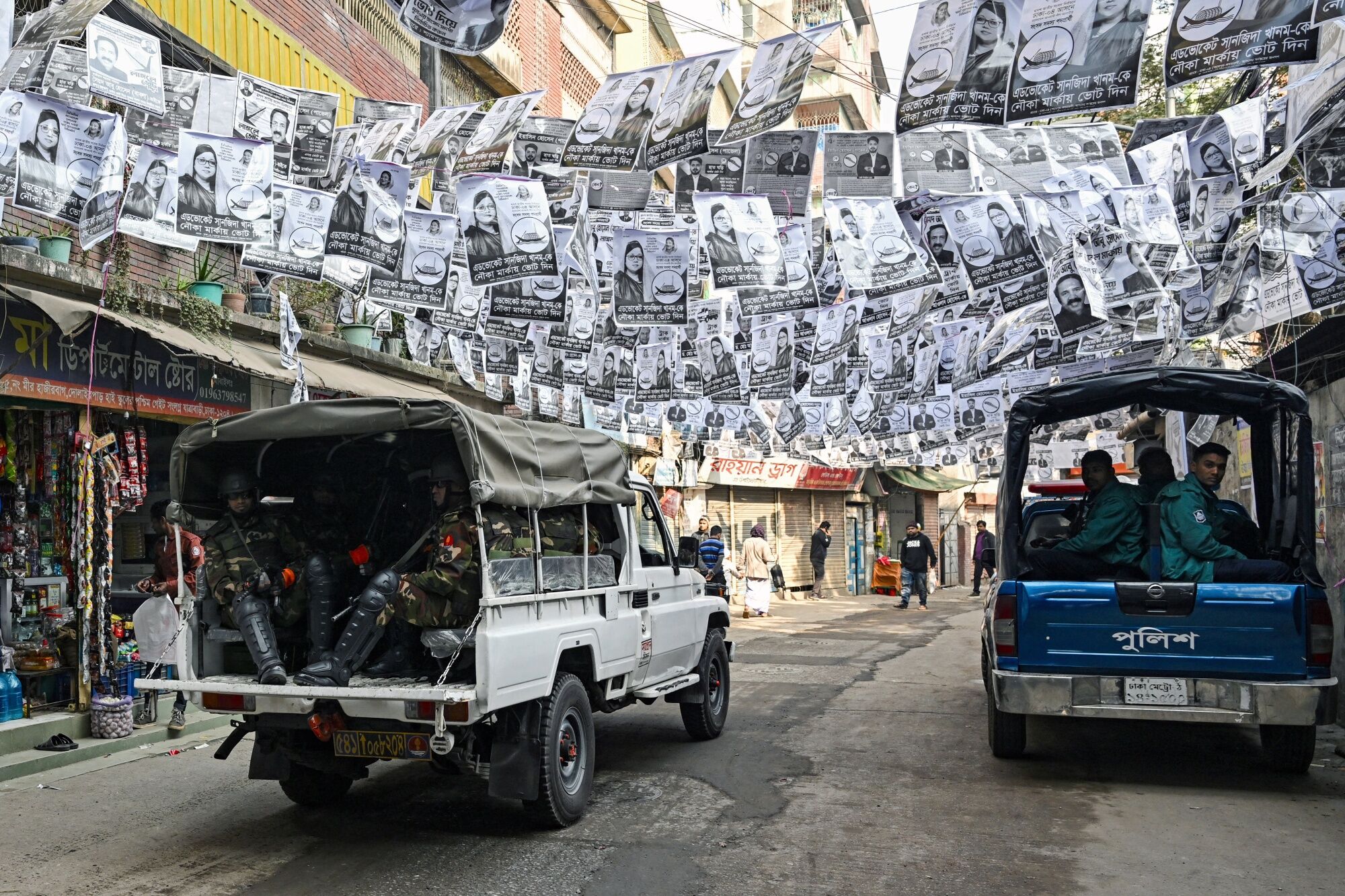
(Bloomberg) -- Bangladesh Prime Minister Sheikh Hasina is on course to extend her rule and retain her title as the world's longest serving female head of government after polling closed in an election boycotted by her rivals and voters.
Hasina's Awami League Party is expected to take the lead when early results trickle in and the Election Commission has put the turnout at about 40%. It's a sharp drop from the 80% participation in polls in 2018, as voters heeded a campaign by the opposition Bangladesh Nationalist Party to shun the election and draw attention to the sweeping crackdown her government carried out in the run up to the polls.
“We have not received major complaints of irregularities, except some,” Chief Election Commissioner Kazi Habibul Awal told reporters in the capital Dhaka.
The vote was the culmination of a monthlong campaign beset by daily street protests, the jailing of Nobel Peace Prize winner Muhammad Yunus and viral videos of ruling party leaders pushing voters to cast ballots or risk losing government benefits.
Dhaka was deserted with heavy security around voting centers. There were few reports of clashes between opposition supporters and police officials although a bomb went off at a polling station in the capital, injuring four people.
Hasina, 76, asked voters to exercise their democratic rights and support the development of the South Asian country as she cast her ballot earlier in the day.
“I'm determined to make sure that democracy continues,” Hasina, flanked by her daughter and sister, told reporters. “Without democracy, development work can't continue.”
Hasina, who is on course for a fourth straight term in power, has overseen one of the fastest-growing economies in the world and lifted millions out of poverty as part of her development agenda — achievements often overshadowed by her turn to authoritarianism.
Still, the economy is struggling with dollar shortages, which has prompted Moody's Investors Service and others to downgrade Bangladesh's credit ratings. The government was earlier forced to turn to the International Monetary Fund for $4.7 billion in emergency loans after the pandemic and soaring commodity prices depleted foreign exchange reserves.
About 120 million people were eligible to vote for 300 of the 350 seats in parliament. In recent weeks, prominent leaders from Hasina's Awami League party have been shown on social media video clips telling voters that they risked losing their benefits if they didn't take part in the elections.
The main opposition Bangladesh Nationalist Party has boycotted the national vote in response to Hasina refusing to step aside and allowing a caretaker government to run the poll. The dispute has led to street battles between the opposition group, security forces and supporters of Awami League.
On the eve of the national vote BNP Senior Joint Secretary General Ruhul Kabir Rizvi called for voters to boycott the election to mark the “downfall” of Hasina's government, according to the Daily Star newspaper. The Awami League is targeting 50% turnout and has allowed some of its leaders to contest as independents to spur voter interest, the paper reported.
Police arrested several opposition leaders in the months before the election. Hasina's main rival and BNP leader Khaleda Zia faces suspended jail sentences on graft charges that her supporters say are trumped up.
Human Rights Watch said in a November report that almost 10,000 opposition activists have been arrested since a planned rally by the BNP on Oct. 28. Nobel winner Yunus was given a six-month jail sentence by a Dhaka court last week in a case his supporters say was politically motivated.
--With assistance from Sankalp Phartiyal.
(Updates throughout)
More stories like this are available on bloomberg.com
©2024 Bloomberg L.P.

-
Getting To Work Costs Women More | The Reason Why

It is not just about women paying more than men. It is about women paying much more in cities than in villages.
-
AI Bias In Investing Cannot Be Eliminated, But It Can Be Governed
Framing is a particularly important example as identical financial information presented in terms of gains rather than losses can lead an LLM to reach a different assessment.
-
Joining The Dots | Dark Skies, Steady Diya: Why Hope Holds This Diwali
With war, a weak rupee and foreign outflows weighing on sentiment, policymakers at the NDTV World Summit and market veterans at NDTV Profit Ignite: Diwali Edition offered the same advice: stay invested and filter out the noise.
-
The Curious Case of Equitas Small Finance Bank And A CEO Who Quit For Stock
PN Vasudevan believes persistent investor concerns over a perceived conflict of interest had become a governance overhang on Equitas Small Finance Bank's stock, even as the lender improved profitability and asset quality.
-
Talking Points This Week: AI Cash Burn, A Tiger Comeback And An India That Still Finds Its Own Path
India is not immune to higher oil or tighter global liquidity, yet its earnings base is broader, its domestic policy levers are still available.
-
Foreign Investors Own Half Of HDFC Bank and ICICI Bank. An LTCG Cut Could Matter Most Here
Foreign portfolio investors have US$115 billion parked in HDFC Bank, ICICI Bank. If the government cuts long-term capital gains tax, Jefferies says returning foreign money could land here first.
-
'Never Seen This Level Of Negativity': Sandeep Tandon Says The Next Rally May Be Closer Than You Think
Veteran investor Sandeep Tandon says foreign selling is easing, large-caps are due a comeback and mid-caps are crowded, while he turns positive on gold, power and pharma this Diwali.
-
Indians Stay With Family, Not In Hotels | The Reason Why
India still lacks enough clean, reliable and affordable hotels for budget-conscious travellers.
-
The Economic Imperative: Analysing The Material Driving Force Behind India-Canada Strategic Reset
This economic complementarity is further reinforced by deep institutional investment ties and talent mobility, which form the bedrock of the bilateral framework.
-
Medicine Pricing: Where Must Profit Stop?
India must confront excessive margins, hidden incentives and regulatory gaps that threaten the integrity of medicine.










