My Husband’s Music
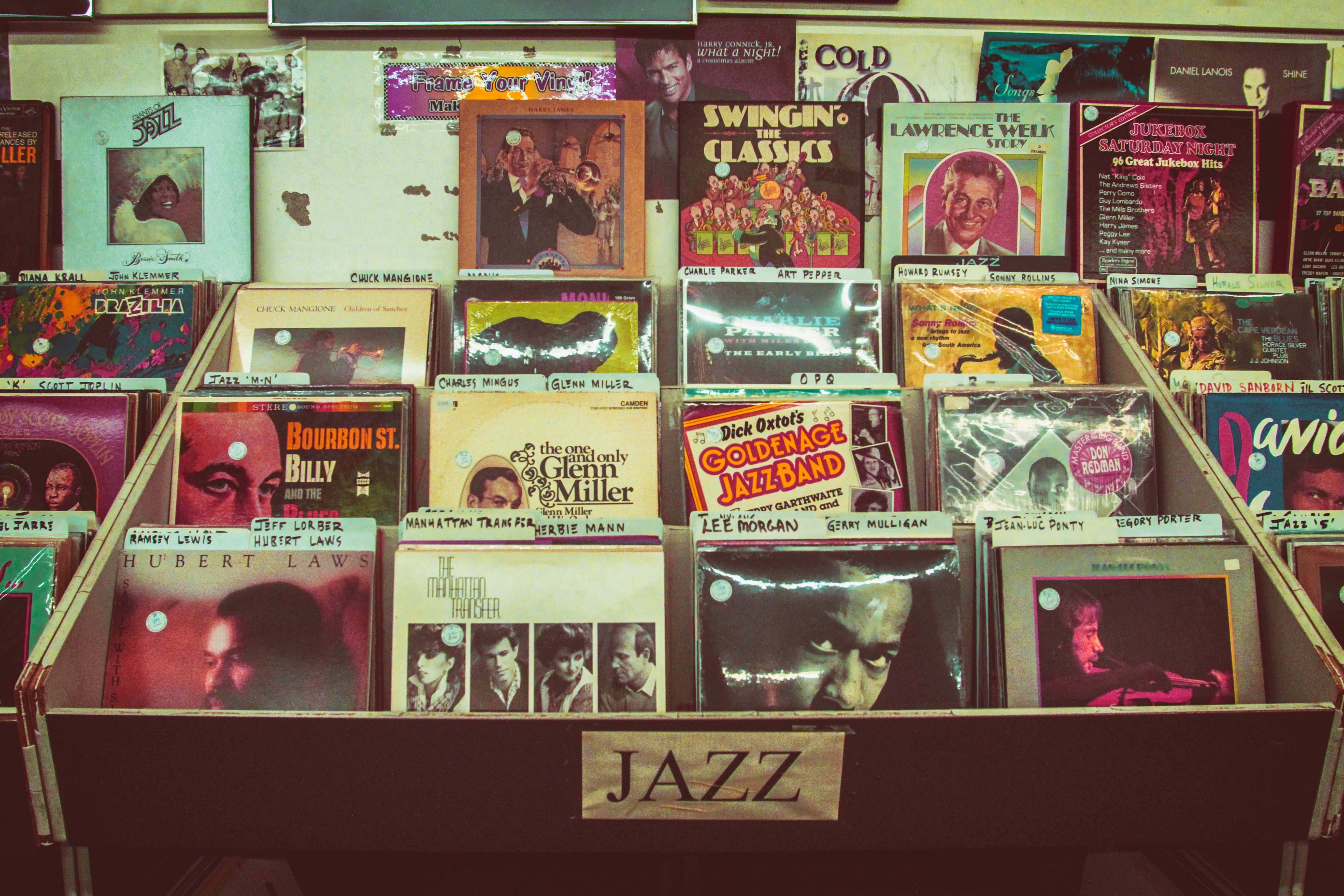
One of the best things about the Harry Bosch TV series franchise has always been the jazz music. Bosch's creator Michael Connelly has often spoken about it. Jazz was his father's music. Like we often do with parental preferences, Connelly rejected this music for a while before embracing it. When he was writing his first Bosch book, his father had terminal cancer. “So, it was my nod to him,” he told Hollywood Reporter recently. “I gave his music to Harry Bosch.”
As I watch Bosch Legacy, my playlist is filling up with new listening options referenced from the latest season such as King Curtis: Live at Fillmore West and Miles Mosley. I just discovered that Connelly has a music page on his website and it links to a Spotify playlist. I'm listening to it as I write this.

I was never a jazz person. Even as my classmates devoured the rich pop music scene of the 1980s, I stuck my ear near the microphone of a transistor turned low so I wouldn't disturb my younger brother and I put myself to bed every night listening to Bela Ke Phool, a late night radio show of vintage songs. I had zero interest in the two Georges that defined the school-going decade for my contemporaries—George Michael and Boy George.
My father introduced me to Mukesh, and from there I went down the magical rabbit hole of Hindi cinema's Golden Era. S.D. Burman, Manna Dey, Hemant Kumar, Kishore Kumar, Mohammed Rafi, Talat Mahmood, Asha Bhosle, Shamshad Begum, Suraiya, Geeta Dutt, Noorjehan and all the lyricists and composers who worked alongside them. How could I find the time for any other genre of music when I was drifting dreamily through Lata Mangeshkar's repertoire of at least 27,000 songs in 36 languages?
In Lata Mangeshkar…In Her Own Voice, Lata tells author Nasreen Munni Kabir how Noorjehan often called her from Karachi and asked her to sing Dheere se aaja from the 1951 film Albela. Telephone operators had a field day eavesdropping on calls between these two musical Godzillas. I'll never forget the time I watched a matinee rerun of Dosti in an almost empty, now defunct south Bombay theatre and singing along to the songs, sobbing my way through the film. When I eventually embraced western music, I chose to shower what was left of my love on rock.
My introduction to jazz was only much later when I studied in Philadelphia, the home of many jazz greats I had never heard of back then, such as Billie Holiday, John Coltrane and Dizzie Gillespie. I went to jazz cafes for the ‘scene' rather than the music. It was only much later when I met my husband for the first time and he presented me with a Miles Davis CD that I was really forced to look at jazz seriously.
Another golden age lay ahead of me, impatiently waiting for me to dive in. The men were great but it was the women whose sorrowful songs, hard lives and contribution to the American civil rights movement reeled me in. “You don't have to live next to me, Just give me my equality, Everybody knows about Mississippi, Everybody knows about Alabama, Everybody knows about Mississippi, goddamn.” Nina Simone burned a hole in my heart. As the husband puts it, jazz is despair and soul-searching, joy that comes from a dark place.
Soon after, I discovered the connection between jazz and Hindi cinema. I realised I had grown up with Chic Chocolate's swing hits such as Gore Gore and Shola Jo Bhadke. In his brilliant book Taj Mahal Foxtrot, on the story of Bombay's Jazz Age, Naresh Fernandes writes about how this music was depicted.
“Swing came to signify a bold modernity and often provided the backdrop for a plot in which young people fall in love without regard for the conventional arranged marriages their parents wanted to set up for them.” It was also used to show the bad influence of western culture on our great Indian values.
I learned that many of the men who made up the orchestras of the who's who of the Golden Era of Hindi music were Goan swing musicians. Fernandes writes that Frank Fernand, who dreamt of giving jazz an Indian flavour, released his own arrangement of Dheere se aaja, the same song that my favourite ladies had sung over the Indo-Pak telephone line.
My two worlds had come together. My husband's music and my music had a shared history. My love for jazz could only deepen.
Priya Ramani is a Bengaluru-based journalist and is on the editorial board of Article-14.com.
The views expressed here are those of the author and do not necessarily represent the views of BQ Prime or its editorial team.

-
'Never Seen This Level Of Negativity': Sandeep Tandon Says The Next Rally May Be Closer Than You Think

Veteran investor Sandeep Tandon says foreign selling is easing, large-caps are due a comeback and mid-caps are crowded, while he turns positive on gold, power and pharma this Diwali.
-
Indians Stay With Family, Not In Hotels | The Reason Why
India still lacks enough clean, reliable and affordable hotels for budget-conscious travellers.
-
The Economic Imperative: Analysing The Material Driving Force Behind India-Canada Strategic Reset
This economic complementarity is further reinforced by deep institutional investment ties and talent mobility, which form the bedrock of the bilateral framework.
-
Medicine Pricing: Where Must Profit Stop?
India must confront excessive margins, hidden incentives and regulatory gaps that threaten the integrity of medicine.
-
Why Amazon And Flipkart Are Struggling To Beat Meesho In India's Smaller Cities
With 274 million users and lowest-cost logistics, Meesho is defending its value commerce crown against giants like Amazon and Flipkart.
-
High US Salaries, No Green Card Certainty: The Financial Calculation Facing Indian H-1B Families
The suspension of PERM processing at eight technology employers does not cancel existing H-1B visas. What it does is force a question many Indian families have been avoiding: is the US salary worth tying your career and family plans to one employer?
-
Swiggy vs Eternal: Food Delivery's Two Rivals Are No Longer In The Same Race
Eternal is building a private AI assistant, dark.ai. Swiggy is still working out how to make Instamart pay, with an operating loss of Rs 895 crore in the July-September quarter while Blinkit stayed profitable.
-
Where You Live Shapes How You Get To Work | The Reason Why
Two-wheelers are the most popular way to get to work in India, accounting for nearly 43% of workplace commutes.
-
Unhedged Position: Can India See An Indonesia-Style Time Correction?
The Nifty is trading below levels it first clocked in 2024. Is there, then, as I have suggested in the headline, potential that the current time correction drags on painfully for the next three-five, even ten years?
-
Navigating Friction And Energy Realities: An Analysis Of Marco Rubio's October Visit To India
Occurring at a critical juncture marked by stalled trade negotiations and escalating geopolitical pressures over global energy supplies, the visit offers a profound window into modern US-India relations.










