Can Inter-State Migrants Get The Benefit Of Reservation?
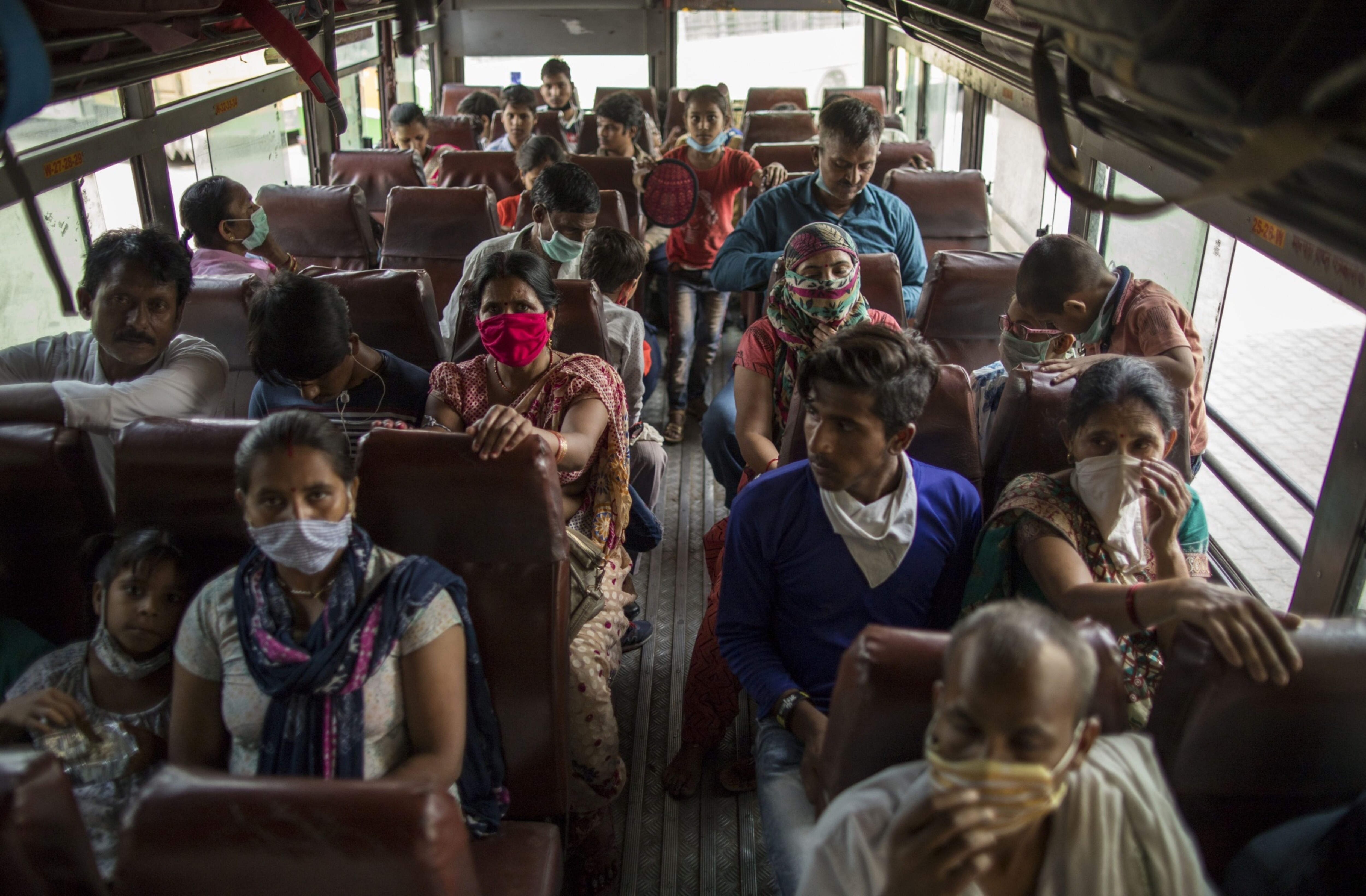
Under Articles 15(4)-(5) and 16(4) of the Constitution, the government has the power to reserve seats in educational institutions and government jobs for Scheduled Castes and Scheduled Tribes, apart from other backward communities. However, the list of SCs and STs who are eligible for reservations is state-specific. In other words, a community that is on the list of SCs in Bihar may not be on the list of SCs in Maharashtra. What happens, then, when an SC or ST person in one state migrates to another—is he or she entitled to apply for a reserved seat in the latter state? The answer that has been developed by the Supreme Court to this question is quite interesting.

Hutton's Census
According to the 2011 census, there were 201.3 million people from Scheduled Castes (16.6% of India's population) and 104.5 million from Scheduled Tribes (8.6% of India's population) in India – more than the estimated population of the United Kingdom, France, Germany, and Spain combined. As Winston Churchill said in the House of Commons in 1946, “[w]hen one speaks of a community as large as [this], the word ‘minority' loses much of its significance.” Articles 341 and 342 of the Constitution provide that India's President has to prepare a list of SCs and STs. It is only the groups set out in that list—a list which can thereafter be modified by Parliament alone—who can qualify for reservations as SCs and STs.
The list of SCs and STs is different for each state because the disabilities faced by these communities vary from region to region in India.
For instance, SCs are typically those groups that have historically suffered from the stigma of untouchability. In the colonial period, they were referred to as the “depressed classes”. In 1931, the census report prepared by JH Hutton found that while a list of depressed classes could be prepared for an area, it could not be drawn up for “India as a whole”. This was because a community might have been considered “untouchable” in one region in a province, but it may not have been thought of as such in another region in the same province. As Hutton concluded in his census report, “it certainly is not the case that a caste which is depressed in one part of India is depressed everywhere.”
The No-Migration Rule
However, this has generated a unique set of constitutional difficulties in independent India. What happens when an SC or ST person migrates from one state to another – does she get the benefit of reservations even in the state to which she has migrated? The answer depends on who controls the seat—the central government or state government. The rule of thumb is that if the job or college seat is under the power of the central government, then migration makes no difference to a person's caste status. The Supreme Court has said so in cases like Bir Singh v. Delhi Jal Board (2018) and Subhash Chandra v. Delhi Subordinate Services Selection Board (2009). In other words, if an SC person in, say, Maharashtra wants to apply for a central government job in Delhi, or for admission into an engineering college controlled by the central government in Bihar, then she can apply for a reserved seat. This may be despite the fact that she may not be on the list of SCs in Delhi or Bihar.
However, if the job or college is under the control of the state government, then migration results in loss of status. This could arise in three situations.
- The first could be a scenario in which an SC or ST person migrates from State A to State B and her caste or tribe is only on the list in State A.
- Secondly, there could also be a situation where the caste of this person is on the list in both State A and State B. In neither of these cases is the migrant entitled to the benefit of reservations. This was the Supreme Court's conclusion in cases like Marri Chandra Shekhar Rao v. Dean (1990) and Action Committee v. Union of India (1994). In other words, an SC person belonging to “Caste X” in Maharashtra cannot apply under the reserved category for a job or college seat controlled by the Uttar Pradesh government, whether or not “Caste X” is on the list of SCs in Uttar Pradesh.
- Thirdly, a person who migrates from State A to State B, but whose caste is on the SC list in State B but not State A, will probably not get the benefit of SC status by migrating to State B.
The idea behind the no-migration-rule is that social disabilities are not the same everywhere. A caste or community might suffer from a very severe social handicap in State A, but may not have any such problems in State B. An SC person who migrates from State A to State B may not, therefore, face the same social stigma that she would have faced in State A for belonging to her caste. Further, allowing outsiders to take up reserved seats in State B will deprive the reserved communities in State B that suffer from serious social disabilities.
Also Read: The Math Behind Reservation in Government Jobs
Does Migration Extinguish The Past?
The no-migration-rule, however, may sometimes yield unfair results. As the Supreme Court has itself pointed out in a case, an SC or ST person might have migrated to another state for work, and might be suffering from the stigma of untouchability there—the law, as it stands, does not protect her. When it comes to migration and loss of caste status, the distinction drawn by the Supreme Court between the central government and state government is quite artificial.
An SC person in Tamil Nadu can apply under the reserved category for a central government job in Bihar despite the fact that her caste is not considered an SC in Bihar. Yet, she would be disqualified from applying for a comparable job in the state government in Bihar. An SC girl in Tamil Nadu has suffered substantial social disabilities. She has been brought up in an environment of deprivation and discrimination. The disadvantages with which she grew up do not magically cease to exist upon her migration to another state, even though her caste may not be recognised as an SC there. There is no reason why she should be considered an SC for the central government, but a general category candidate for the state government. This is even more so in cases where the migrant's caste or tribe is recognised as an SC or ST in both states. This policy favours domestic candidates over migrants and discourages inter-state migration.
Also Read: Is There A Fundamental Right To Reservations?
Abhinav Chandrachud is an advocate at the Bombay High Court and the author of ‘Republic of Religion: The Rise and Fall of Colonial Secularism in India' (Penguin 2020).
The views expressed here are those of the author and do not necessarily represent the views of BloombergQuint or its editorial team.

-
Why Swapping Your Old Gold Can Trigger A Rs 5 Lakh Tax Bill, And How You Can Avoid It Legally

Swapping old gold for new is taxed as a sale and a fresh purchase. Getting your own gold remade can cut most of that bill, though it has its own costs.
-
The AI Trade is Done. The Real Opportunity for Investors Starts in 2027 | Unhedged Position
As pureplay AI stocks plunge and circular, capex-led financing unwinds, 2027 is set to be a year of reckoning for AI companies. Yet the bust clears the way for a better opportunity for investors in 2027 -- shifting the spotlight from AI builders to the companies using AI.
-
Leadership As Mission: Why The Age Of AI Demands More Human Leadership
Debjani Ghosh examines how AI is changing leadership, arguing that its success must be measured by its impact on people and the accountability of those guiding its use.
-
We May Need Another Tukaram Mundhe To Fight Air Pollution | The Reason Why
Developers may install basic measures such as sprinklers and green nets, resume work, and continue violating rules when this equipment stops working.
-
Extracting Value From Battery Scrap Could Be Challenging For India | The Reason Why
A discarded lithium-ion battery still contains valuable materials such as lithium, nickel and cobalt. These can be recovered and reused. When such batteries are crushed and shredded, they produce a dark powder called black mass.
-
One El Nino, India Can Handle. Two Could Break The Granary
India's grain stocks can absorb one bad year, but a second El Nino could drain the buffer in two to three years, economists say.
-
India's Troika Of Good Luck | Joining The Dots
As Jensen Huang's exit drags Nvidia down, a cooling AI trade and resilient earnings have revived investor interest in India. A likely RBI rate hike looms.
-
Talking Points This Week: Leadership Shock At Nvidia, Earnings Strength, And The Fog Over Hormuz
The Anthropic IPO pricing and first trading day, Nvidia's upcoming earnings, and any fresh signals from Iran will set the tone for the following week.
-
Signature Play: The Classic Cocktail Is Dead. Or Is It?
Classic cocktails are disappearing from India's cocktail menus. But they're still being ordered, taught to bartenders and borrowed from. So, who's really having the last drink?
-
A New Samvat Wishlist: Inclusive Prosperity And Human Development
India has strengthened its economic foundations through infrastructure, digital access and enterprise. Its next growth chapter must deepen productivity, create better livelihoods and widen participation in prosperity.









