The Goddess Irony: Nine Nights of Reverence, 356 Days of Violence
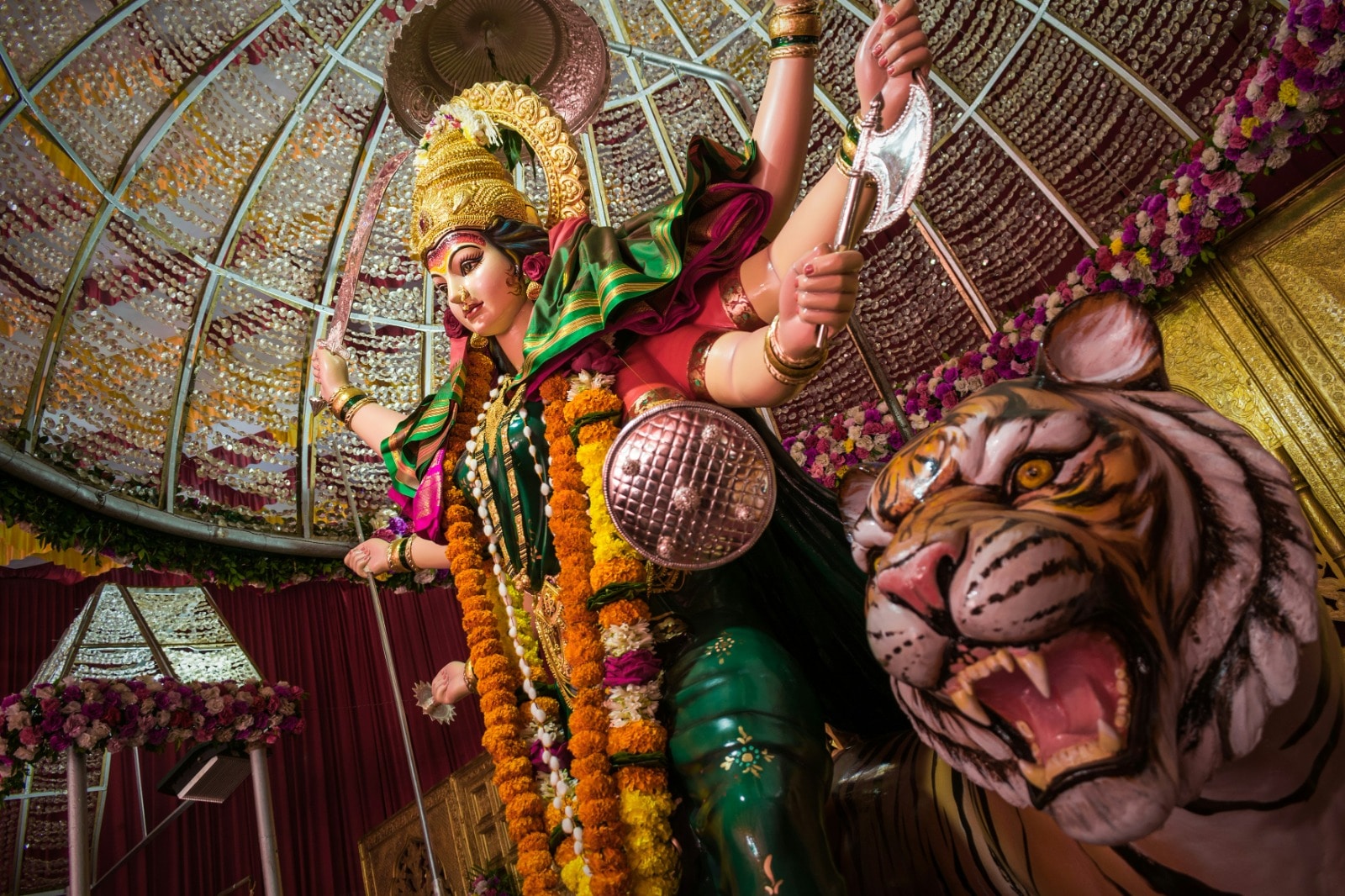
Every autumn, India celebrates Navratri, worshipping the goddess in her many forms – Durga, Kali, Lakshmi, Saraswati. We sing hymns to her power, we bow before her idols, and we perform Kanya Pujan, washing the feet of young girls in a symbolic act of reverence. Politicians and public figures remind us that women are “shakti,” the source of creation and strength.
And yet, when the nine nights of worship end, the goddess returns to her pedestal while real women step back into a world that has little room for reverence.
India recorded 4.48 lakh crimes against women in 2023, up slightly from 4.45 lakh in 2022 and 4.28 lakh in 2021, according to the National Crime Record Bureau, which often released with a significant time lag. This amounts to a crime rate of 66.2 incidents per lakh women (based on a projected female population of 677 million). While the charge-sheeting rate stood at 77.6%, court pendency remains overwhelming.
Even these numbers understate the crisis. In August 2024, a postgraduate doctor at R. G. Kar Medical College in Kolkata was raped and murdered inside a seminar room- a case that sparked protests across the city. In Noida, 26-year-old Nikki Bhati was allegedly burnt to death in her matrimonial home in August 2025 amid dowry disputes, reigniting national outrage over dowry deaths. And just last week, during Navratri festivities in Maharashtra, a five-year-old girl in Akola was hospitalized in the ICU after being raped by her stepfather while her mother was away at Garba. Each of these cases is a chilling reminder that the threat is not distant, but woven into India's everyday life.
The Acid of Patriarchy
Few crimes illustrate gendered violence as cruelly as acid attacks. While numbers are lower than other forms of violence, their impact is catastrophic. Survivors are disfigured, blinded, and ostracized – punished, often, for rejecting advances or asserting independence. Despite a Supreme Court ban on the unregulated sale of acid, loopholes and enforcement failures keep it accessible. The persistence of such attacks underlines how far the state still has to go in protecting women's most basic right: the right to live without fear.
Missing Daughters
The goddess irony extends to the womb. While we extol Durga, Saraswati, and Lakshmi, the preference for sons has left millions of daughters “missing.” The sex ratio at birth in states such as Goa (838 girls per 1,000 boys) and Himachal Pradesh (875) remains deeply skewed, pointing to continuing sex-selective abortions. Such demographic imbalances have long-term social consequences: rising trafficking, early marriage, and shrinking agency for women.
Ritual vs. Reality
To be clear, festivals like Navratri are not the problem. They hold cultural and spiritual value, reminding us of ideals of strength and justice. The problem arises when ritual substitutes for responsibility. Worshipping the goddess during nine nights while silencing women for the rest of the year is not devotion, it is hypocrisy.
Lighting lamps for Durga but denying daughters education is hypocrisy. Feeding little girls during kanya pujan but tolerating child marriage is hypocrisy. Bowing to an idol but ignoring domestic abuse next door is hypocrisy.
From Symbol to Substance
True devotion to women requires structural change, not symbolic ritual. It requires stern enforcement of laws on dowry, acid sale, sexual harassment, and domestic violence; faster trials and reduced pendency rates for cases involving crimes against women. But most importantly, cultural change, beginning with educating boys that women are not goddesses on pedestals, but equal human beings deserving respect.
Respecting the goddess is easy. Respecting the woman in her home, her workplace, her street is hard. But it is also the only form of respect that matters.
A Call to Action
Each Navratri, we celebrate Durga's triumph over demons. But today's demons are not mythical. They are dowry-hungry relatives, acid-wielding men, harassers on the street, neighbors who look away, and systems that delay justice.
If India truly believes in the divinity of women, it must prove it not during nine nights of worship, but on every ordinary day when no one is watching. Only then will Navratri move from ritual to reality – from goddess irony to women's dignity.

-
The Economic Imperative: Analysing The Material Driving Force Behind India-Canada Strategic Reset

This economic complementarity is further reinforced by deep institutional investment ties and talent mobility, which form the bedrock of the bilateral framework.
-
Medicine Pricing: Where Must Profit Stop?
India must confront excessive margins, hidden incentives and regulatory gaps that threaten the integrity of medicine.
-
Why Amazon And Flipkart Are Struggling To Beat Meesho In India's Smaller Cities
With 274 million users and lowest-cost logistics, Meesho is defending its value commerce crown against giants like Amazon and Flipkart.
-
High US Salaries, No Green Card Certainty: The Financial Calculation Facing Indian H-1B Families
The suspension of PERM processing at eight technology employers does not cancel existing H-1B visas. What it does is force a question many Indian families have been avoiding: is the US salary worth tying your career and family plans to one employer?
-
Swiggy vs Eternal: Food Delivery's Two Rivals Are No Longer In The Same Race
Eternal is building a private AI assistant, dark.ai. Swiggy is still working out how to make Instamart pay, with an operating loss of Rs 895 crore in the July-September quarter while Blinkit stayed profitable.
-
Where You Live Shapes How You Get To Work | The Reason Why
Two-wheelers are the most popular way to get to work in India, accounting for nearly 43% of workplace commutes.
-
Unhedged Position: Can India See An Indonesia-Style Time Correction?
The Nifty is trading below levels it first clocked in 2024. Is there, then, as I have suggested in the headline, potential that the current time correction drags on painfully for the next three-five, even ten years?
-
Navigating Friction And Energy Realities: An Analysis Of Marco Rubio's October Visit To India
Occurring at a critical juncture marked by stalled trade negotiations and escalating geopolitical pressures over global energy supplies, the visit offers a profound window into modern US-India relations.
-
India Exports Capital. Why Not Export Trusteeship?
The big question, then, is whether India can build an institution that global borrowers, investors, banks, and lawyers can trust, even without an Indian connection.
-
France's Economy & Politics Are In Crisis | The Reason Why
Let's look at how the French economy and politics evolved under Nicolas Sarkozy, Franois Hollande and Emmanuel Macron.










