India's Heatwaves Turn Deadlier With Unusually High Air Pollution
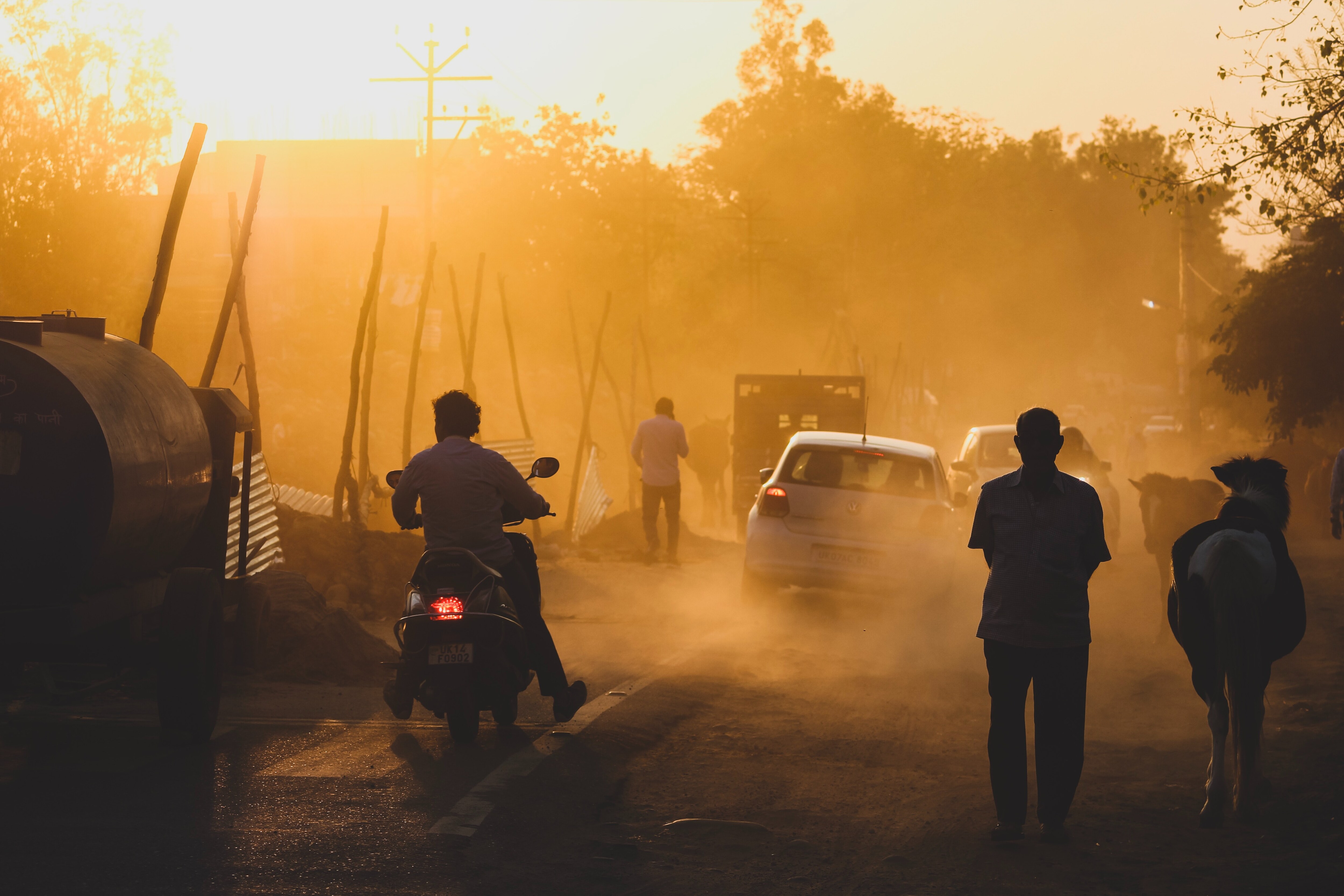
India's air pollution is not just making its winters worse. The nation's summer heatwaves also turned deadlier with higher-than-normal levels of particulate matter.
"The summer of 2022 has not only been unusually hot but also uncharacteristically high on particulate pollution, especially north India," the Centre for Science and Environment said in a new analysis. "The summer pollution challenge is not limited to megacities or to one specific region; it is a widespread national problem that requires urgent and deliberate action at a national scale."
Air pollution is generally seen as a winter problem when cold weather traps air pollution and smog close to the ground. These conditions are not found during summer as warm air rises and carries pollutants away. That, however, was not the case this year.
Seasonal particulate matter 2.5 levels in north, central, east and west India were all higher than the previous summer. North India fared the worst with a 23% increase in average summer pollution, followed by central India at 15.6%. South India saw no change, while northeast India saw average air quality improve between March and May.
Another worrying trend noted was smaller towns, and not megacities, are becoming pollution hotspots.
Bhiwadi in Rajasthan, Manesar in Haryana, Singrauli in Madhya Pradesh, Rohtak in Haryana and Muzaffarnagar in Uttar Pradesh were the five states with the worst summer air quality this year.
Delhi-NCR continued to have the worst regional air. It had 12 of the cities in the top 20 with highest summer pollution levels. The particulate matter 2.5 levels in the NCR region were almost 3 times the average of cities in south India.
Aizawl in Mizoram and Gummipondi in Tamil Nadu were the least polluted cities.
"This analysis identifies the unique patterns of pollution across all regions and puts a spotlight on a large number of towns and cities that do not get policy attention," said Anumita Roychowdhury, executive director-research and advocacy at CSE.
"Summer particulate pollution spikes due to arid conditions, high summer heat and temperature, and more airborne dust particles that travel long distances are compounding the problem from local sources,” she said in a statement.
Significant tightening of action is required to control emissions from each pollution source, Roychowdhury said.

-
Gold Is Rs 22,000 Cheaper Than A Month Ago. Should You Buy Amid The Wedding Season?

Gold's potential slide to $3,500 could save around Rs 4,700 per 10 grams, but a soft inflation print could just as easily push prices back up. One way to split the risk is to buy in parts, some now and the rest after the Fed's Dec. 9 decision.
-
AI Agents Are Gaining Power. Who Governs Them?
Artificial intelligence agents promise to transform productivity by moving machines from assisting decisions to executing them. But as organisations delegate greater authority to these AI-agents, they must first establish who controls that authority and who remains accountable when things go wrong.
-
Why Swapping Your Old Gold Can Trigger A Rs 5 Lakh Tax Bill, And How You Can Avoid It Legally
Swapping old gold for new is taxed as a sale and a fresh purchase. Getting your own gold remade can cut most of that bill, though it has its own costs.
-
The AI Trade is Done. The Real Opportunity for Investors Starts in 2027 | Unhedged Position
As pureplay AI stocks plunge and circular, capex-led financing unwinds, 2027 is set to be a year of reckoning for AI companies. Yet the bust clears the way for a better opportunity for investors in 2027 -- shifting the spotlight from AI builders to the companies using AI.
-
Leadership As Mission: Why The Age Of AI Demands More Human Leadership
Debjani Ghosh examines how AI is changing leadership, arguing that its success must be measured by its impact on people and the accountability of those guiding its use.
-
We May Need Another Tukaram Mundhe To Fight Air Pollution | The Reason Why
Developers may install basic measures such as sprinklers and green nets, resume work, and continue violating rules when this equipment stops working.
-
Extracting Value From Battery Scrap Could Be Challenging For India | The Reason Why
A discarded lithium-ion battery still contains valuable materials such as lithium, nickel and cobalt. These can be recovered and reused. When such batteries are crushed and shredded, they produce a dark powder called black mass.
-
One El Nino, India Can Handle. Two Could Break The Granary
India's grain stocks can absorb one bad year, but a second El Nino could drain the buffer in two to three years, economists say.
-
India's Troika Of Good Luck | Joining The Dots
As Jensen Huang's exit drags Nvidia down, a cooling AI trade and resilient earnings have revived investor interest in India. A likely RBI rate hike looms.
-
Talking Points This Week: Leadership Shock At Nvidia, Earnings Strength, And The Fog Over Hormuz
The Anthropic IPO pricing and first trading day, Nvidia's upcoming earnings, and any fresh signals from Iran will set the tone for the following week.









