Charting The Global Economy: US Retail Sales Chugging Along

(Bloomberg) -- Brisk July retail sales along with fewer applications for unemployment benefits underscored a US economy with staying power as inflationary pressures gradually subside.
Across the Atlantic, the UK jobless rate fell and wage growth cooled, while euro-zone productivity dropped for a sixth straight quarter and job growth slowed. Meanwhile, foreign direct investment in China slumped on investor concerns about the economy.
Here are some of the charts that appeared on Bloomberg this week on the latest developments in the global economy, markets and geopolitics:
US
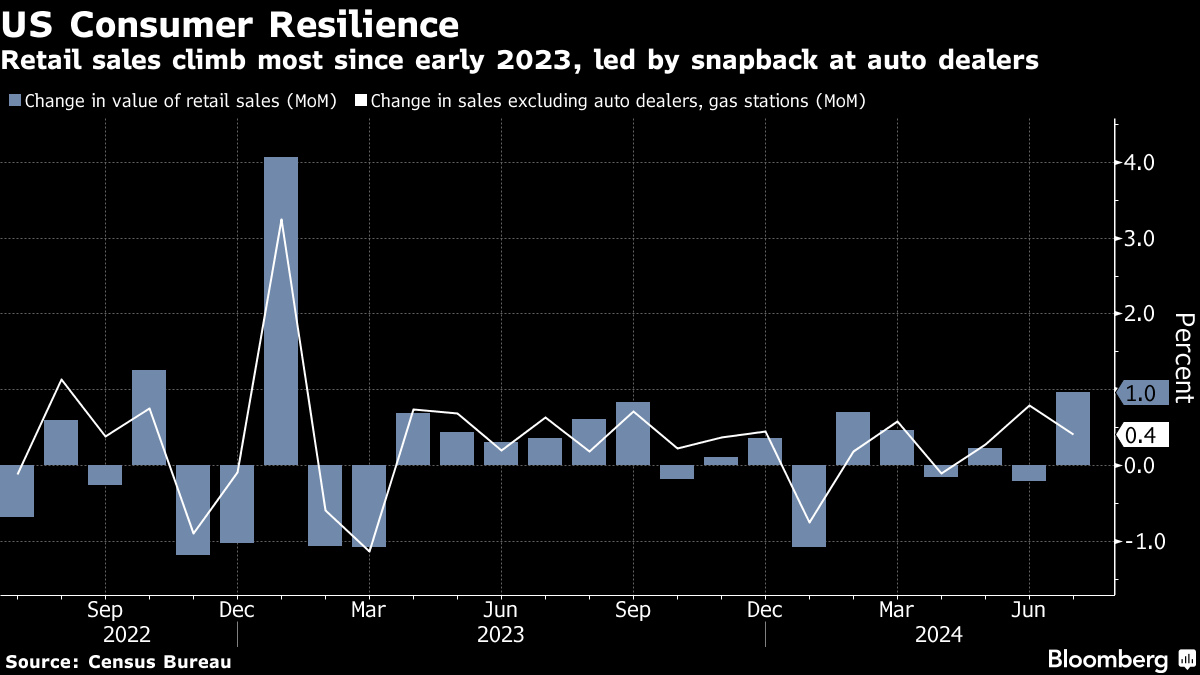
Fresh readings on retail spending and unemployment benefits quelled some of the restiveness about the US economy, parts of which remain restrained by elevated interest rates. The value of retail sales increased in July by the most since early 2023 in a broad advance and firmer sales guidance by Walmart Inc., a barometer of growth, also indicated that shoppers are becoming more selective but are still spending.
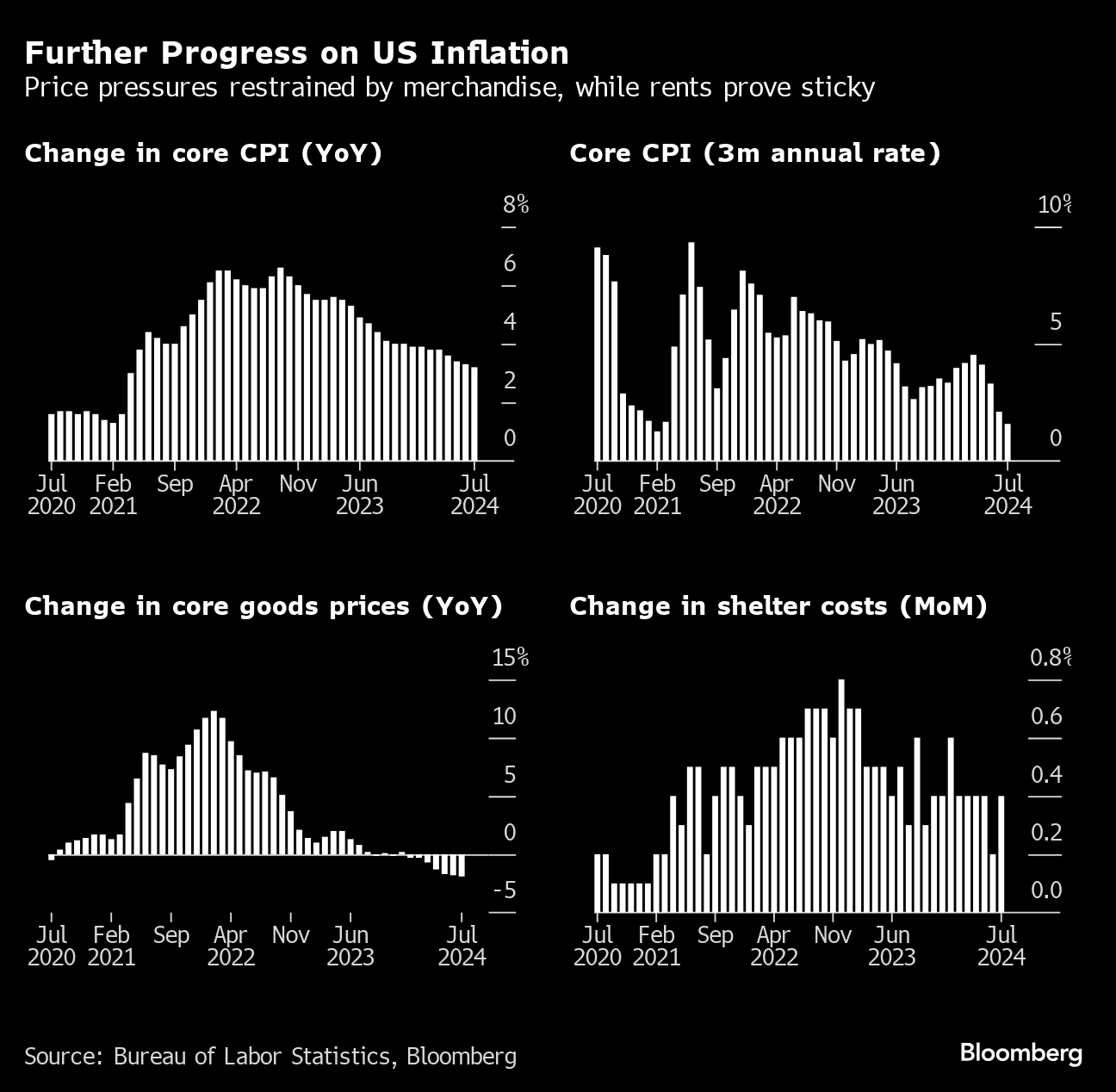
Underlying US inflation eased for a fourth month on an annual basis in July, keeping the Federal Reserve on track to lower interest rates next month. While prices fell last month for apparel, new and used cars and airfares, shelter was the most disappointing part of the report, which economists and policymakers have been widely expecting to ease and help move inflation closer to the Fed's target.
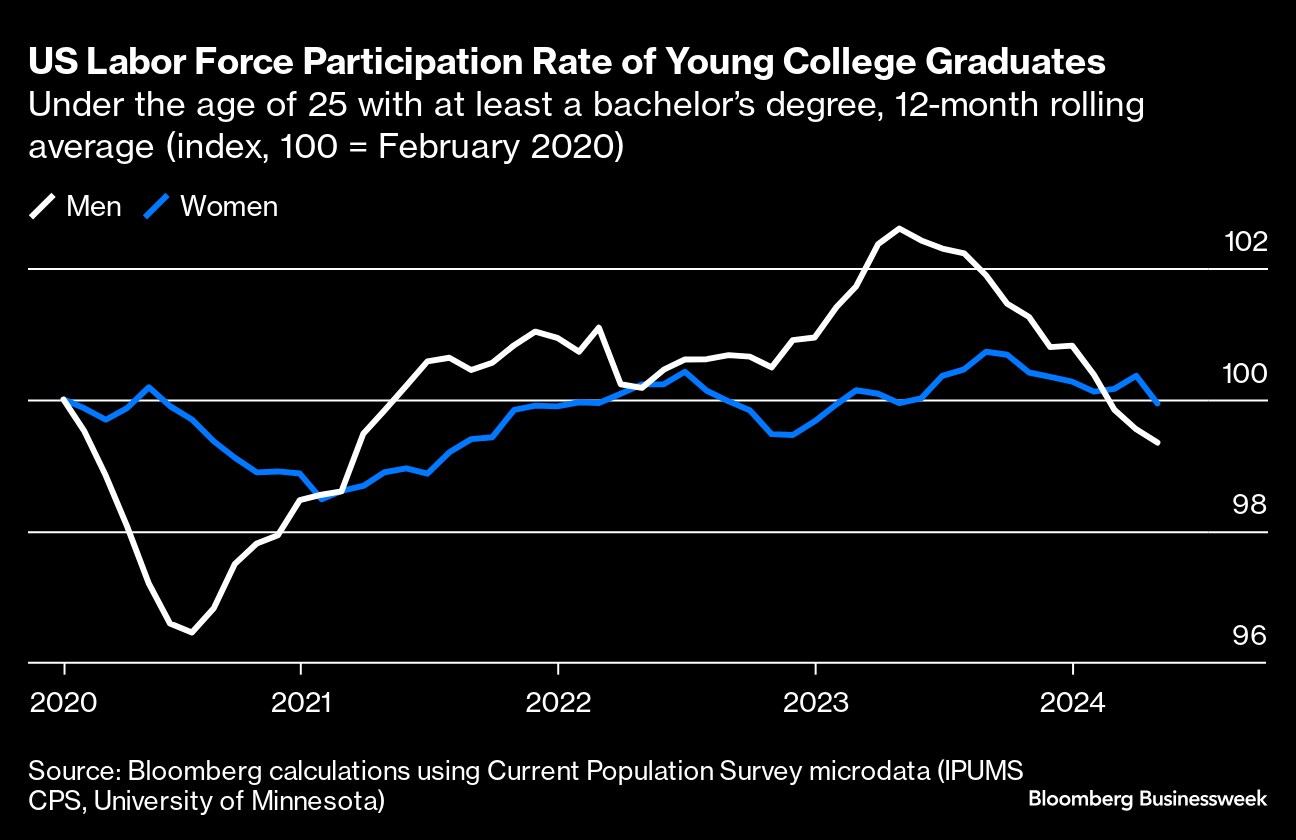
While young college-educated women are sticking with their job search even as the number of vacancies shrinks, many of their male peers are choosing to take a break. The share of male college graduates participating in the workforce has declined in the past year, with 1 in 5 under the age of 25 neither employed nor actively looking for work, according to the latest 12-month average in a Bloomberg News analysis of government data.
Europe
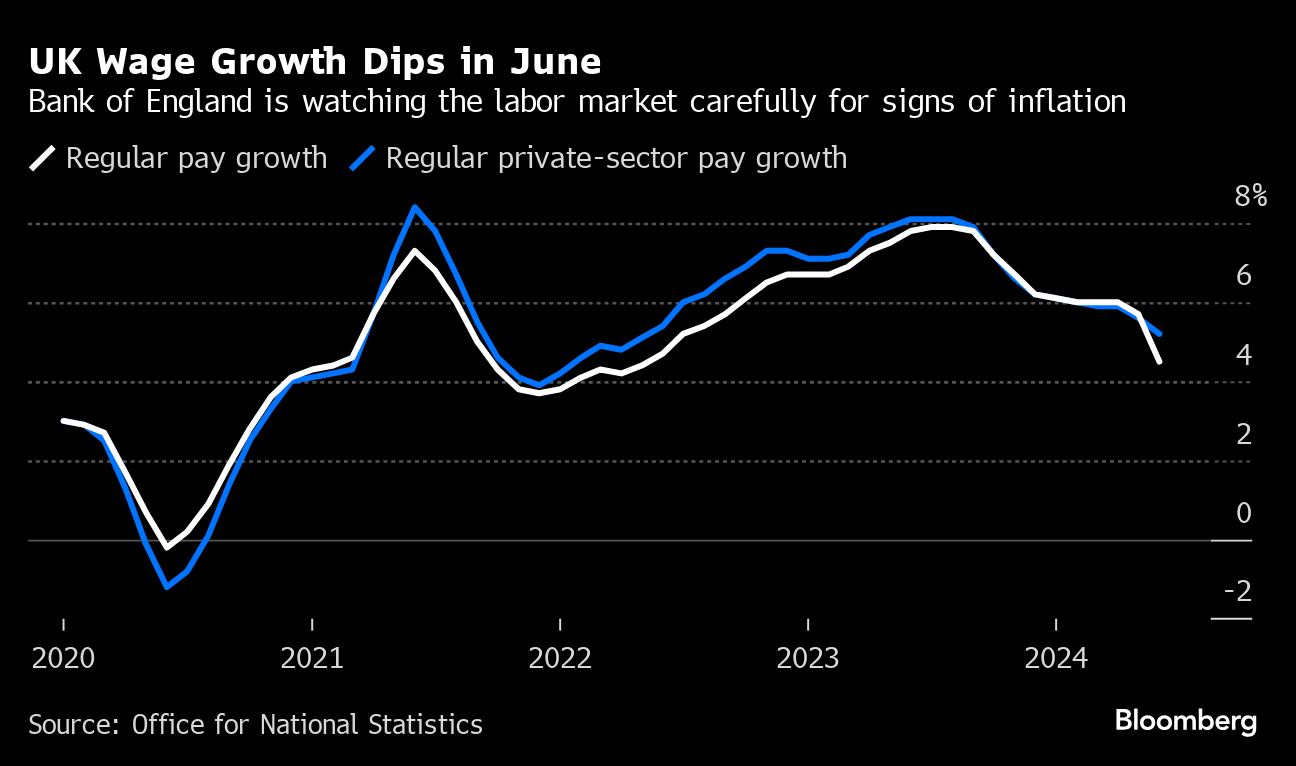
UK unemployment fell unexpectedly after companies hired at the strongest pace since November, a sign of underlying strength in the economy that complicates the Bank of England's shift toward lower interest rates. Separate data showed regular wage growth cooled to 5.4%, the weakest year-on-year pay increase since the summer of 2022.
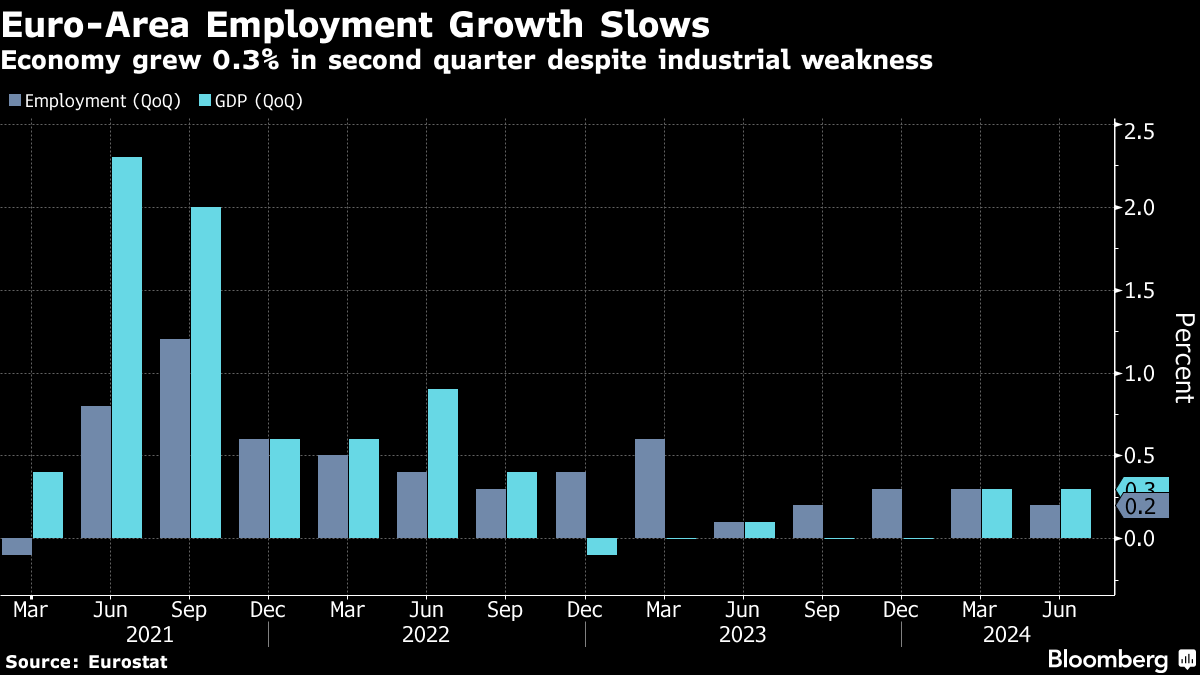
Firms across the euro zone slowed hiring in the second quarter amid mounting signs of economic weakness. The euro economy has sent distress signals recently, with consumers unwilling to spend despite outsized wage increases, private-sector activity grinding to a halt, and confidence in its largest member — Germany — tanking.
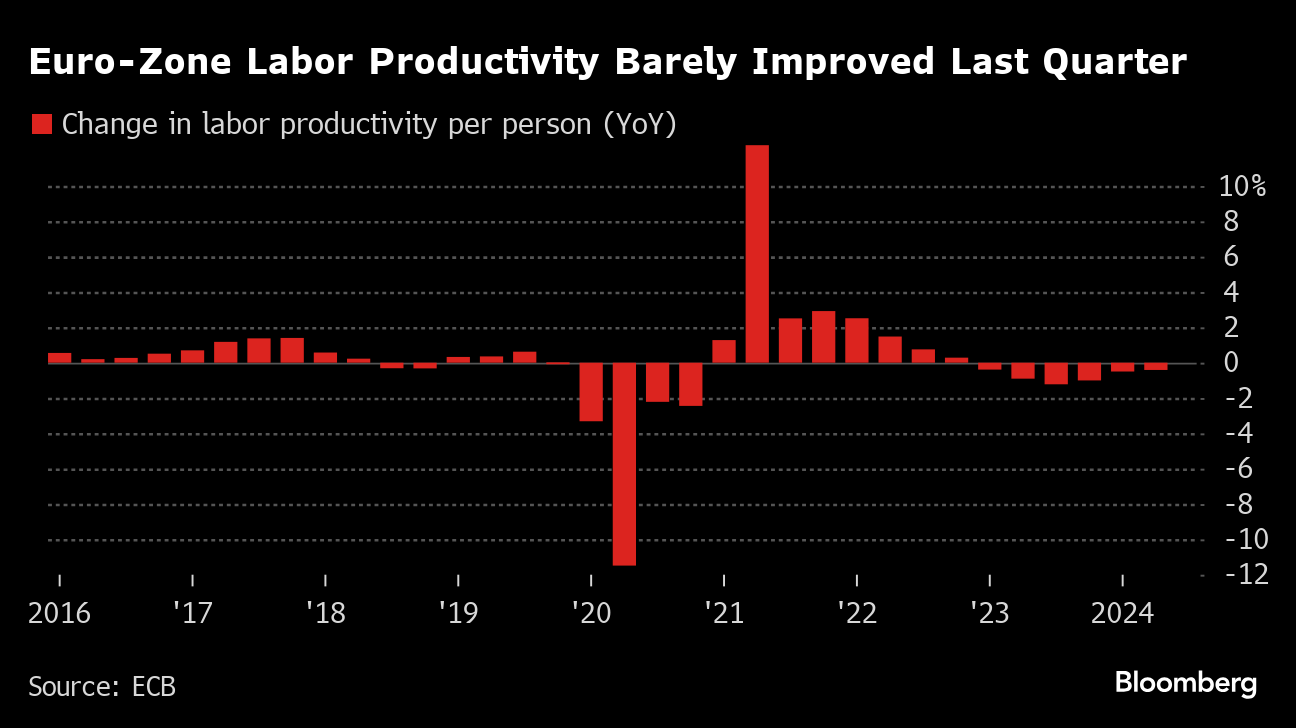
Euro-zone productivity barely improved in the second quarter and again missed the European Central Bank's expectations – a blow for its efforts to bring inflation back to 2%.
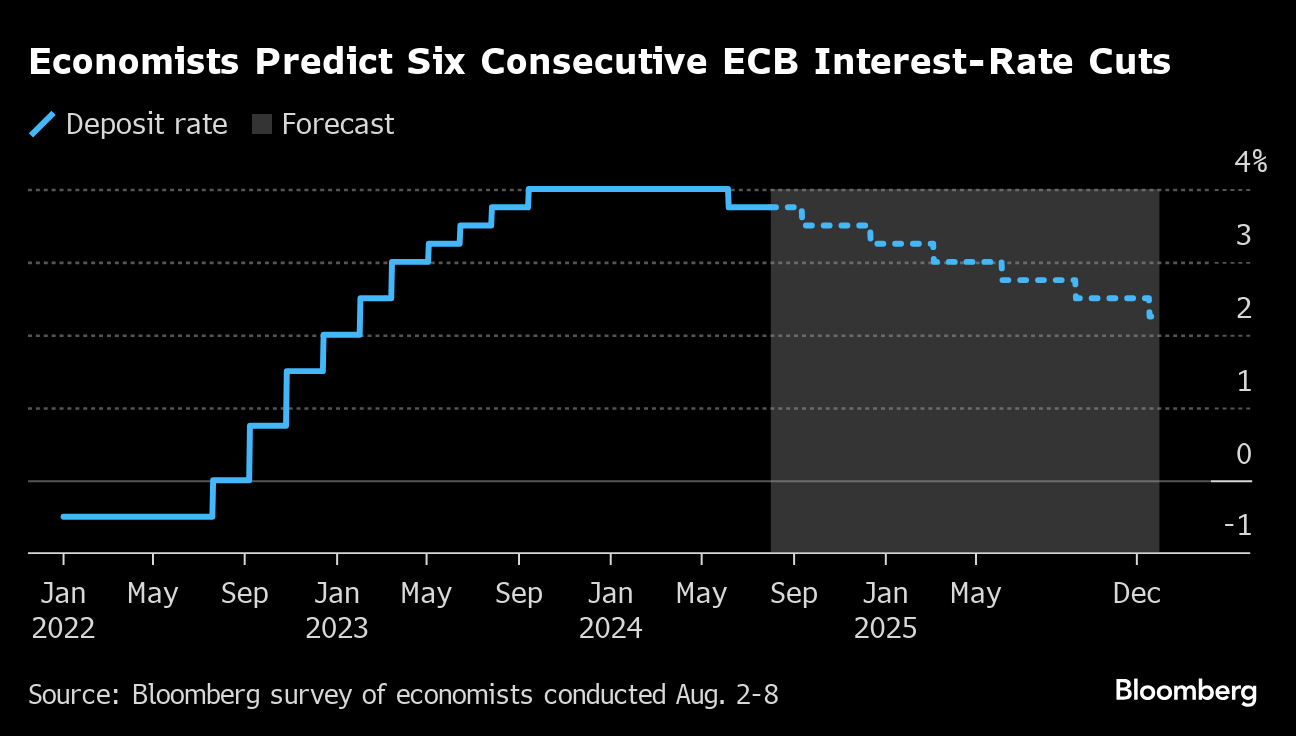
The ECB is now likely to cut its deposit rate once a quarter through the end of next year, a timetable that will see its easing cycle end sooner than previously anticipated, according to economists.
Asia
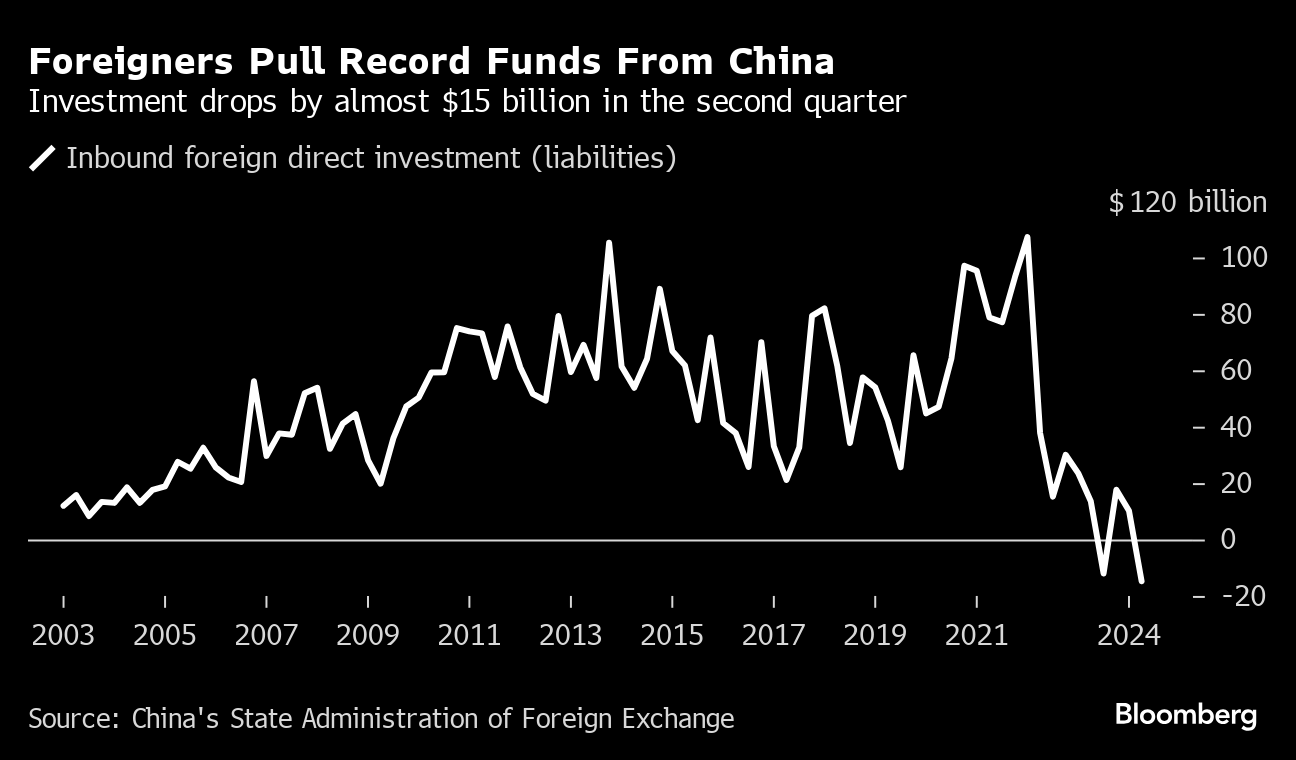
Foreign investors pulled a record amount of money from China last quarter, likely reflecting deep pessimism about the world's second-largest economy. China's direct investment liabilities in its balance of payments dropped almost $15 billion in the April-June period, marking only the second time this figure has turned negative.
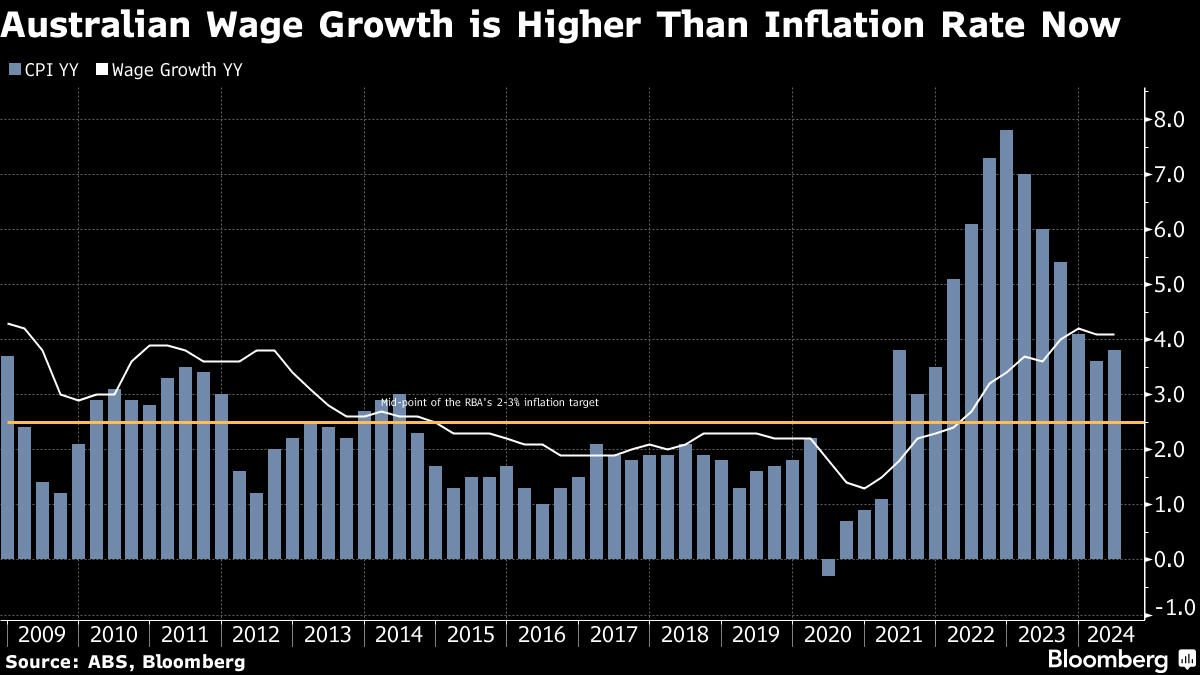
Australia's wage growth remained elevated in the second quarter, reflecting persistent inflation pressures in the economy and supporting the Reserve Bank's view that interest-rate cuts remain some way off.
Emerging Markets
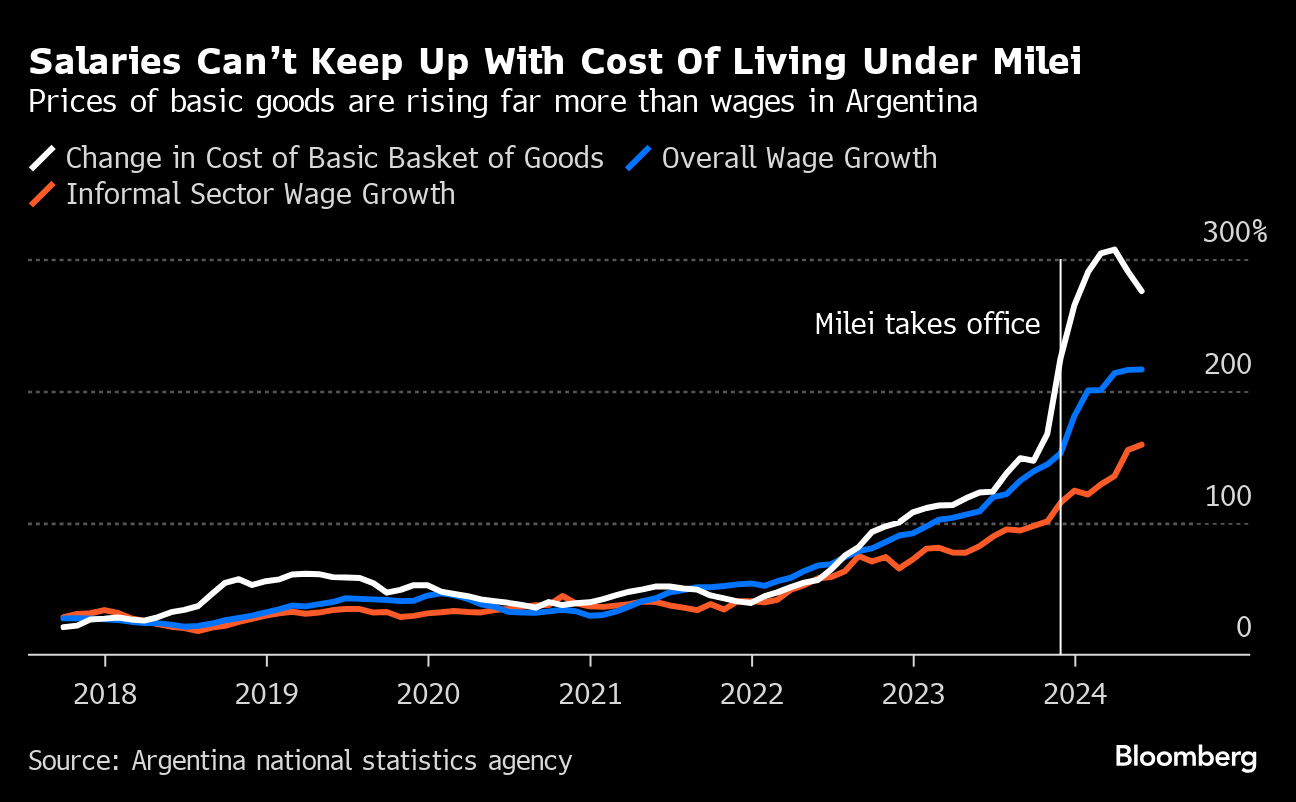
In the eight months since President Javier Milei took office, prices have soared more than 100%, consumer spending tanked and unemployment climbed as Argentines have been submitted to the most brutal austerity shock in recent history. Yet something unexpected has happened on Milei's watch: For all the ongoing misery, he remains just as popular as when he stormed to power pledging to take a chainsaw to the state.
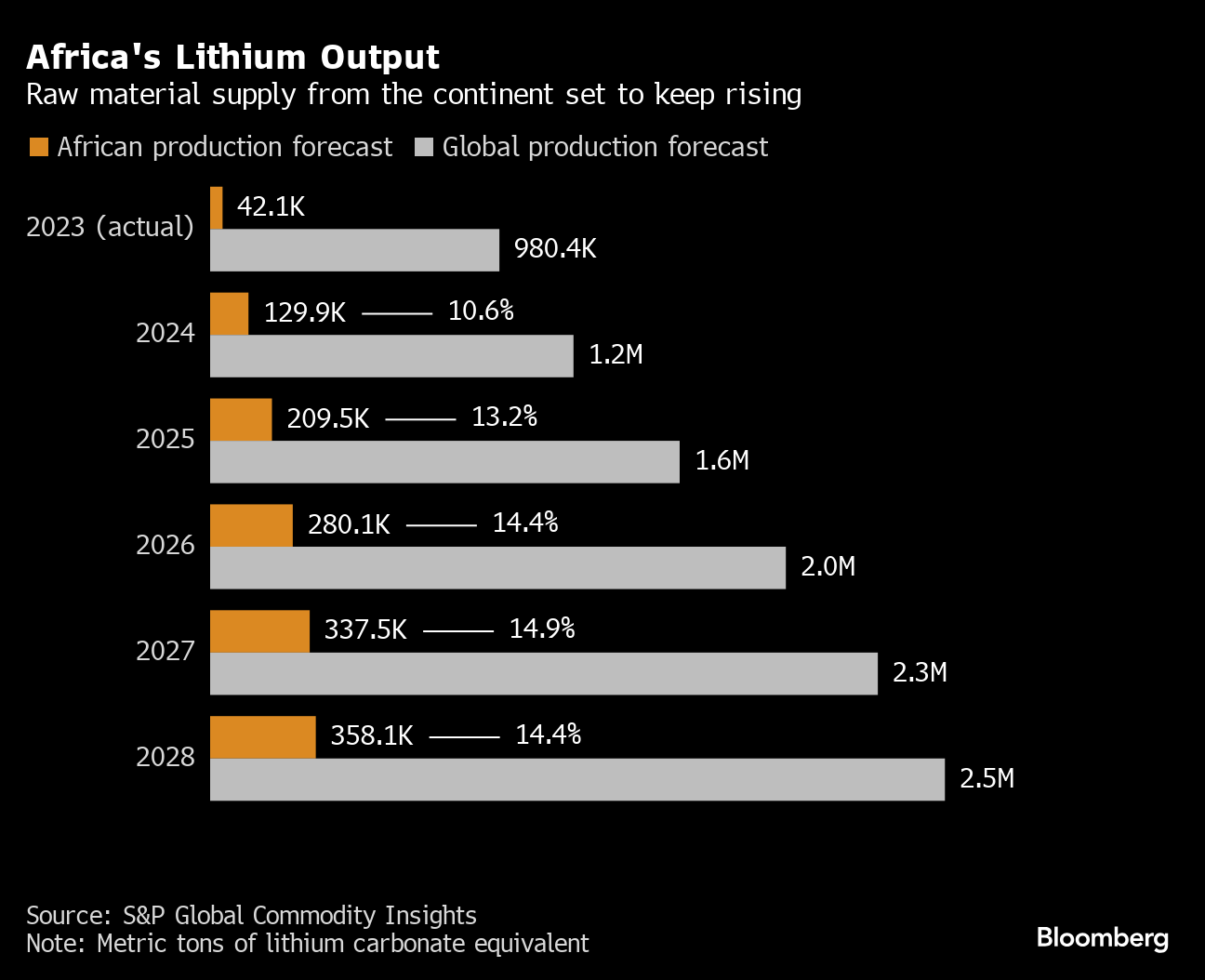
Chinese miners and refiners are driving a surge in African lithium output, shrugging off concerns over a glut to lock in future supplies of the critical battery metal. The continent is projected to account for almost 11% of global supply this year, compared with close to zero at the start of the decade, according to S&P Global Commodity Insights. That's projected to increase to more than 14% by 2028.
World
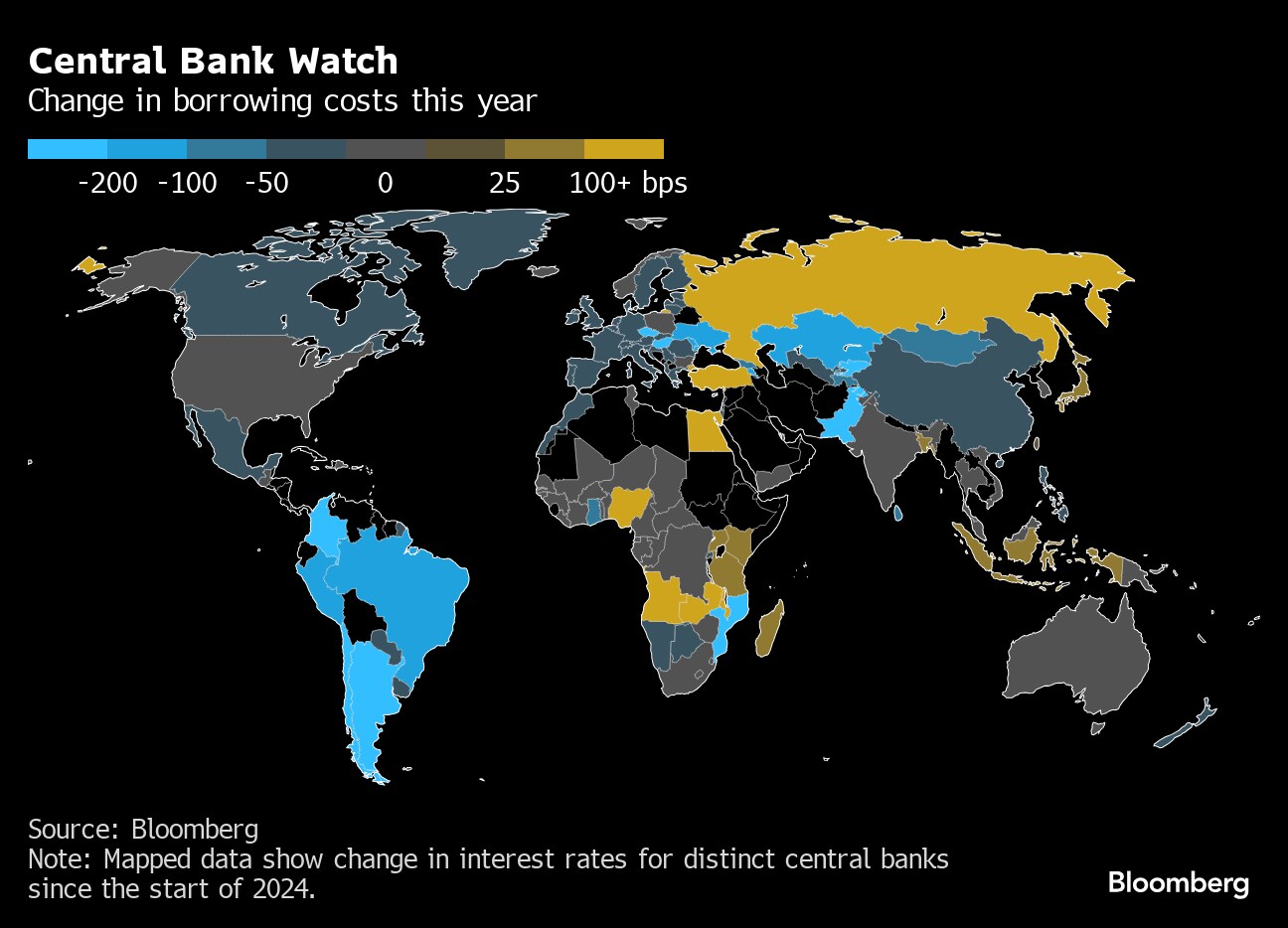
New Zealand's central bank cut interest rates, embarking on an easing cycle much sooner than previously indicated as the economy slumps and inflation slows. Namibia and the Philippines also lowered borrowing costs. Zambia's central bank held its key interest rate after six straight hikes to support its drought-battered economy. Norway and Uruguay also stood pat.
--With assistance from Andrew Atkinson, Ella Ceron, William Clowes, Patrick Gillespie, James Mayger, Swati Pandey, Jana Randow, Tom Rees, Augusta Saraiva, Zoe Schneeweiss, Mark Schroers and Manuela Tobias.
More stories like this are available on bloomberg.com
©2024 Bloomberg L.P.

-
Why Swapping Your Old Gold Can Trigger A Rs 5 Lakh Tax Bill, And How You Can Avoid It Legally

Swapping old gold for new is taxed as a sale and a fresh purchase. Getting your own gold remade can cut most of that bill, though it has its own costs.
-
The AI Trade is Done. The Real Opportunity for Investors Starts in 2027 | Unhedged Position
As pureplay AI stocks plunge and circular, capex-led financing unwinds, 2027 is set to be a year of reckoning for AI companies. Yet the bust clears the way for a better opportunity for investors in 2027 -- shifting the spotlight from AI builders to the companies using AI.
-
Leadership As Mission: Why The Age Of AI Demands More Human Leadership
Debjani Ghosh examines how AI is changing leadership, arguing that its success must be measured by its impact on people and the accountability of those guiding its use.
-
We May Need Another Tukaram Mundhe To Fight Air Pollution | The Reason Why
Developers may install basic measures such as sprinklers and green nets, resume work, and continue violating rules when this equipment stops working.
-
Extracting Value From Battery Scrap Could Be Challenging For India | The Reason Why
A discarded lithium-ion battery still contains valuable materials such as lithium, nickel and cobalt. These can be recovered and reused. When such batteries are crushed and shredded, they produce a dark powder called black mass.
-
One El Nino, India Can Handle. Two Could Break The Granary
India's grain stocks can absorb one bad year, but a second El Nino could drain the buffer in two to three years, economists say.
-
India's Troika Of Good Luck | Joining The Dots
As Jensen Huang's exit drags Nvidia down, a cooling AI trade and resilient earnings have revived investor interest in India. A likely RBI rate hike looms.
-
Talking Points This Week: Leadership Shock At Nvidia, Earnings Strength, And The Fog Over Hormuz
The Anthropic IPO pricing and first trading day, Nvidia's upcoming earnings, and any fresh signals from Iran will set the tone for the following week.
-
Signature Play: The Classic Cocktail Is Dead. Or Is It?
Classic cocktails are disappearing from India's cocktail menus. But they're still being ordered, taught to bartenders and borrowed from. So, who's really having the last drink?
-
A New Samvat Wishlist: Inclusive Prosperity And Human Development
India has strengthened its economic foundations through infrastructure, digital access and enterprise. Its next growth chapter must deepen productivity, create better livelihoods and widen participation in prosperity.









