Warren Buffett Letter: Buffett Writes To Shareholders On “Recent Drought Of Acquisitions”
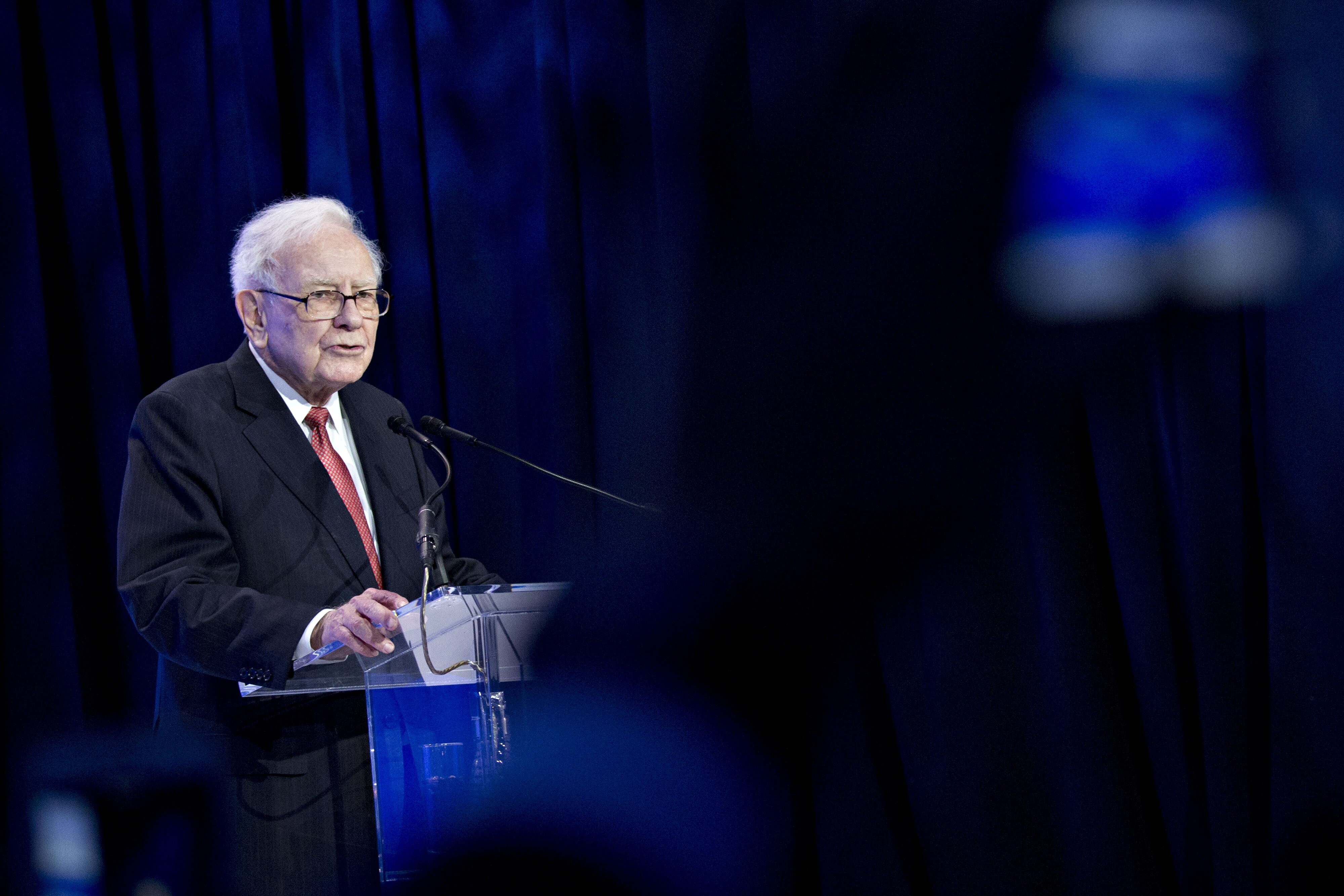
High prices, aversion to leverage and the need for a good night's sleep are key reasons for Berkshire Hathaway's “recent drought of acquisitions” said Warren Buffett.
In his annual letter to shareholders the renowned investor and chairman of Berkshire Hathaway Inc. discussed acquisitions, or rather the lack of them, in detail...
Excerpted from Buffett's letter...
Acquisitions
There are four building blocks that add value to Berkshire: (1) sizable stand-alone acquisitions; (2) bolt-on acquisitions that fit with businesses we already own; (3) internal sales growth and margin improvement at our many and varied businesses; and (4) investment earnings from our huge portfolio of stocks and bonds. In this section, we will review 2017 acquisition activity.
In our search for new stand-alone businesses, the key qualities we seek are durable competitive strengths; able and high-grade management; good returns on the net tangible assets required to operate the business; opportunities for internal growth at attractive returns; and, finally, a sensible purchase price.
That last requirement proved a barrier to virtually all deals we reviewed in 2017, as prices for decent, but far from spectacular, businesses hit an all-time high. Indeed, price seemed almost irrelevant to an army of optimistic purchasers.
Why the purchasing frenzy? In part, it's because the CEO job self-selects for “can-do” types. If Wall Street analysts or board members urge that brand of CEO to consider possible acquisitions, it's a bit like telling your ripening teenager to be sure to have a normal sex life.
Also Read: Buffett Warns Investors That Safe-Looking Bonds Can Be Risky
Once a CEO hungers for a deal, he or she will never lack for forecasts that justify the purchase. Subordinates will be cheering, envisioning enlarged domains and the compensation levels that typically increase with corporate size. Investment bankers, smelling huge fees, will be applauding as well. (Don't ask the barber whether you need a haircut.) If the historical performance of the target falls short of validating its acquisition, large “synergies” will be forecast. Spreadsheets never disappoint.
The ample availability of extraordinarily cheap debt in 2017 further fueled purchase activity. After all, even a high-priced deal will usually boost per-share earnings if it is debt-financed. At Berkshire, in contrast, we evaluate acquisitions on an all-equity basis, knowing that our taste for overall debt is very low and that to assign a large portion of our debt to any individual business would generally be fallacious (leaving aside certain exceptions, such as debt dedicated to Clayton's lending portfolio or to the fixed-asset commitments at our regulated utilities). We also never factor in, nor do we often find, synergies.
Our aversion to leverage has dampened our returns over the years. But Charlie and I sleep well. Both of us believe it is insane to risk what you have and need in order to obtain what you don't need. We held this view 50 years ago when we each ran an investment partnership, funded by a few friends and relatives who trusted us. We also hold it today after a million or so “partners” have joined us at Berkshire.
Despite our recent drought of acquisitions, Charlie and I believe that from time to time Berkshire will have opportunities to make very large purchases. In the meantime, we will stick with our simple guideline: The less the prudence with which others conduct their affairs, the greater the prudence with which we must conduct our own.
Berkshire did make an acquisition last year - a 38.6 percent partnership interest in Pilot Flying, a leading travel-center operator, and a contractual agreement to increase its partnership interest in PFJ to 80 percent in 2023.
Also Read: Tax Law Gives Buffett's Berkshire Hathaway A Big Boost In Value

-
Why Swapping Your Old Gold Can Trigger A Rs 5 Lakh Tax Bill, And How You Can Avoid It Legally

Swapping old gold for new is taxed as a sale and a fresh purchase. Getting your own gold remade can cut most of that bill, though it has its own costs.
-
The AI Trade is Done. The Real Opportunity for Investors Starts in 2027 | Unhedged Position
As pureplay AI stocks plunge and circular, capex-led financing unwinds, 2027 is set to be a year of reckoning for AI companies. Yet the bust clears the way for a better opportunity for investors in 2027 -- shifting the spotlight from AI builders to the companies using AI.
-
Leadership As Mission: Why The Age Of AI Demands More Human Leadership
Debjani Ghosh examines how AI is changing leadership, arguing that its success must be measured by its impact on people and the accountability of those guiding its use.
-
We May Need Another Tukaram Mundhe To Fight Air Pollution | The Reason Why
Developers may install basic measures such as sprinklers and green nets, resume work, and continue violating rules when this equipment stops working.
-
Extracting Value From Battery Scrap Could Be Challenging For India | The Reason Why
A discarded lithium-ion battery still contains valuable materials such as lithium, nickel and cobalt. These can be recovered and reused. When such batteries are crushed and shredded, they produce a dark powder called black mass.
-
One El Nino, India Can Handle. Two Could Break The Granary
India's grain stocks can absorb one bad year, but a second El Nino could drain the buffer in two to three years, economists say.
-
India's Troika Of Good Luck | Joining The Dots
As Jensen Huang's exit drags Nvidia down, a cooling AI trade and resilient earnings have revived investor interest in India. A likely RBI rate hike looms.
-
Talking Points This Week: Leadership Shock At Nvidia, Earnings Strength, And The Fog Over Hormuz
The Anthropic IPO pricing and first trading day, Nvidia's upcoming earnings, and any fresh signals from Iran will set the tone for the following week.
-
Signature Play: The Classic Cocktail Is Dead. Or Is It?
Classic cocktails are disappearing from India's cocktail menus. But they're still being ordered, taught to bartenders and borrowed from. So, who's really having the last drink?
-
A New Samvat Wishlist: Inclusive Prosperity And Human Development
India has strengthened its economic foundations through infrastructure, digital access and enterprise. Its next growth chapter must deepen productivity, create better livelihoods and widen participation in prosperity.









