Varroc Engineering Rises 6.7% Above IPO Price On Stock Market Debut
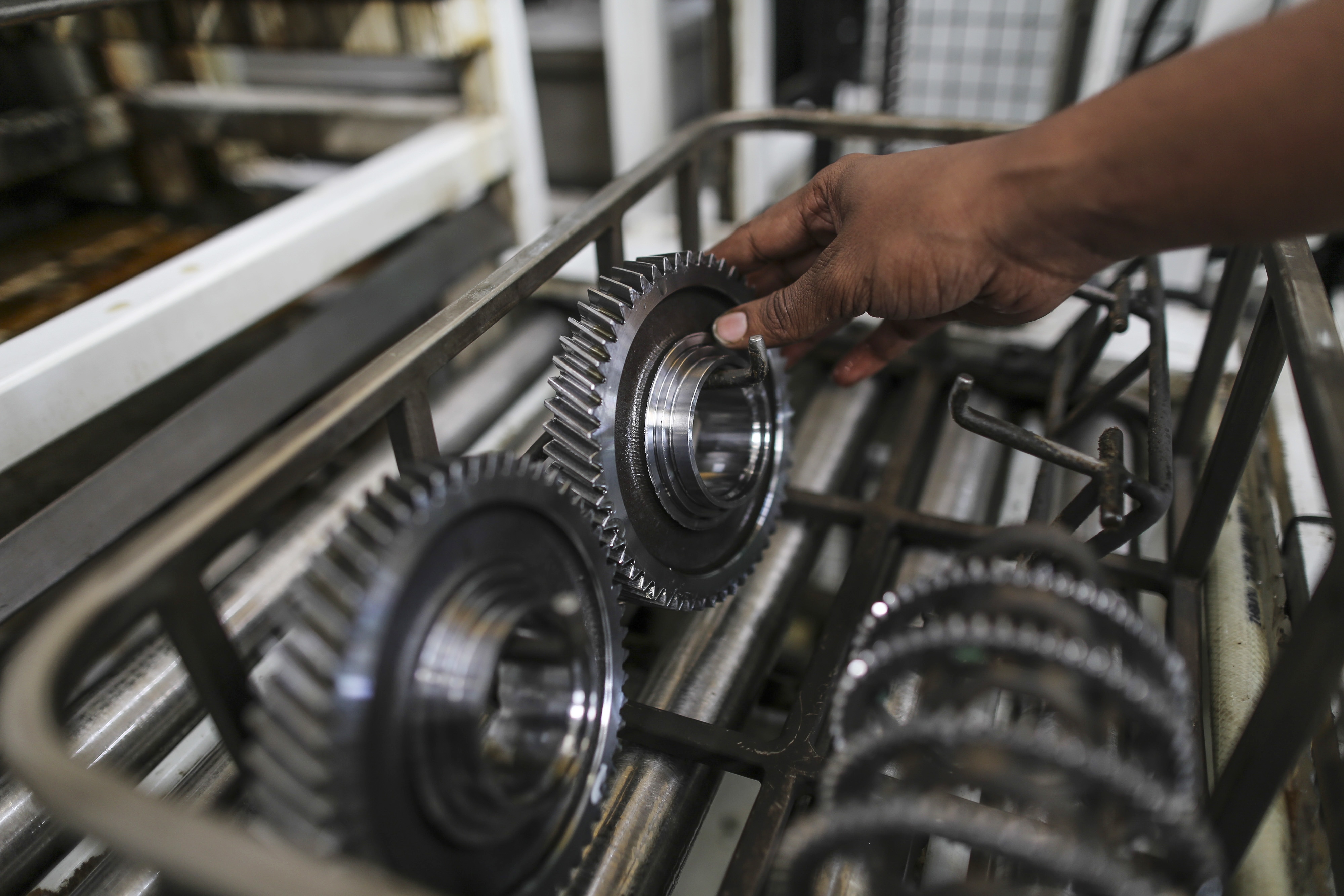
Varroc Engineering Ltd. listed at a premium of 6.7 percent at Rs 1,032 per share on the BSE Ltd., compared to its issue price of Rs 967.
The auto-part maker's Rs. 1,950-crore initial public offering was subscribed 3.57 times on the final day of bidding on June 28. The portion from qualified institutional buyers as shares reserved for this segment was subscribed 9.16 times. The non-institutional investor category and the retail investors category was subscribed 2.45 times and 0.89 times respectively. The category for employees was subscribed 0.64 times.
Business
Varroc Engineering designs and makes exterior lighting systems and plastic, polymer, electronic and metallic components for automobiles. The company supplies components for Jaguar Land Rover, Bentley and Tesla.
The company has 36 manufacturing plants in seven countries—most of them in India—that run at an average utilisation level of close to 70 percent.
It's also setting up units in Brazil and Morocco to serve South American, southern European and North African markets. These plants are likely to start production in the ongoing financial year. It also plans to set up two new units in India.
The company recently agreed to acquire an exterior automotive lighting maker in Turkey, adding to a series of acquisitions made in the last 11 years. The acquisition is expected to be completed by the end of this month, subject to approval of the Turkish competition authority.
In the global market, Varroc supplies parts to key global clients including electric car maker Tesla, Audi, Jaguar Land Rover, Bentley and Volkswagen. The company derives nearly 65 percent of its revenue from global businesses, which also makes it vulnerable to any unfavourable currency movements.
In India, it supplies components to two- and three-wheeler makers with Bajaj Auto Ltd. alone contributing nearly 18.6 percent to its consolidated revenue. Top five clients contribute 60 percent to its top line.
Financial Highlights
- The net worth of the company for the year ended March 2018 stood at Rs 2,849 crore, translating into a book value of Rs 211 per share.
- Varroc's revenue has been clocking a compounded annual growth rate of 19.5 percent in five years through March 2018. The company turned profitable during the period. It reported a net profit of Rs 450 crore in FY18 compared with a loss of Rs 25 crore in FY13.
- Earnings before interest, tax and depreciation and amortisation rose at a CAGR of 28 percent, while the Ebitda margin averaged around 7.3 percent during the period.
- The company has a total debt of close to Rs 980 crore and Rs 332-crore cash. It has consistently generated cash flows and paid dividend in the last six years.
Peer Comparison
Varroc Engineering doesn't have a direct peer. Minda Industries Ltd., Lumax Industries Ltd. and Motherson Sumi Systems Ltd. come closest with similar businesses.
Varroc's total debt-to-equity is similar to that of its peers but has a higher book value compared to Lumax and Motherson.
Earnings per share for financial year 2018 stands at Rs 33.4. At the upper end of the price band, the stock will trade at 30 times its earnings, according to BloombergQuint's calculations.

-
The Economic Imperative: Analysing The Material Driving Force Behind India-Canada Strategic Reset

This economic complementarity is further reinforced by deep institutional investment ties and talent mobility, which form the bedrock of the bilateral framework.
-
Medicine Pricing: Where Must Profit Stop?
India must confront excessive margins, hidden incentives and regulatory gaps that threaten the integrity of medicine.
-
Why Amazon And Flipkart Are Struggling To Beat Meesho In India's Smaller Cities
With 274 million users and lowest-cost logistics, Meesho is defending its value commerce crown against giants like Amazon and Flipkart.
-
High US Salaries, No Green Card Certainty: The Financial Calculation Facing Indian H-1B Families
The suspension of PERM processing at eight technology employers does not cancel existing H-1B visas. What it does is force a question many Indian families have been avoiding: is the US salary worth tying your career and family plans to one employer?
-
Swiggy vs Eternal: Food Delivery's Two Rivals Are No Longer In The Same Race
Eternal is building a private AI assistant, dark.ai. Swiggy is still working out how to make Instamart pay, with an operating loss of Rs 895 crore in the July-September quarter while Blinkit stayed profitable.
-
Where You Live Shapes How You Get To Work | The Reason Why
Two-wheelers are the most popular way to get to work in India, accounting for nearly 43% of workplace commutes.
-
Unhedged Position: Can India See An Indonesia-Style Time Correction?
The Nifty is trading below levels it first clocked in 2024. Is there, then, as I have suggested in the headline, potential that the current time correction drags on painfully for the next three-five, even ten years?
-
Navigating Friction And Energy Realities: An Analysis Of Marco Rubio's October Visit To India
Occurring at a critical juncture marked by stalled trade negotiations and escalating geopolitical pressures over global energy supplies, the visit offers a profound window into modern US-India relations.
-
India Exports Capital. Why Not Export Trusteeship?
The big question, then, is whether India can build an institution that global borrowers, investors, banks, and lawyers can trust, even without an Indian connection.
-
France's Economy & Politics Are In Crisis | The Reason Why
Let's look at how the French economy and politics evolved under Nicolas Sarkozy, Franois Hollande and Emmanuel Macron.










