U.S. Trade Deficit Narrows Most On Record On Muted China Imports
(Bloomberg) -- The US trade deficit shrunk in April by the most on record in dollar terms, reflecting a drop in the value of imports amid Covid lockdowns in China while exports climbed.
The gap in goods and services trade narrowed $20.6 billion, or 19.1%, to $87.1 billion, Commerce Department data showed Tuesday. The median estimate in a Bloomberg survey of economists called for an $89.5 billion deficit. The figures aren't adjusted for inflation.

Imports dropped in April as factory activity in China fell to the lowest level since February 2020 amid strict lockdowns to curb the spread of Covid-19. While manufacturing in the country has improved somewhat since, the measures are still straining already-tenuous global supply chains, especially when coupled with Russia's war in Ukraine.
The deficit with China decreased in April by $8.5 billion, the most in seven years. Imports dropped $10.1 billion, also the most since 2015.
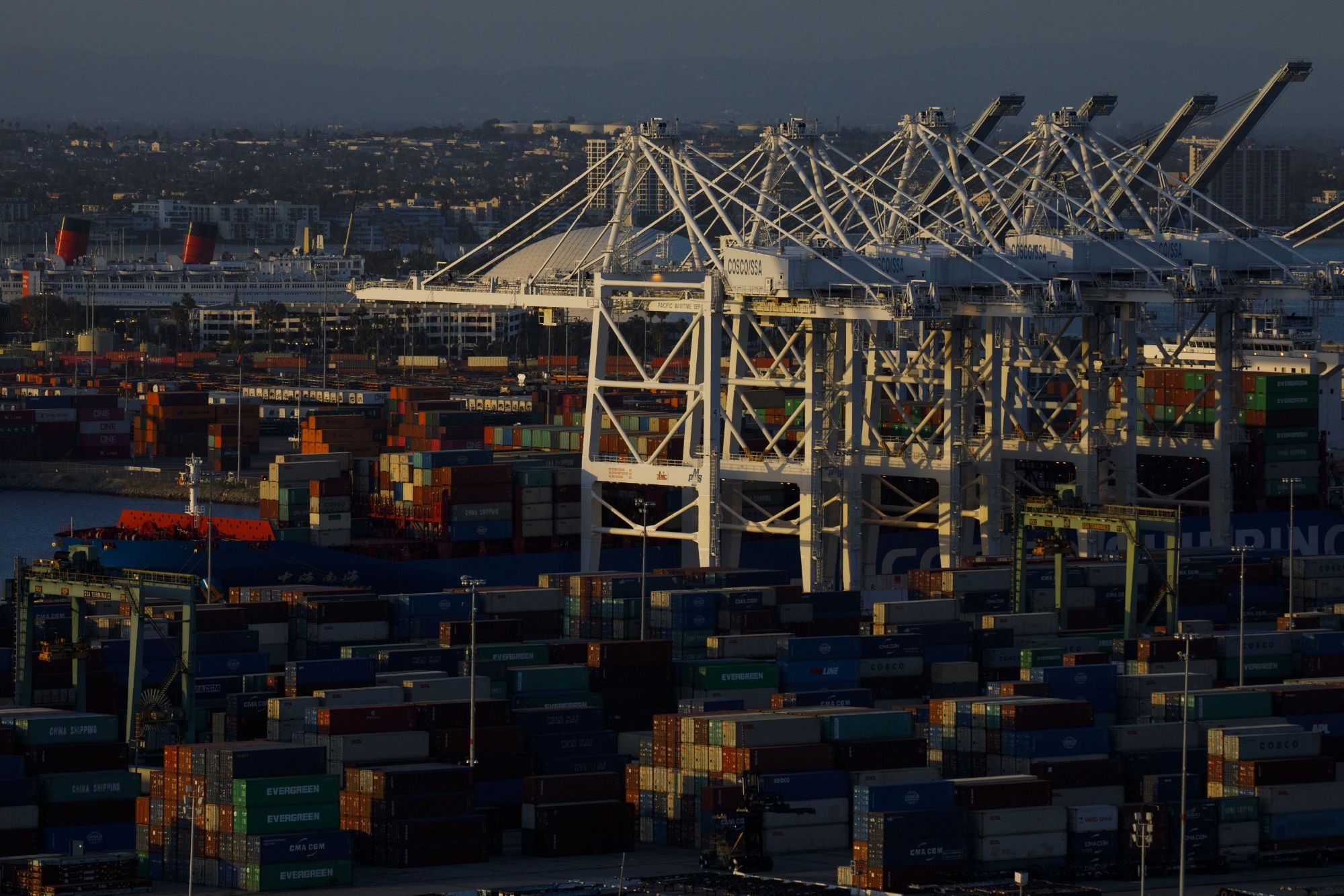
Decades-high inflation is expected to weigh on trade this year, with the World Trade Organization cutting its forecast for growth in global merchandise volumes. So far though, in the US, that hasn't materialized yet, judging by the near-record amounts of goods that arrived at the ports of Los Angeles and Long Beach in April.
In the first quarter, the widening of the trade deficit largely explained the economy's worst performance since the pandemic recovery began, with gross domestic product shrinking at a 1.5% annual pace. That's because the value of products American businesses and consumers bought from overseas outpaced purchases of US goods and services by other economies.
Read more: Lifting Tariffs on Goods May Make Sense, US Commerce Chief Says
The value of imports of goods and services decreased 3.4% in April to $339.7 billion, the first drop since July in a broad-based decline. Exports increased 3.5% to a record $252.6 billion.
US merchandise imports plunged from a record in March, dropping 4.4%, the most since April 2020, reflecting a decline in inbound shipments of consumer goods, industrial supplies, capital goods and automobiles.
Retailers like Target Corp. and Walmart Inc. are trying to offload excess inventory, accumulated in part as consumers shift more of their spending from goods to services. That may portend fewer imports going forward.
On an inflation-adjusted basis, the April merchandise-trade deficit narrowed 14.2% to $116.2 billion.
Digging Deeper
- The nominal merchandise-trade deficit narrowed to $107.7 billion
- Travel exports -- or spending by visitors to the US -- rose to $10.7 billion, the highest since February 2020
- Travel imports, a measure of Americans traveling abroad, climbed for a third month to $8.3 billion, also the most since the onset of the pandemic
(Adds graphic)
More stories like this are available on bloomberg.com
©2022 Bloomberg L.P.

-
Talking Points This Week: Leadership Shock At Nvidia, Earnings Strength, And The Fog Over Hormuz

The Anthropic IPO pricing and first trading day, Nvidia's upcoming earnings, and any fresh signals from Iran will set the tone for the following week.
-
Signature Play: The Classic Cocktail Is Dead. Or Is It?
Classic cocktails are disappearing from India's cocktail menus. But they're still being ordered, taught to bartenders and borrowed from. So, who's really having the last drink?
-
A New Samvat Wishlist: Inclusive Prosperity And Human Development
India has strengthened its economic foundations through infrastructure, digital access and enterprise. Its next growth chapter must deepen productivity, create better livelihoods and widen participation in prosperity.
-
Love, Sex Aur Dhokha: The Audacious Plot To Spy On Jensen Huang
A Taipei dinner, a Singapore chip buyer and a suspected Chinese asset: inside the alleged spy operation that got close to NVIDIA's Jensen Huang.
-
Ten Things I Learnt This Samvat
Patience can be a trap. Cheap stocks can stay cheap. Leverage can wipe you out. What did Samvat 2082 teach us? Niraj Shah writes on 10 lessons from the year gone by.
-
Talking Points This Week: Tech Nerves, FII Buying, And A Faraway Banking Shock
The global markets are not shining this Diwali. The exception in the large markets is, India.
-
Midterm Rally Lasted A Day. The Hard Reality Of A Divided US May Last Two Years | Opinion
Between a contested AI boom, a debt ceiling that arrives in 2027 and a president with every incentive to act alone, the next two years may prove more volatile than the first day's rally suggests.
-
Blue Wave Will Derail the AI Trade but Won't Dismantle the AI Era | Unhedged Position
The Democrats' sweep of the US Congress will see politics collide with economic forces both over the long and short term.
-
It's Time To Take The GST Council's Bet On Trust Global
Payment records can prove India's services exports, and clear, proportionate rules can bring foreign digital sellers into the tax net.
-
Opinion | India at 38: From Innovation Overperformer to Innovation Powerhouse
India now has 453 VC-backed deep science startups, 18 of them late-stage, after 117 percent growth since 2020. Laurus Labs, at USD 9.3 billion, is the most valuable deep science company in any middle-income economy outside China.









