UBS Highlights 10 Near-Term Dampeners For Indian Markets
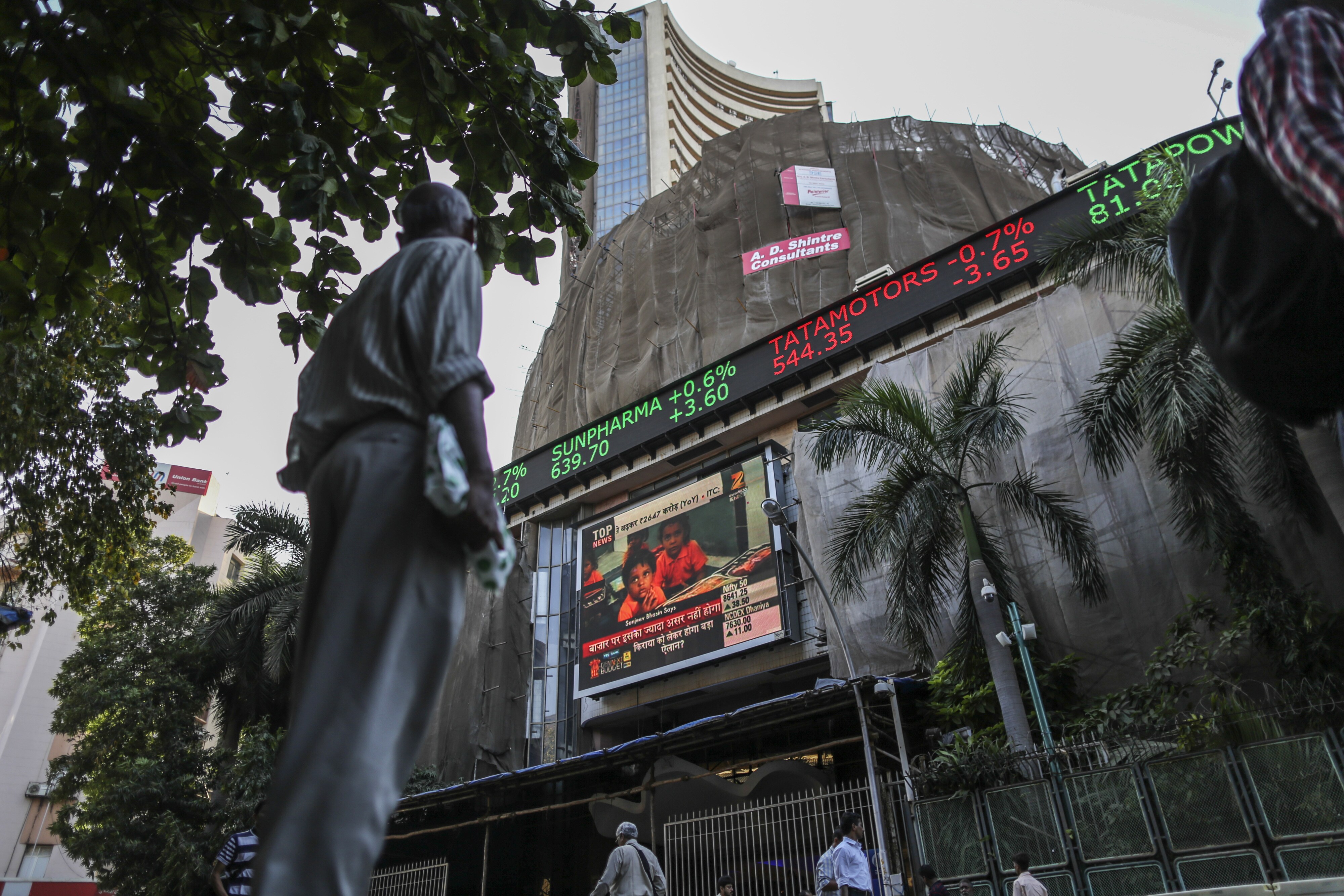
Ten near-term concerns could dampen the sentiment in the Indian equity markets, according to UBS Securities India.
Some cracks have emerged in the positive narrative that helped Indian markets overcome sustained earnings cuts since 2014, analysts led by Gautam Chhaochharia wrote in a note dated Feb. 26.
“Many of these may be more of near-term sentiment dampeners rather than changes in the fundamental trajectory,” noted UBS, as it maintained its base-case end-2018 target for the NSE Nifty 50 Index at 10,500.
Here are the near-term concerns highlighted by UBS:
1) Battle Of The Exchanges
Investors are worried about potential outflows from Indian equities due to the ongoing standoff between Indian exchanges and their global peers, said UBS. MSCI Inc. had warned of disruptive and harmful impact on international institutional investments into India after Indian bourses terminated licencing pacts with their foreign counterparts.
The decision threatens nearly $13 billion invested in India by overseas funds tracking the MSCI Emerging Markets Index, according to BloombergQuint's calculations.
2) State-Owned Bank Frauds
The near Rs 13,000 crore fraud detected at state-owned lender Punjab National Bank opens “another dimension of risk”, wrote UBS in its note.
Other pressure points have come to light ever since, including alleged swindling of Rs 3,695 crore of loans advanced by a consortium of seven banks to Rotomac Global Pvt., and Rs 109 crore loan default by Simbhaoli Sugars Ltd.
3) LTCG Tax Impact
The 10 percent tax long-term capital gains, introduced in the Union Budget 2018 has worried investors, noted UBS. In the medium-term, the tax implies additional cost for equity investors looking to sell listed equities after a year, thereby lowering their returns from India, the brokerage added.
4) Slowing Domestic Flows
Monthly inflow into equity mutual funds will moderate from 2017 levels in 2018, according to UBS' analysis.
Demonetisation-led liquidity is wearing off and interest rates are rising. Incentives for bank managers also may be changing towards getting deposits as the incremental loan/deposit ratio increases.UBS' India Market Strategy Report
5) Small And Mid-Cap Selloff
Small-cap and mid-cap stocks have come off their 2017 highs, and have underperformed the benchmark indices in 2018. Nearly 35-40 percent of stocks from the small and mid-cap universe have fallen at least 20 percent from their 52-week highs, UBS said.
6) Rising Consumer Prices
The brokerage expects consumer price inflation to remain in the 5.1-5.6 percent range over the next few months. CPI inflation stood at 5.07 percent in January, moderating slightly as the seasonal spike in vegetables began to cool off.

7) Rising Bond Yields
Equity valuations remain elevated despite the 120-basis point increase in bond yields in just the last six months, noted UBS.
8) Higher Oil Prices
India's improved current account situation has helped contain the impact of crude prices, but if prices rise further, “that may not be the case”, warned UBS.
India's trade deficit in January was at its widest in more than four-and-a-half years on the back of a surge in the import of crude oil, precious jewellery and coal.

9) Earnings Challenges
India's growth looks “optically better” aided by a low base, but consensus earnings estimates for the current financial year will be cut, said UBS. Government data due to be released on Wednesday is likely to show a pick up in gross value added growth to 6.7 percent in the third quarter of the current fiscal, according to a Bloomberg survey.
10) Political Outlook
Most investors have priced in Prime Minister Narendra Modi winning a second term in the 2019 elections, and any change to the political outlook would be a “key local risk”, warned UBS.

-
Indians Are Travelling, But Not Every Journey Is A Holiday | The Week In Whys

Pilgrims, patients and working women are the real travellers, and the system hasn't quite caught up with them.
-
Getting To Work Costs Women More | The Reason Why
It is not just about women paying more than men. It is about women paying much more in cities than in villages.
-
AI Bias In Investing Cannot Be Eliminated, But It Can Be Governed
Framing is a particularly important example as identical financial information presented in terms of gains rather than losses can lead an LLM to reach a different assessment.
-
Joining The Dots | Dark Skies, Steady Diya: Why Hope Holds This Diwali
With war, a weak rupee and foreign outflows weighing on sentiment, policymakers at the NDTV World Summit and market veterans at NDTV Profit Ignite: Diwali Edition offered the same advice: stay invested and filter out the noise.
-
The Curious Case of Equitas Small Finance Bank And A CEO Who Quit For Stock
PN Vasudevan believes persistent investor concerns over a perceived conflict of interest had become a governance overhang on Equitas Small Finance Bank's stock, even as the lender improved profitability and asset quality.
-
Talking Points This Week: AI Cash Burn, A Tiger Comeback And An India That Still Finds Its Own Path
India is not immune to higher oil or tighter global liquidity, yet its earnings base is broader, its domestic policy levers are still available.
-
Foreign Investors Own Half Of HDFC Bank and ICICI Bank. An LTCG Cut Could Matter Most Here
Foreign portfolio investors have US$115 billion parked in HDFC Bank, ICICI Bank. If the government cuts long-term capital gains tax, Jefferies says returning foreign money could land here first.
-
'Never Seen This Level Of Negativity': Sandeep Tandon Says The Next Rally May Be Closer Than You Think
Veteran investor Sandeep Tandon says foreign selling is easing, large-caps are due a comeback and mid-caps are crowded, while he turns positive on gold, power and pharma this Diwali.
-
Indians Stay With Family, Not In Hotels | The Reason Why
India still lacks enough clean, reliable and affordable hotels for budget-conscious travellers.
-
The Economic Imperative: Analysing The Material Driving Force Behind India-Canada Strategic Reset
This economic complementarity is further reinforced by deep institutional investment ties and talent mobility, which form the bedrock of the bilateral framework.










