Tencent Becomes A Can’t-Touch Stock For Some ESG Investors
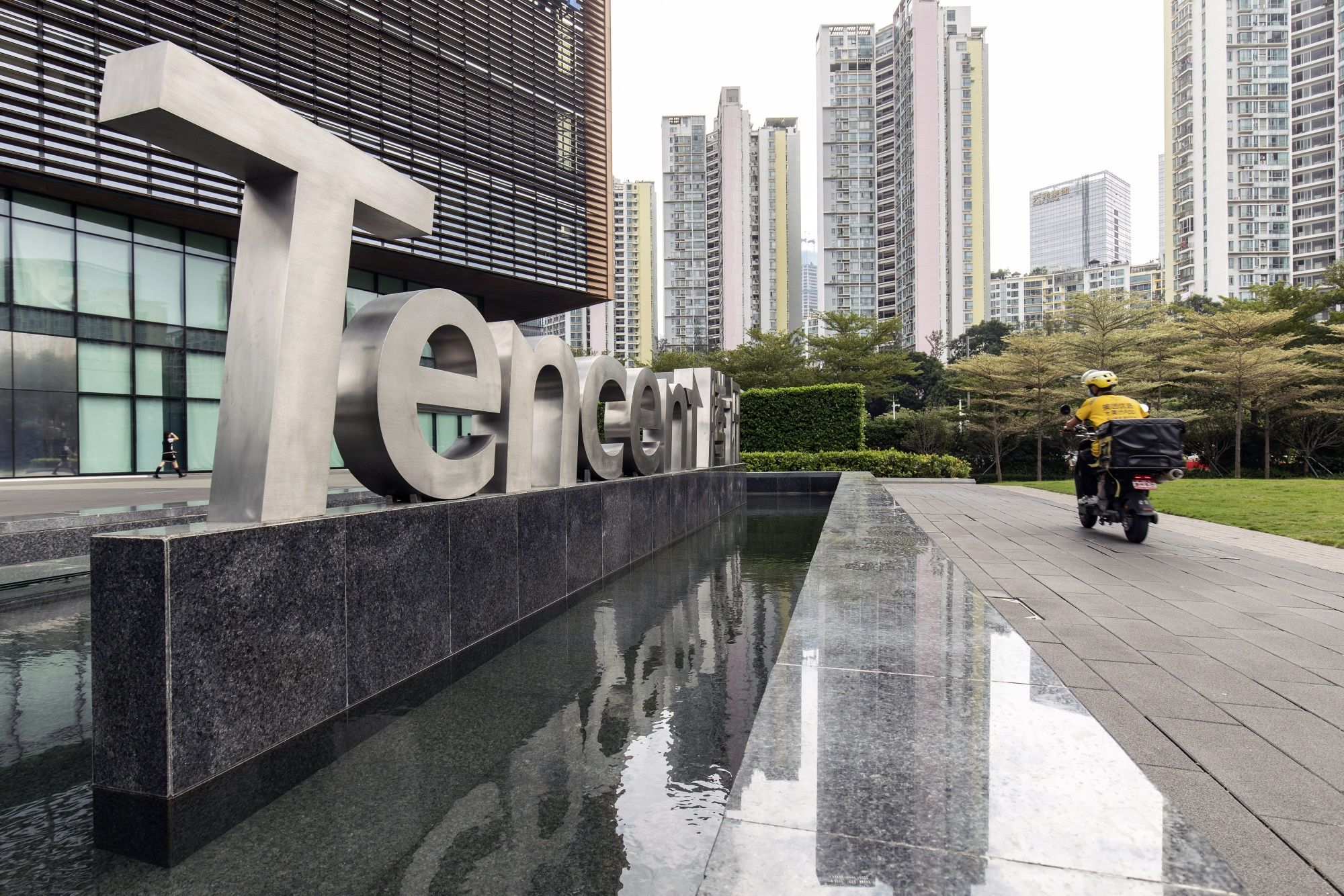
(Bloomberg) -- Dozens of ESG funds sold more than $1 billion worth of Tencent Holdings Ltd. shares in the past six months, as concerns about Chinese censorship and regulatory risks grew.
Sustainalytics, an ESG research and ratings company, in late August downgraded Tencent to the category of “non-compliant” with UN principles. Since then, funds run by AXA Investment Managers SA, Candriam and Storebrand Asset Management sold their stakes; among ESG funds in Europe, more than 40 sold Hong Kong-listed shares valued at $1.2 billion, according to data compiled by Bloomberg.
Though many ESG investors still own Tencent and other Chinese internet companies, the exits illustrate how some are grappling with challenges posed by the nation's record of surveillance and suppression of free speech, including on platforms like Tencent's WeChat. The government's crackdown on technology firms has also called into question the viability of investing in the sector in recent years.
“Censorship and surveillance were growing, and expanding to regions like religion, LGBT issues, the Ukraine war, and Covid,” said Simon MacMahon, global head of ESG research for Sustainalytics, a unit of Morningstar Inc. Chinese internet companies Baidu Inc. and Weibo Corp. were also downgraded. The three firms “play a significant role in that,” he said in an interview.
Storebrand said it divested because of the Sustainalytics downgrades. Others, including Alecta, Sweden's biggest pension company with a $107 billion portfolio, exited because of regulatory risks from “state intervention in private businesses.”
Alecta, which has also sold off its stake in Alibaba Group Holding Ltd., no longer has “any direct investments” in Chinese firms, said Carina Silberg, head of governance and sustainability. “Risks in Chinese companies are hard to assess, and the development in China is not going in the right direction.”
Meanwhile Candriam, the third-biggest provider of “Article 9” funds — the most stringent environmental, social and governance designation in the EU — with $153 billion in assets under management, said it decided in December to drop Tencent from all of those portfolios. The decision was “certainly a difficult one from a financial perspective” but was made after Tencent failed to meet Candriam's ESG standards even after direct engagement, a spokesperson said.
“As a publicly listed global company we hold ourselves to the highest standards, and our policies and procedures comply with all laws and regulations in each country where we operate,” Tencent said in an emailed statement. “User privacy and data security are core values at Tencent, and we look forward to continuing to sustain user trust and delivering great user experiences.”
Representatives for Baidu and Weibo didn't immediately reply to requests for comment. AXA Investment Managers declined to comment.
The Russian invasion of Ukraine sparked an impassioned public debate about whether ESG investors should exclude companies based in authoritarian countries. Asset managers including Mirova, the $29 billion sustainable-investing unit affiliated with Natixis Investment Managers, said last year it had blacklisted some Chinese assets. It pointed to Russia's war as an example of how “there is no responsible investment if there is no democracy.”
Tech Rebound
Not everyone agrees. Asian ESG funds increased exposure to Chinese stocks by $570 million in January and are close to returning to a neutral position amid improved market sentiment, Bank of America Corp. analysts including Girish Nair said in a note dated Feb. 15.
The ESG exits also coincided with a rally in share prices. Chinese technology stocks have jumped since late last year, when the government signaled a shift away from crackdowns in favor of economic growth. The Hang Seng Tech Index has surged about 48% from its October trough, and Tencent has gained 90%.
At least one fund run by Calvert Research & Management, a $33 billion unit of Morgan Stanley focused on responsible investing, exited Tencent. It's wary of Chinese companies that do business in high-profile industries because they “tend to get a lot of attention from the government” and are “very susceptible” to regulatory risks, said Hellen Mbugua, Calvert's director of research.
Reputational risks are also becoming “more and more important” as ESG “becomes more mainstream,” Mbugua said in an interview.
--With assistance from , , , and .
More stories like this are available on bloomberg.com
©2023 Bloomberg L.P.

-
'Never Seen This Level Of Negativity': Sandeep Tandon Says The Next Rally May Be Closer Than You Think

Veteran investor Sandeep Tandon says foreign selling is easing, large-caps are due a comeback and mid-caps are crowded, while he turns positive on gold, power and pharma this Diwali.
-
Indians Stay With Family, Not In Hotels | The Reason Why
India still lacks enough clean, reliable and affordable hotels for budget-conscious travellers.
-
The Economic Imperative: Analysing The Material Driving Force Behind India-Canada Strategic Reset
This economic complementarity is further reinforced by deep institutional investment ties and talent mobility, which form the bedrock of the bilateral framework.
-
Medicine Pricing: Where Must Profit Stop?
India must confront excessive margins, hidden incentives and regulatory gaps that threaten the integrity of medicine.
-
Why Amazon And Flipkart Are Struggling To Beat Meesho In India's Smaller Cities
With 274 million users and lowest-cost logistics, Meesho is defending its value commerce crown against giants like Amazon and Flipkart.
-
High US Salaries, No Green Card Certainty: The Financial Calculation Facing Indian H-1B Families
The suspension of PERM processing at eight technology employers does not cancel existing H-1B visas. What it does is force a question many Indian families have been avoiding: is the US salary worth tying your career and family plans to one employer?
-
Swiggy vs Eternal: Food Delivery's Two Rivals Are No Longer In The Same Race
Eternal is building a private AI assistant, dark.ai. Swiggy is still working out how to make Instamart pay, with an operating loss of Rs 895 crore in the July-September quarter while Blinkit stayed profitable.
-
Where You Live Shapes How You Get To Work | The Reason Why
Two-wheelers are the most popular way to get to work in India, accounting for nearly 43% of workplace commutes.
-
Unhedged Position: Can India See An Indonesia-Style Time Correction?
The Nifty is trading below levels it first clocked in 2024. Is there, then, as I have suggested in the headline, potential that the current time correction drags on painfully for the next three-five, even ten years?
-
Navigating Friction And Energy Realities: An Analysis Of Marco Rubio's October Visit To India
Occurring at a critical juncture marked by stalled trade negotiations and escalating geopolitical pressures over global energy supplies, the visit offers a profound window into modern US-India relations.










