Tata Steel, Tata Power, Wipro, ACC And More — Stocks That Were Trading Before India's Independence
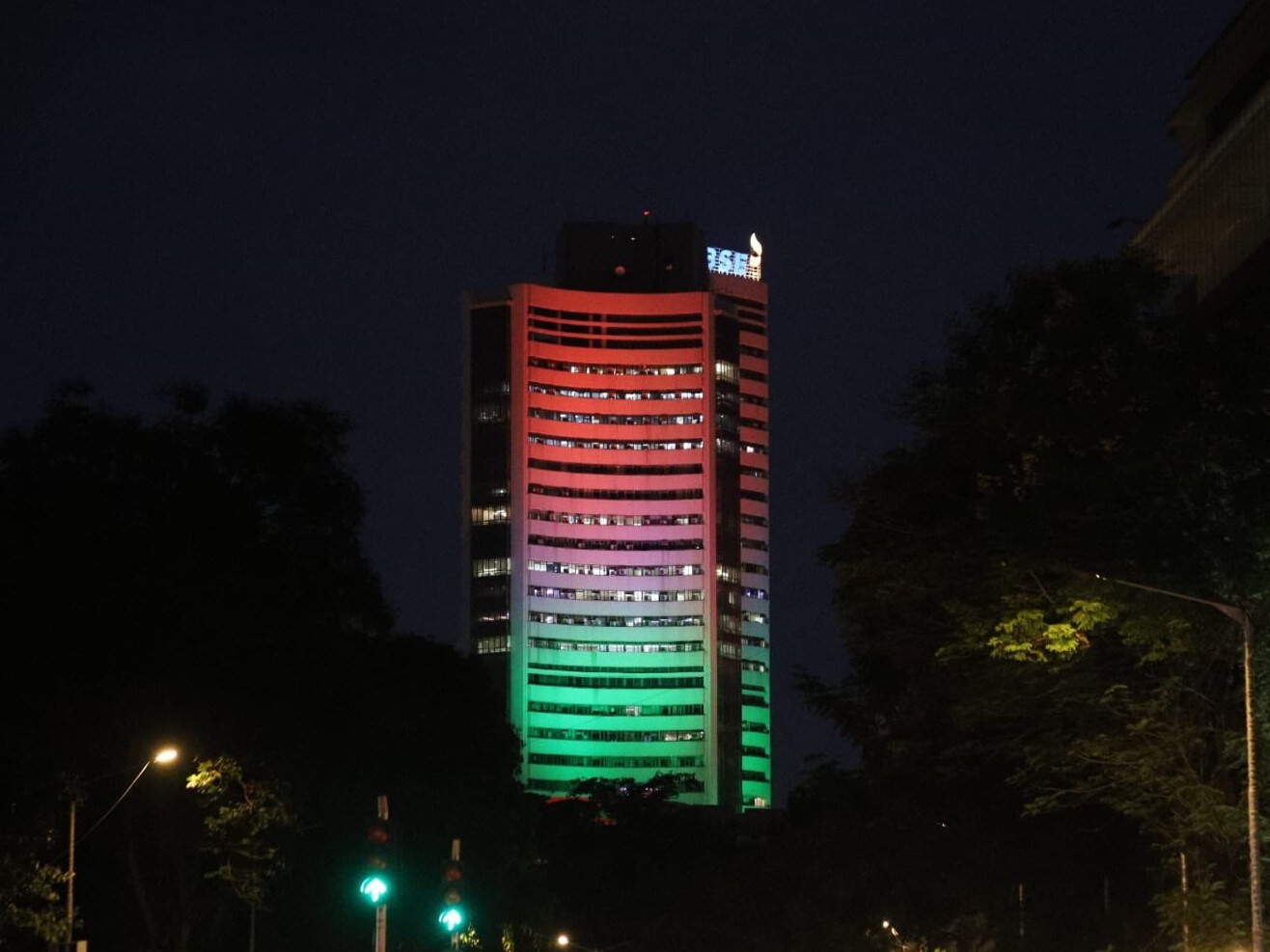
As India marks its 79th year of independence, eighteen companies that predate the nation's freedom continue thriving on BSE.
BSE, established in 1875 as Asia's oldest stock exchange, now ranks 6th globally by market capitalisation, exceeding $5 trillion, providing the platform for these remarkable corporate survival stories spanning nearly a century of economic transformation.
Nearly eight decades after India's independence, eighteen companies that were already trading before 1947 remain active on the Bombay Stock Exchange, showcasing remarkable corporate endurance with wildly varying performance since 1990.
Wipro
The IT giant leads all companies with exceptional 27% annualised returns. Listing just months before independence in June 1947, the company transformed from a vegetable oil manufacturer into India's fourth-largest IT services player, exemplifying successful business model evolution and strategic adaptation.
Tata Power
With 10.9% annualised returns over the last 35-year period, Tata Power is one of India's largest integrated power companies. It operates across electricity generation, transmission, and distribution, maintaining its position as a leading utility company for nine decades.
Alembic
With diverse operations spanning across pharmaceuticals, real estate, and power assets, demonstrating the benefits of multi-sector operations, Alembic has delivered strong 15.2% annualised returns since 1990.
Bombay Dyeing
Originally a textile business, the company has since diversified into real estate development, polyester staple fibre manufacturing, and retail operations, with a 3.9% annualised return since 1990.
ACC
One of India's leading cement manufacturers, ACC has maintained steady growth in manufacturing and selling cement and ready-mix concrete products. Since 1990, it has delivered 9.4% annualised returns.
Tata Steel
As one of India's largest steel manufacturers, the company has successfully navigated multiple economic cycles while maintaining its industrial leadership position. Its shares have achieved 9.7% annualised returns since 1990.
Swan Energy
Originally incorporated as a cotton and polyester textile manufacturer, the company completely pivoted to real estate development and LNG storage facilities. The company has delivered 14.5% annualised returns through business transformation.
Walchand Peoplefirst
With annualised returns of 5.8% since 1990, the company was founded by industrialist Seth Walchand Hirachand and incorporated in July 1920.
Formerly known as Premier Construction Ltd, its operations have evolved from heavy engineering and construction to consulting and training services. Now operating as Walchand Plus in partnership with Dale Carnegie Training USA, it focuses on behavioural skills development and HR consultancy.
Walchandnagar Industries
Walchandnagar Industries achieved solid 13.3% annualised returns, maintaining focus on heavy engineering and foundry & machine shop business operations throughout its eight-decade journey.
Supreme Industries
With 18.7% annualised returns since 1990, Supreme Industries emerged as a strong wealth compounder for its investors.
Founded in 1942 during India's independence struggle, the company was taken over by the Taparia family in 1966, who focused entirely on plastics processing. Now India's largest plastic manufacturer, handling over 6,40,000 tonnes of polymers annually across 29 plants, Supreme pioneered several products, including 'Satranj' PP mats and various piping systems.
Andhra Cements
Andhra Cements delivered 8.7% annualized returns through steady cement manufacturing and sales operations.
The Ravalgaon Sugar Farm
The Ravalgaon Sugar Farm generated 6.8% annualized returns. Now owned by Reliance Industries, the company shifted from sugar farming to confectionery product manufacturing.
Peninsula Land posted negative -3.9% annualized returns. The real estate development company has faced sustained challenges in the volatile property sector.
Raja Bahadur International
Raja Bahadur International achieved 14.5% annualized returns. Originally known as The Raja Bahadur Motilal Poona Mills Ltd, it was promoted by the Pittie family in the late 19th century and incorporated in 1926 for textile manufacturing. The company later diversified into drawing office equipment and machine tool accessories before transitioning to real estate development and construction, including the Raja-Shree Business Park leased to Tata Consultancy Services.
Victoria Mills
Originally in fabric manufacturing, the company successfully transitioned to real estate development operations. Its shares have delivered annualized returns of 7% over the last 35 years.
Shree Digvijay Cement
Shree Digvijay Cement delivered strong 16% annualized returns through consistent cement manufacturing and sales operations.
Kesar Enterprises
With modest annualized returns of 2.4%. Originally incorporated as The Kesar Sugar Works in August 1933.
The company belongs to the Kilachand Devchand group and operates sugar production, spirits, ethanol, and a 44MW bagasse-based cogeneration power plant at Baheri, Uttar Pradesh. The company has experienced recent challenges with poor sales growth of -8.40% over five years.
Mukand
The special alloy steel, billets, bars, and rods manufacturer has faced significant challenges in the competitive steel sector, with -0.5% annualized returns.

-
Talking Points This Week: Leadership Shock At Nvidia, Earnings Strength, And The Fog Over Hormuz

The Anthropic IPO pricing and first trading day, Nvidia's upcoming earnings, and any fresh signals from Iran will set the tone for the following week.
-
Signature Play: The Classic Cocktail Is Dead. Or Is It?
Classic cocktails are disappearing from India's cocktail menus. But they're still being ordered, taught to bartenders and borrowed from. So, who's really having the last drink?
-
A New Samvat Wishlist: Inclusive Prosperity And Human Development
India has strengthened its economic foundations through infrastructure, digital access and enterprise. Its next growth chapter must deepen productivity, create better livelihoods and widen participation in prosperity.
-
Love, Sex Aur Dhokha: The Audacious Plot To Spy On Jensen Huang
A Taipei dinner, a Singapore chip buyer and a suspected Chinese asset: inside the alleged spy operation that got close to NVIDIA's Jensen Huang.
-
Ten Things I Learnt This Samvat
Patience can be a trap. Cheap stocks can stay cheap. Leverage can wipe you out. What did Samvat 2082 teach us? Niraj Shah writes on 10 lessons from the year gone by.
-
Talking Points This Week: Tech Nerves, FII Buying, And A Faraway Banking Shock
The global markets are not shining this Diwali. The exception in the large markets is, India.
-
Midterm Rally Lasted A Day. The Hard Reality Of A Divided US May Last Two Years | Opinion
Between a contested AI boom, a debt ceiling that arrives in 2027 and a president with every incentive to act alone, the next two years may prove more volatile than the first day's rally suggests.
-
Blue Wave Will Derail the AI Trade but Won't Dismantle the AI Era | Unhedged Position
The Democrats' sweep of the US Congress will see politics collide with economic forces both over the long and short term.
-
It's Time To Take The GST Council's Bet On Trust Global
Payment records can prove India's services exports, and clear, proportionate rules can bring foreign digital sellers into the tax net.
-
Opinion | India at 38: From Innovation Overperformer to Innovation Powerhouse
India now has 453 VC-backed deep science startups, 18 of them late-stage, after 117 percent growth since 2020. Laurus Labs, at USD 9.3 billion, is the most valuable deep science company in any middle-income economy outside China.









