Stocks Rally As Powell ‘Locks In’ A September Cut: Markets Wrap

(Bloomberg) -- Stocks rallied across the board and bond yields tumbled, with Jerome Powell giving its clearest signal yet that the Federal Reserve will begin cutting interest rates in September.
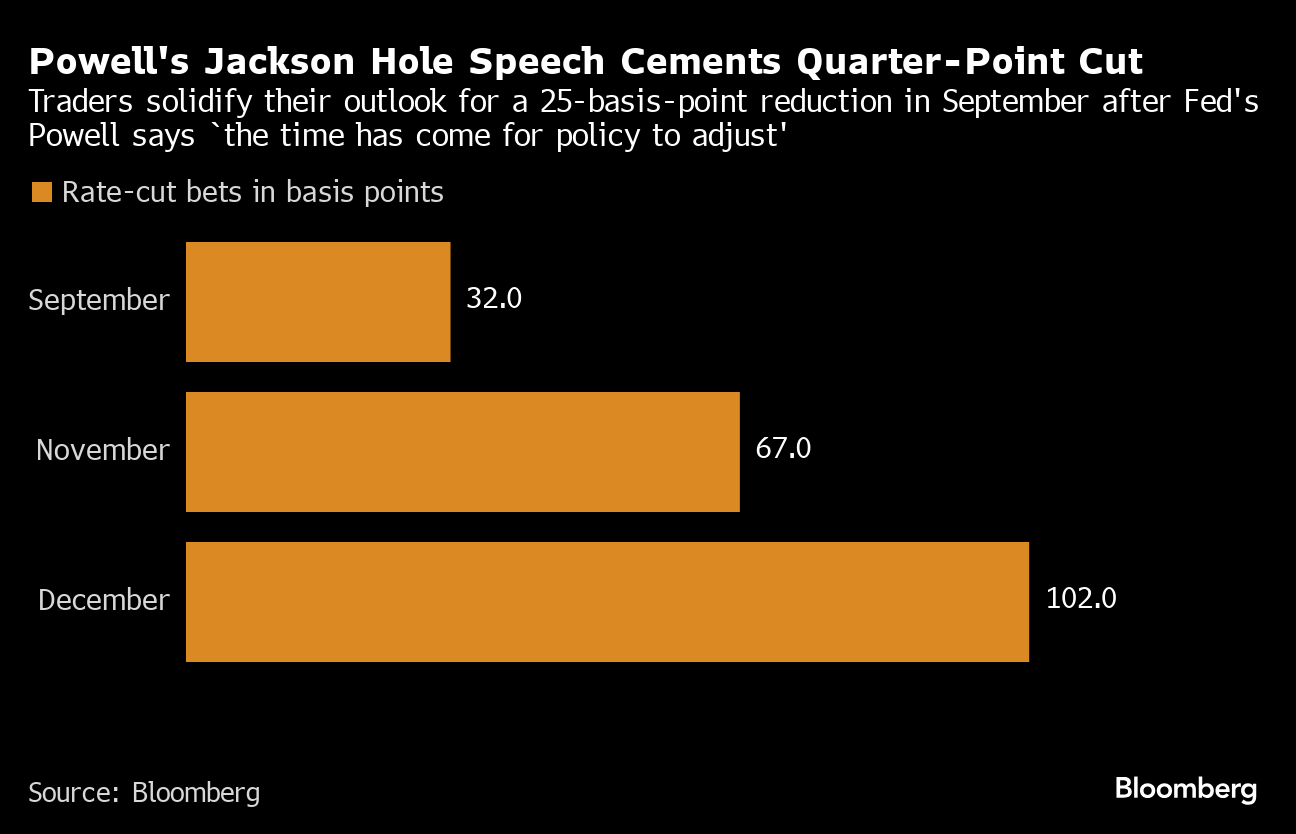
While Wall Street had already priced in the start of policy easing next month, Powell's comments that the “time has come” validated those views. Now there are plenty of other aspects in his Jackson Hole speech that shouldn't be overlooked. For one, the Fed chief acknowledged recent progress on inflation. Then there's the fact the he sees the economy growing at a “solid pace” — which provides reassurance after the recent growth jitters.
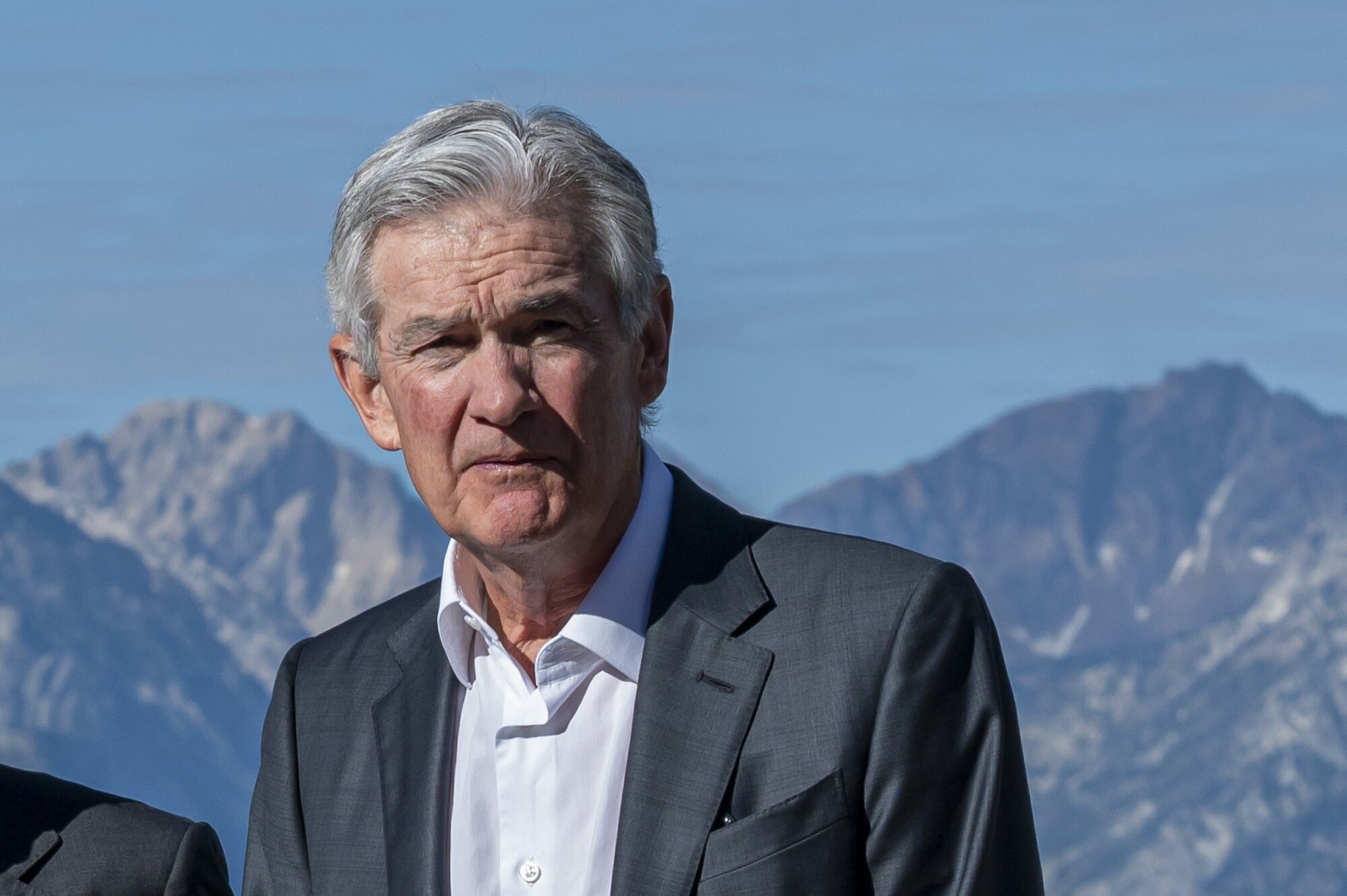
But it was actually his emphasis on the “cooling labor market” that got the attention of many market observers. Basically, it was seen as an indication the Fed will do whatever it can to avoid a pronounced slowdown.
“The market should be happy with this speech because it wasn't hawkish in any way, gave the green light for 25 basis-point rate cuts — and left the door open for even larger cuts if that becomes necessary,” said Chris Zaccarelli at Independent Advisor Alliance.
To be sure, bigger cuts could also be a warning sign for equities as they could indicate a rush prevent an economic contraction.
“It is important at this time to take a balanced approach to investing and neither plan for an imminent recession, nor chase risk and get complacent just because the Fed will be lowering rates in less than a month,” Zaccarelli noted.
Absent from Powell's speech was any specific discussion of the destination for the federal funds rate at the end of this easing cycle or the pace of rate cuts along the way, noted Richard Clarida at Pacific Investment Management Co.
“The details are yet to come into focus, but for the Fed, the direction of travel seems clear,” said Clarida, also a former Fed vice chair. The August jobs report will likely be significant in the “25 versus 50” discussion, he said.
In the meantime, investors cheered. All major groups in the S&P 500 gained, with the gauge up over 1%. An MSCI gauge of global shares hit an all-time high. The Bloomberg “Magnificent Seven” gauge of megacaps rose 1.7%. The Russell 2000 of small firms jumped 3.2%.
A rally in Treasuries was led by shorter maturities. The two-year yield broke below 4%. The dollar lost 1%. Swap traders are now pricing in 102 basis points of easing this year, which implies a reduction at every remaining policy meeting through December, including one jumbo 50-basis-point cut.
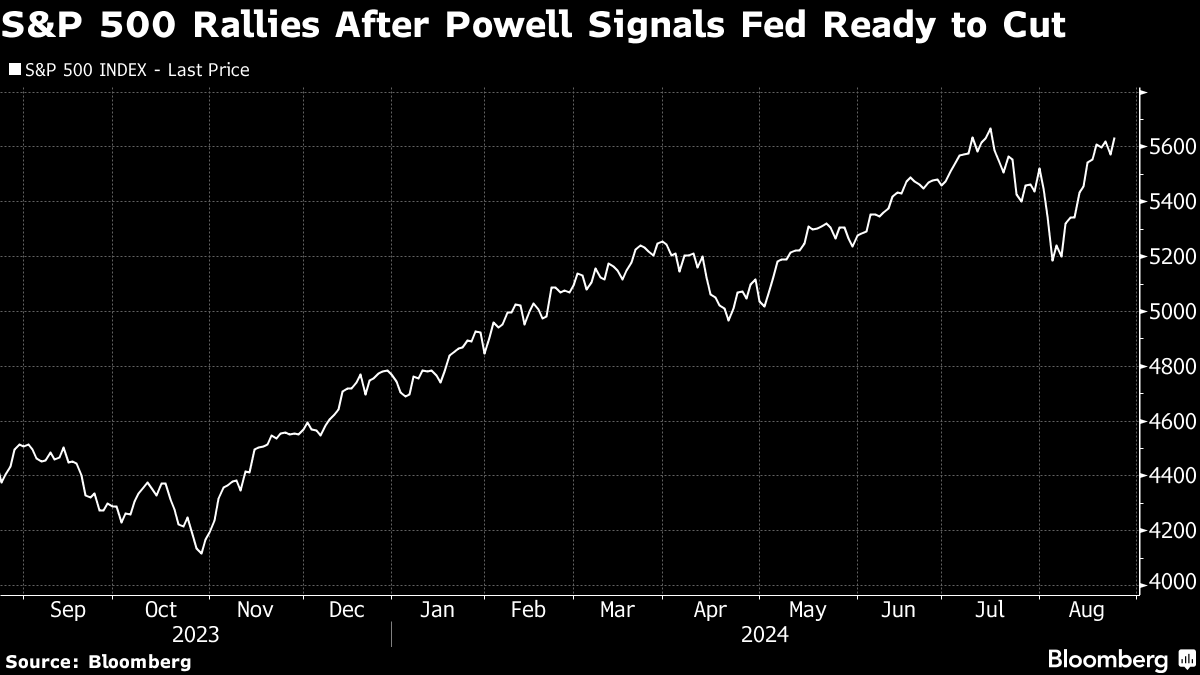
“Here comes the punchbowl,” said David Russell at TradeStation. “Jerome Powell came out swinging today with a litany of dovish signals. He drove the point home with a clear call for adjusting policy. This keeps a tailwind at the market's back into year-end, making it harder to expect a retest of this month's lows.”
To Krishna Guha at Evercore, while Powell did not explicitly reference the “size” of cuts, “pace” incorporates the possibility of moving faster than 25 basis points per meeting.
“Powell has rung the bell for the start of the cutting cycle,” said Seema Shah at Principal Asset Management. “Powell has not pre-committed to a 50 basis-point cut. But make no mistake, if the labor market shows signs of further cooling, the Fed will cut with conviction.”
Neil Dutta at Renaissance Macro Research noted that the word “gradual” was missing from his speech. Unlike some of the recent Fed speakers, Powell is not removing the optionality of doing large moves as policy adjusts, he said.
“The strike price on the fabled ‘Powell Put' is now rising,” Dutta added.
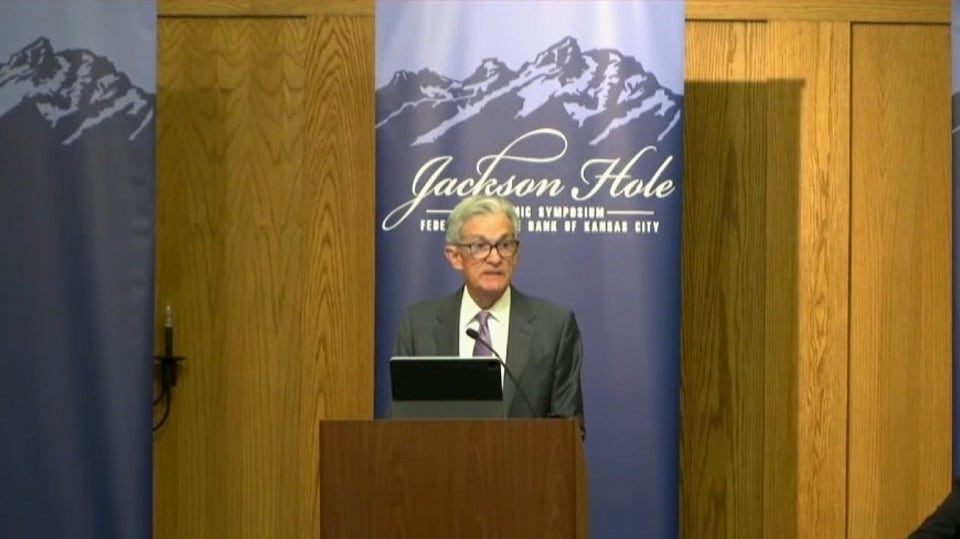
While many had their eyes peeled on Powell's speech at the Jackson Hole symposium, to Morgan Stanley's Michael Wilson, the jobs data in early September will be of even bigger importance.
“It's about the labor data, period — that's what's going to dictate what the Fed does, they've said that,” Wilson, the bank's chief US equity strategist, said in an interview with Bloomberg Television. “And that's what the market is going to trade off of.”
Former Treasury Secretary Lawrence Summers said that, while the Fed hit a “low point” in its monetary policy history by failing to act quickly against the 2021 inflation surge, in the end it did enough to right the economy.
“I've got to give the Fed credit,” Summers said on Bloomberg Television's with David Westin on Friday. “While it wasn't always obvious that this would be the case, they moved strongly enough and vigorously enough to keep expectations anchored” for inflation, he said.
Corporate Highlights:
- Apple Inc. is planning to hold its biggest product launch event of the year on Sept. 10, when the company will unveil the latest iPhones, watches and AirPods, according to people familiar with the situation.
- McKesson Corp. is in advanced talks to buy a controlling stake in Florida Cancer Specialists & Research Institute, a privately-held operator of oncology clinics, according to people familiar with the matter.
- Slowing sales at Topgolf Callaway Brands Corp.'s namesake driving ranges and a hefty debt load that threatens to frighten off buyers spurred Raymond James to slash the company's rating.
- Workday Inc. surged after executives said the software company would sharply increase profitability over the next three years.
- Cava Group Inc. soared after raising its full-year outlook after posting second-quarter results that beat expectations, the latest indicator that diners see good value in fast-casual restaurants.
Some of the main moves in markets:
Stocks
- The S&P 500 rose 1.15% as of 4 p.m. New York time
- The Nasdaq 100 rose 1.2%
- The Dow Jones Industrial Average rose 1.1%
- The MSCI World Index rose 1.2%
- Bloomberg Magnificent 7 Total Return Index rose 1.7%
- The Russell 2000 Index rose 3.2%
Currencies
- The Bloomberg Dollar Spot Index fell 1%
- The euro rose 0.7% to $1.1190
- The British pound rose 0.9% to $1.3210
- The Japanese yen rose 1.4% to 144.27 per dollar
Cryptocurrencies
- Bitcoin rose 4.9% to $63,655.86
- Ether rose 4.7% to $2,749.77
Bonds
- The yield on 10-year Treasuries declined six basis points to 3.80%
- Germany's 10-year yield declined two basis points to 2.22%
- Britain's 10-year yield declined five basis points to 3.91%
Commodities
- West Texas Intermediate crude rose 2.6% to $74.91 a barrel
- Spot gold rose 1% to $2,510.80 an ounce
This story was produced with the assistance of Bloomberg Automation.
--With assistance from Alex Nicholson, Robert Brand and Lynn Thomasson.
More stories like this are available on bloomberg.com
©2024 Bloomberg L.P.

-
The Curious Case of Equitas Small Finance Bank And A CEO Who Quit For Stock

PN Vasudevan believes persistent investor concerns over a perceived conflict of interest had become a governance overhang on Equitas Small Finance Bank's stock, even as the lender improved profitability and asset quality.
-
Talking Points This Week: AI Cash Burn, A Tiger Comeback And An India That Still Finds Its Own Path
India is not immune to higher oil or tighter global liquidity, yet its earnings base is broader, its domestic policy levers are still available.
-
Foreign Investors Own Half Of HDFC Bank and ICICI Bank. An LTCG Cut Could Matter Most Here
Foreign portfolio investors have US$115 billion parked in HDFC Bank, ICICI Bank. If the government cuts long-term capital gains tax, Jefferies says returning foreign money could land here first.
-
'Never Seen This Level Of Negativity': Sandeep Tandon Says The Next Rally May Be Closer Than You Think
Veteran investor Sandeep Tandon says foreign selling is easing, large-caps are due a comeback and mid-caps are crowded, while he turns positive on gold, power and pharma this Diwali.
-
Indians Stay With Family, Not In Hotels | The Reason Why
India still lacks enough clean, reliable and affordable hotels for budget-conscious travellers.
-
The Economic Imperative: Analysing The Material Driving Force Behind India-Canada Strategic Reset
This economic complementarity is further reinforced by deep institutional investment ties and talent mobility, which form the bedrock of the bilateral framework.
-
Medicine Pricing: Where Must Profit Stop?
India must confront excessive margins, hidden incentives and regulatory gaps that threaten the integrity of medicine.
-
Why Amazon And Flipkart Are Struggling To Beat Meesho In India's Smaller Cities
With 274 million users and lowest-cost logistics, Meesho is defending its value commerce crown against giants like Amazon and Flipkart.
-
High US Salaries, No Green Card Certainty: The Financial Calculation Facing Indian H-1B Families
The suspension of PERM processing at eight technology employers does not cancel existing H-1B visas. What it does is force a question many Indian families have been avoiding: is the US salary worth tying your career and family plans to one employer?
-
Swiggy vs Eternal: Food Delivery's Two Rivals Are No Longer In The Same Race
Eternal is building a private AI assistant, dark.ai. Swiggy is still working out how to make Instamart pay, with an operating loss of Rs 895 crore in the July-September quarter while Blinkit stayed profitable.










