South Korea Watchdog Intensifies Crackdown On China-Linked Notes

(Bloomberg) -- South Korea's regulator will launch a wider probe into local banks and brokers which sold exotic notes linked to Chinese stocks amid concerns that the securities may saddle investors with heavy losses.
Authorities will start investigating 12 institutions on Monday to determine if there was any wrongdoing over the sale of equity-linked securities that are tied to the Hang Seng China Enterprises Index, according to a statement from the Financial Supervisory Service. KB Kookmin Bank and Korea Investment & Securities Co. are among the firms that will be probed, it added.
The watchdog said it uncovered several issues during a two-month inspection, including the practice of pushing bankers to aggressively market high-risk notes that are hard for retail investors to understand.
Even if the banks had systems in place, “we are not sure whether they did their duty to explain the product in a way that's easy to understand, or whether customers just clicked and signed the contracts to buy something without knowing exactly what it is,” FSS Governor Lee Bokhyun told a press briefing on Thursday.
The probe shines the spotlight on investing trends in South Korea where an insufficient pension system and a general penchant for risky trades have prompted retail investors to pile into highly speculative bets. Authorities are now seeking to address the situation, with regulators creating a team to manage potential investor complaints related to possible losses from the equity-linked notes.
Korea to Create Team for Potential Losses in China-Linked ELS
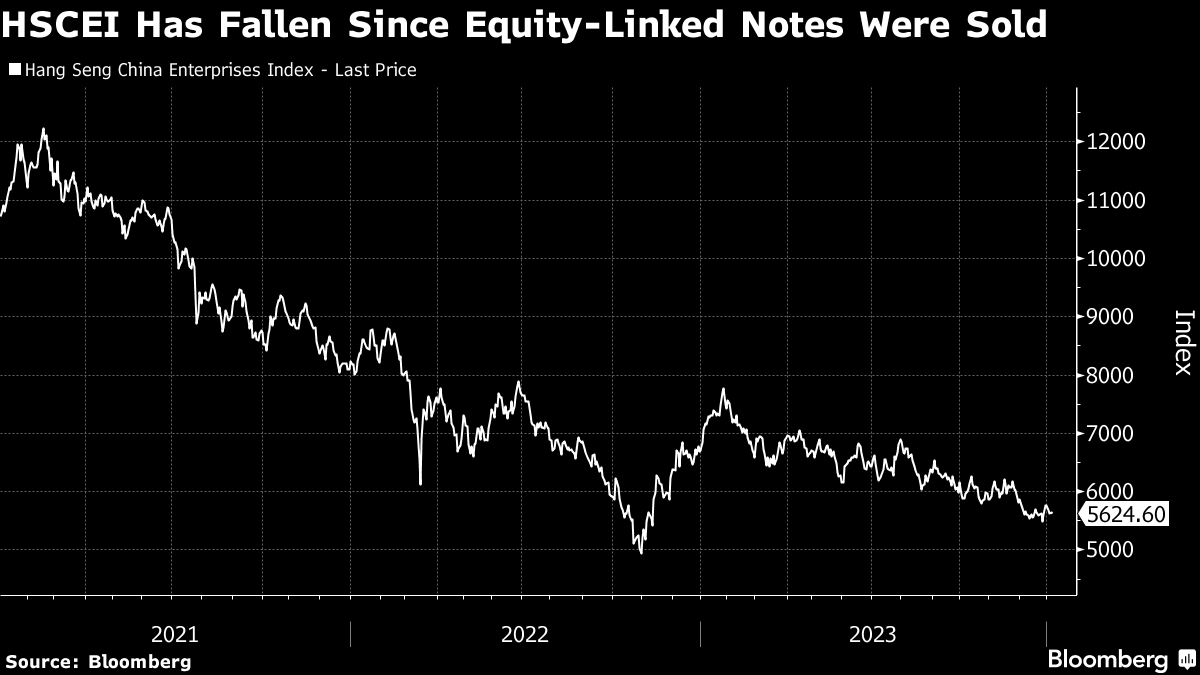
About 15.4 trillion won ($11.7 billion) worth of the equity-linked securities will mature this year as investors couldn't meet the requirements for early redemption, the FSS said in the statement. Some of the notes were sold in 2021 when the HSCEI was above 12,000 whereas the gauge is now trading at less than half that level.
The total outstanding balance of the notes is 19.3 trillion won with retail investors holding 91% of them, FSS said. About 30% of the investors are aged 65 and above.
More stories like this are available on bloomberg.com
©2024 Bloomberg L.P.

-
Getting To Work Costs Women More | The Reason Why

It is not just about women paying more than men. It is about women paying much more in cities than in villages.
-
AI Bias In Investing Cannot Be Eliminated, But It Can Be Governed
Framing is a particularly important example as identical financial information presented in terms of gains rather than losses can lead an LLM to reach a different assessment.
-
Joining The Dots | Dark Skies, Steady Diya: Why Hope Holds This Diwali
With war, a weak rupee and foreign outflows weighing on sentiment, policymakers at the NDTV World Summit and market veterans at NDTV Profit Ignite: Diwali Edition offered the same advice: stay invested and filter out the noise.
-
The Curious Case of Equitas Small Finance Bank And A CEO Who Quit For Stock
PN Vasudevan believes persistent investor concerns over a perceived conflict of interest had become a governance overhang on Equitas Small Finance Bank's stock, even as the lender improved profitability and asset quality.
-
Talking Points This Week: AI Cash Burn, A Tiger Comeback And An India That Still Finds Its Own Path
India is not immune to higher oil or tighter global liquidity, yet its earnings base is broader, its domestic policy levers are still available.
-
Foreign Investors Own Half Of HDFC Bank and ICICI Bank. An LTCG Cut Could Matter Most Here
Foreign portfolio investors have US$115 billion parked in HDFC Bank, ICICI Bank. If the government cuts long-term capital gains tax, Jefferies says returning foreign money could land here first.
-
'Never Seen This Level Of Negativity': Sandeep Tandon Says The Next Rally May Be Closer Than You Think
Veteran investor Sandeep Tandon says foreign selling is easing, large-caps are due a comeback and mid-caps are crowded, while he turns positive on gold, power and pharma this Diwali.
-
Indians Stay With Family, Not In Hotels | The Reason Why
India still lacks enough clean, reliable and affordable hotels for budget-conscious travellers.
-
The Economic Imperative: Analysing The Material Driving Force Behind India-Canada Strategic Reset
This economic complementarity is further reinforced by deep institutional investment ties and talent mobility, which form the bedrock of the bilateral framework.
-
Medicine Pricing: Where Must Profit Stop?
India must confront excessive margins, hidden incentives and regulatory gaps that threaten the integrity of medicine.










