Some Rough Edges Remain For Building Material Companies In 2017
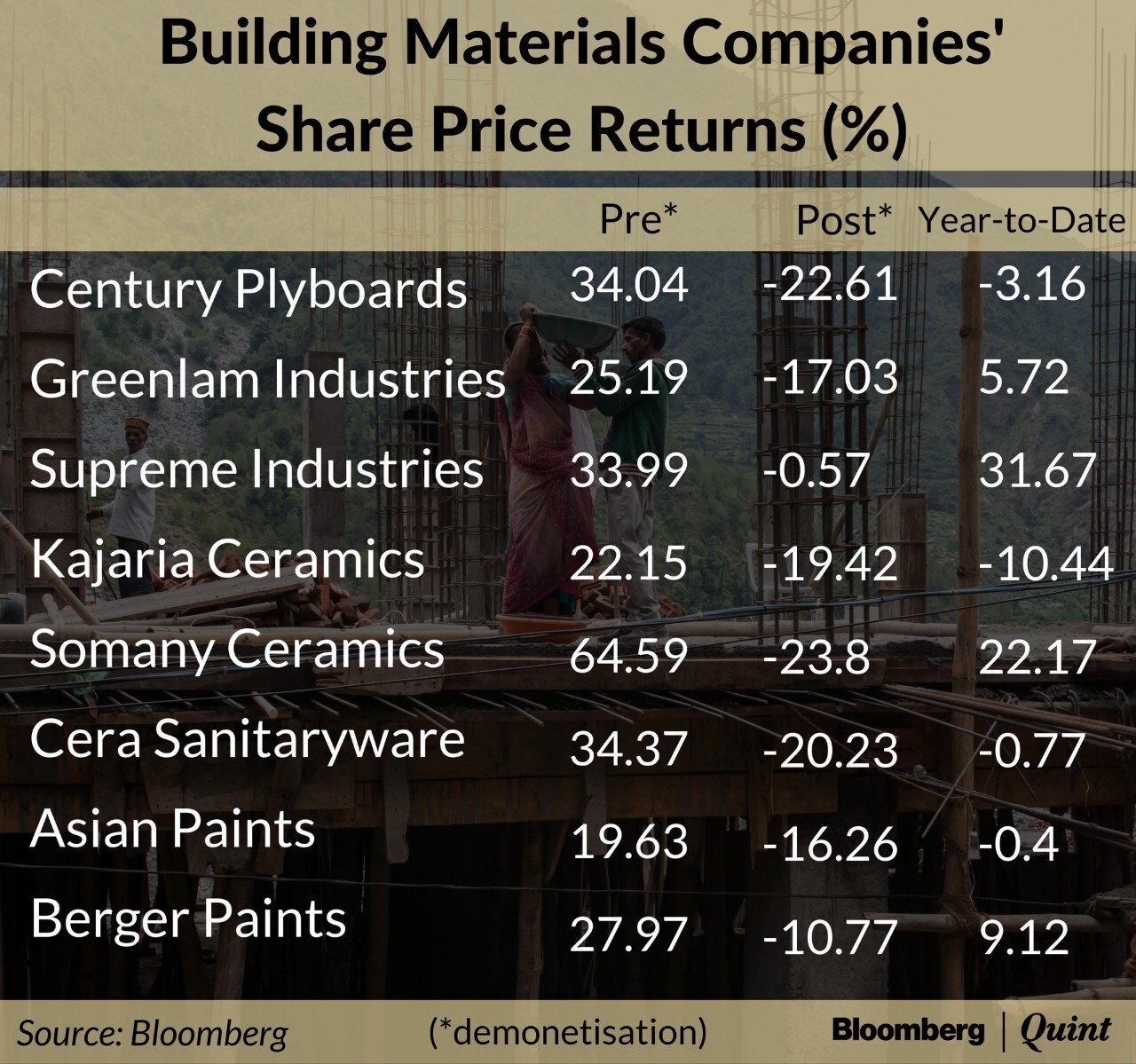
The cash crunch in the country has hit the real estate sector hard, and building material companies are also feeling the heat. In the days following the government's decision to demonetise old Rs 500 and Rs 1,000 notes, shares of plywood and paint companies, tiles and pipe manufacturers erased most of the gains recorded in the first 10 months of 2016.
The top nine listed companies in the building materials space had fared well for the first 10 months of 2016, with share prices rising in the range of 22 to 65 percent. Higher sales volumes coupled with good monsoons added to the cheer for good measure. In the aftermath of the currency purge though, six stocks in the sector wiped out all pre-demonetisation gains while the remaining three just about managed to stay in the green.
Lagged Impact
Sales did not drop immediately though, with customers using phased-out high denomination notes to buy building materials, and traders stocking up after the Diwali season. It was only in December, which is traditionally looked upon as a ‘performance month', that demand started softening.
Liquidity crunch and declining secondary sales is expected to impact December month sales across the space which already has a high base of last year to contend with.ICICI Securities Report In December
The weak offtake from the real estate industry has only added to the pain, with discretionary products likes tiles, plywood and paints bearing the brunt of the hit, and essentials like pipes relatively insulated.
Tiles
Nearly 40-50 percent of units in India's tile manufacturing hub, Morbi in Gujarat, were shut in December, said ICICI Securities in a report released on December 26. However, with the liquidity situation expected to improve in the new year, some units may resume operations, the report added.
Plywood And Pipes
Since the start of December, poor demand also started hurting the wood panel substrate (plywood) space, according to ICICI Securities. Plumbing pipe companies on the other hand have been impacted the least since it is a non-discretionary spend and most manufacturers are part of the organised market. According to both Antique Stock Broking and ICICI Securities, 65 percent of the total business is conducted through the organised market.
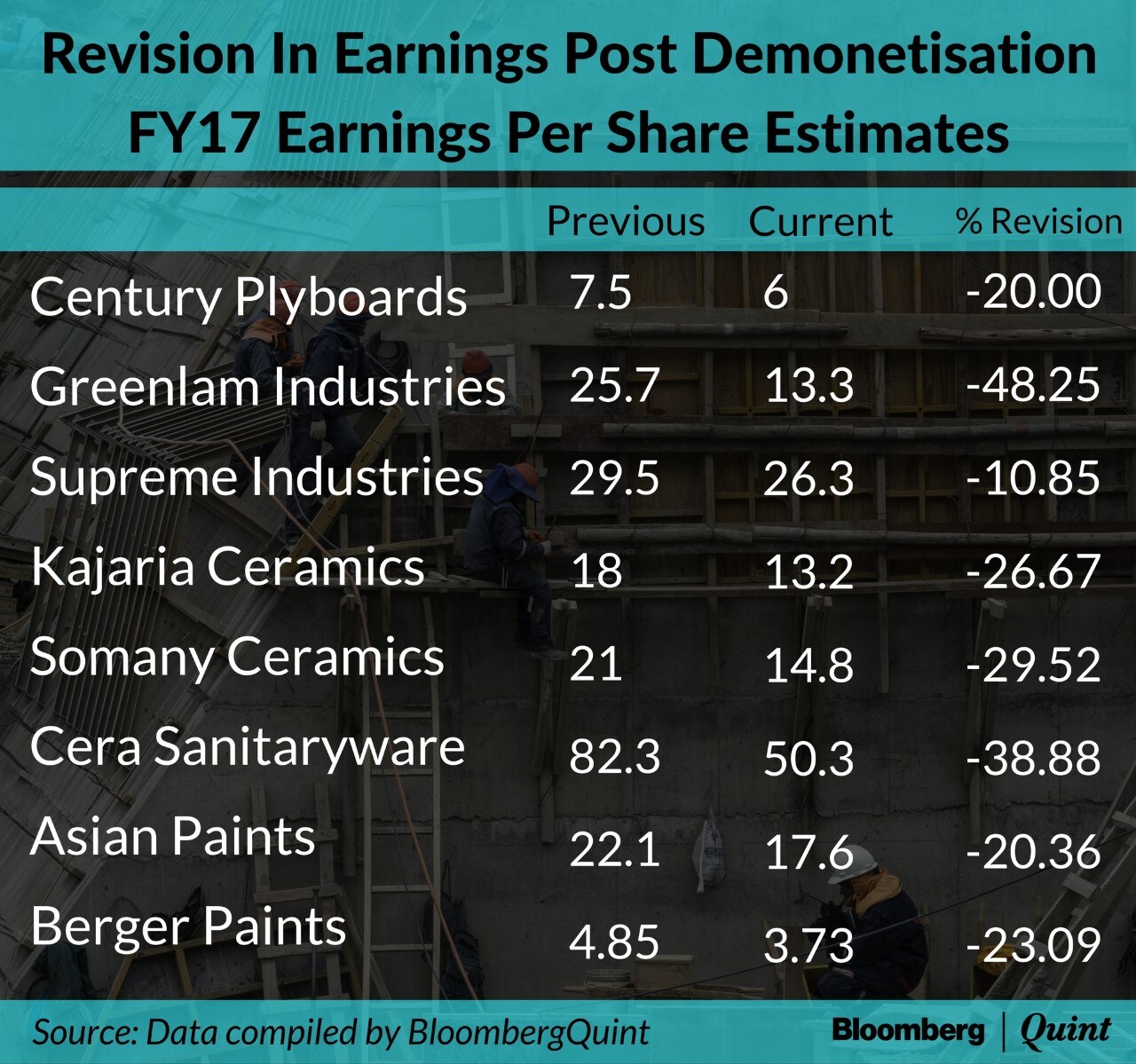
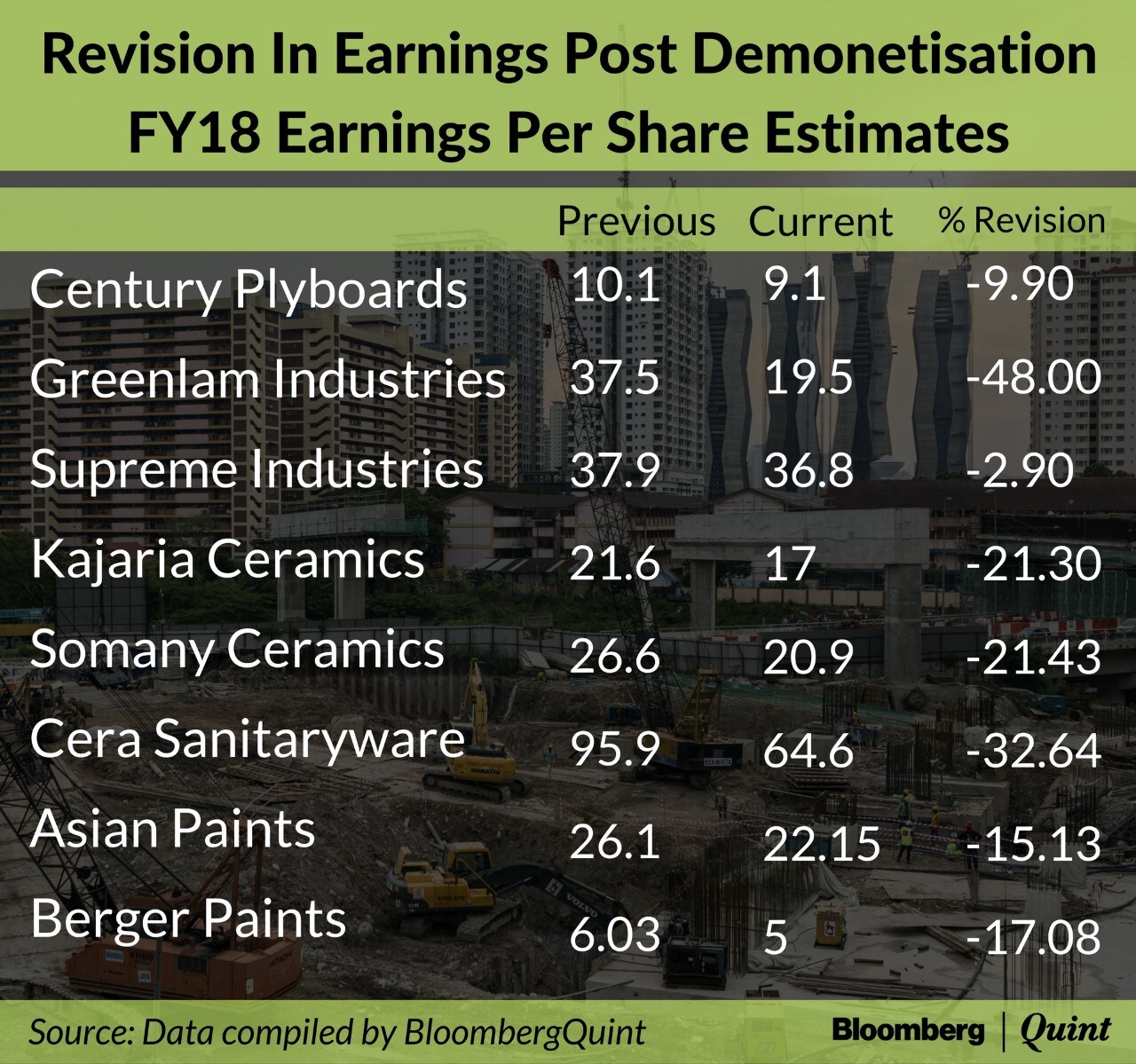
Various broking firms have already downgraded their earnings per share target for these companies.
For the financial year 2017-18, Greenlam Industries Ltd. leads the chart for earnings per share downgrade as only 30 percent of the decorative laminates market consists of organised players. The company's domestic revenue, which constitutes 60 percent of total revenue, comes mainly from the sale of premium designer laminate, which is a discretionary spend.
Organised Market Players Have The Edge
Demonetisation and the impending Goods and Services Tax rollout will give the traditionally smaller organised sector an edge. But the impact of the liquidity crunch is is likely to last for another three to six months, according to some brokerage houses. Demand recovery will depend on the wedding season and growth in the real estate sector, they said.
The ICICI Securities report suggests that although recovery will be slow, the long-term shift to the organised sector will be a huge opportunity for existing players.
Demand recovery could take longer than expected which could trigger underperformance or further correction in building material stocks in the near term. However, we also believe that the long-term structural story of the building material sector gets even stronger with the unorganised sector likely to get highly impacted which would transform into huge opportunities for organised brands.ICICI Securities Report

-
Why Swapping Your Old Gold Can Trigger A Rs 5 Lakh Tax Bill, And How You Can Avoid It Legally

Swapping old gold for new is taxed as a sale and a fresh purchase. Getting your own gold remade can cut most of that bill, though it has its own costs.
-
The AI Trade is Done. The Real Opportunity for Investors Starts in 2027 | Unhedged Position
As pureplay AI stocks plunge and circular, capex-led financing unwinds, 2027 is set to be a year of reckoning for AI companies. Yet the bust clears the way for a better opportunity for investors in 2027 -- shifting the spotlight from AI builders to the companies using AI.
-
Leadership As Mission: Why The Age Of AI Demands More Human Leadership
Debjani Ghosh examines how AI is changing leadership, arguing that its success must be measured by its impact on people and the accountability of those guiding its use.
-
We May Need Another Tukaram Mundhe To Fight Air Pollution | The Reason Why
Developers may install basic measures such as sprinklers and green nets, resume work, and continue violating rules when this equipment stops working.
-
Extracting Value From Battery Scrap Could Be Challenging For India | The Reason Why
A discarded lithium-ion battery still contains valuable materials such as lithium, nickel and cobalt. These can be recovered and reused. When such batteries are crushed and shredded, they produce a dark powder called black mass.
-
One El Nino, India Can Handle. Two Could Break The Granary
India's grain stocks can absorb one bad year, but a second El Nino could drain the buffer in two to three years, economists say.
-
India's Troika Of Good Luck | Joining The Dots
As Jensen Huang's exit drags Nvidia down, a cooling AI trade and resilient earnings have revived investor interest in India. A likely RBI rate hike looms.
-
Talking Points This Week: Leadership Shock At Nvidia, Earnings Strength, And The Fog Over Hormuz
The Anthropic IPO pricing and first trading day, Nvidia's upcoming earnings, and any fresh signals from Iran will set the tone for the following week.
-
Signature Play: The Classic Cocktail Is Dead. Or Is It?
Classic cocktails are disappearing from India's cocktail menus. But they're still being ordered, taught to bartenders and borrowed from. So, who's really having the last drink?
-
A New Samvat Wishlist: Inclusive Prosperity And Human Development
India has strengthened its economic foundations through infrastructure, digital access and enterprise. Its next growth chapter must deepen productivity, create better livelihoods and widen participation in prosperity.









