SEBI Allows Exchanges To Extend Trading Hours For Equity Derivatives
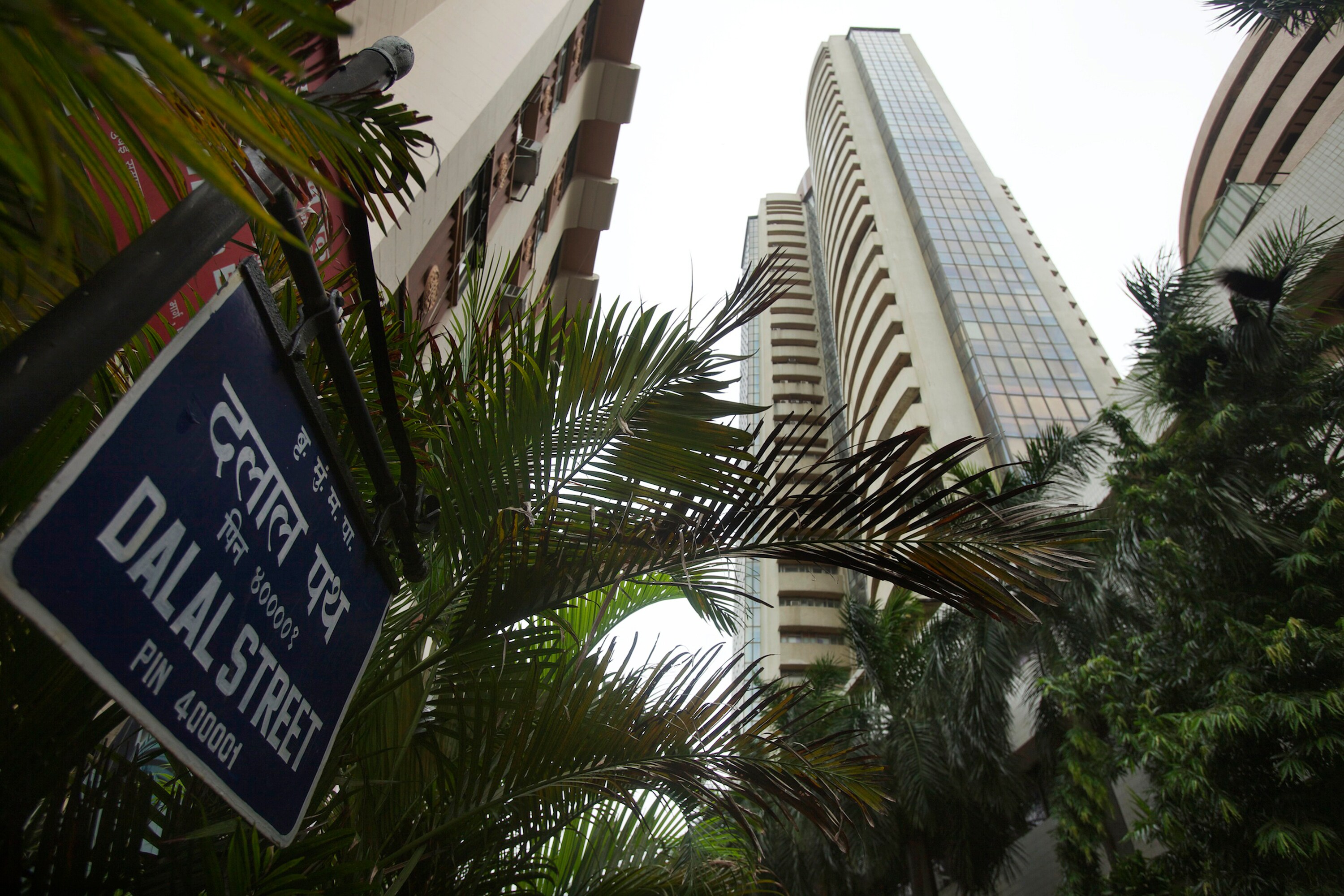
India's market regulator has allowed stock exchanges to extend trading in equity derivatives by more than eight-and-a-half hours to bring the timings in line with commodity markets.
Stock exchanges have been permitted to set their trading hours in the equity derivatives segment between 9:00 a.m. and 11:55 p.m from Oct. 1, according to a Securities and Exchange Board of India circular on its website. As of now, trading is allowed from 9.15 a.m. till 3.30 p.m.
The decision is aimed at integration of various trading segments of securities market as stock exchanges have been permitted to trade commodity derivatives along with other segments of securities from Oct. 1.
SEBI had earlier allowed unified exchanges for stocks, commodities and derivatives. That came after the Forwards Market Commission, the erstwhile regulator for commodity markets, was merged with it in the aftermath of the Rs 5,600 crore payments crisis at the National Spot Exchange Ltd.
Extended trading hours will give investors an opportunity to hedge market risks beyond the traditional cash market hours, National Stock Exchange's Managing Director and Chief Executive Officer Vikram Limaye told BloombergQuint.
If there are any events that happen after close of cash markets in the Indian context, it still provides an opportunity for Indian investors to hedge their risks.Vikram Limaye, MD & CEO, NSE
BSE chief Ashishkumar Chauhan said in an emailed statement that the move will bring the “Indian market in line with International market and Indian commodity derivative markets”.
Stock exchanges seeking to extend their trading hours will have to seek prior approval from SEBI by submitting a detailed proposal, the circular said. That should include the framework for risk management, settlement process, monitoring of positions, availability of manpower, system capability and surveillance systems.
It's a “mature decision” by the regulator to align Indian markets with their foreign counterparts, Deven Choksey, managing director of KR Choksey Shares & Securities Pvt. Ltd., told BloombergQuint. “When markets are operating in other countries and and you are not, then investors are probably deprived of opportunities.”
With Indian markets currently dominated by “speculation and leveraging”, the off-market hours trading of derivatives will allow for more meaningful hedging, he said.
The [trading] volume loss for the country will be protected and at the same time investors will get an opportunity to trade or hedge their portfolio systematically.Deven Choksey, MD, KR Choksey Shares & Securities
Equity derivatives contributed more than 90 percent of the turnover for the National Stock Exchange, India's largest bourse, on April 4.
It's not clear yet if the extension of trading hours will lead to a spurt in volumes, said Amit Khurana, head of equities and research at Dolat Capital Market Pvt. Ltd. What will be key to watch is how institutional investors digest this as they form a large part of the derivatives market, he told BloombergQuint. However, the extended hours will be useful in controlling volatility. “It will also reduce volatility for the next day on extreme moves. To that extent, its a pretty good idea.”
There's no clarity yet on what type of derivatives will be traded in the extended hours. “We will have to wait for exchanges to implement the same,” Ashish Rathi, head of compliance and whole-time director at HDFC Securities, said in an emailed note. It's not clear if extended timings will be for all securities or only for indexes; and if derivatives will trade only till underlying equities trade, he wrote.
The volumes may get scattered at different time slots, Ajay Menon, CEO, Broking & Distribution, Motilal Oswal Securities Ltd. said in a note. “This may cause comparatively lesser trading depth for certain stock futures.”
Besides, Menon said the framework of settlement process needs to be worked out along with availability of manpower and risk management and surveillance capabilities.
For a broker, he said it will result in extra cost as they will have to revise their policy keeping the new requirements in mind. “But at the same time it would be helpful to get more business if it really attracts more trading turnover.”
Watch the full interview with Deven Choksey and Amit Khurana.

-
The Economic Imperative: Analysing The Material Driving Force Behind India-Canada Strategic Reset

This economic complementarity is further reinforced by deep institutional investment ties and talent mobility, which form the bedrock of the bilateral framework.
-
Medicine Pricing: Where Must Profit Stop?
India must confront excessive margins, hidden incentives and regulatory gaps that threaten the integrity of medicine.
-
Why Amazon And Flipkart Are Struggling To Beat Meesho In India's Smaller Cities
With 274 million users and lowest-cost logistics, Meesho is defending its value commerce crown against giants like Amazon and Flipkart.
-
High US Salaries, No Green Card Certainty: The Financial Calculation Facing Indian H-1B Families
The suspension of PERM processing at eight technology employers does not cancel existing H-1B visas. What it does is force a question many Indian families have been avoiding: is the US salary worth tying your career and family plans to one employer?
-
Swiggy vs Eternal: Food Delivery's Two Rivals Are No Longer In The Same Race
Eternal is building a private AI assistant, dark.ai. Swiggy is still working out how to make Instamart pay, with an operating loss of Rs 895 crore in the July-September quarter while Blinkit stayed profitable.
-
Where You Live Shapes How You Get To Work | The Reason Why
Two-wheelers are the most popular way to get to work in India, accounting for nearly 43% of workplace commutes.
-
Unhedged Position: Can India See An Indonesia-Style Time Correction?
The Nifty is trading below levels it first clocked in 2024. Is there, then, as I have suggested in the headline, potential that the current time correction drags on painfully for the next three-five, even ten years?
-
Navigating Friction And Energy Realities: An Analysis Of Marco Rubio's October Visit To India
Occurring at a critical juncture marked by stalled trade negotiations and escalating geopolitical pressures over global energy supplies, the visit offers a profound window into modern US-India relations.
-
India Exports Capital. Why Not Export Trusteeship?
The big question, then, is whether India can build an institution that global borrowers, investors, banks, and lawyers can trust, even without an Indian connection.
-
France's Economy & Politics Are In Crisis | The Reason Why
Let's look at how the French economy and politics evolved under Nicolas Sarkozy, Franois Hollande and Emmanuel Macron.










