SBI Wants To Wait Till Next Financial Year To Merge Five Associate Banks
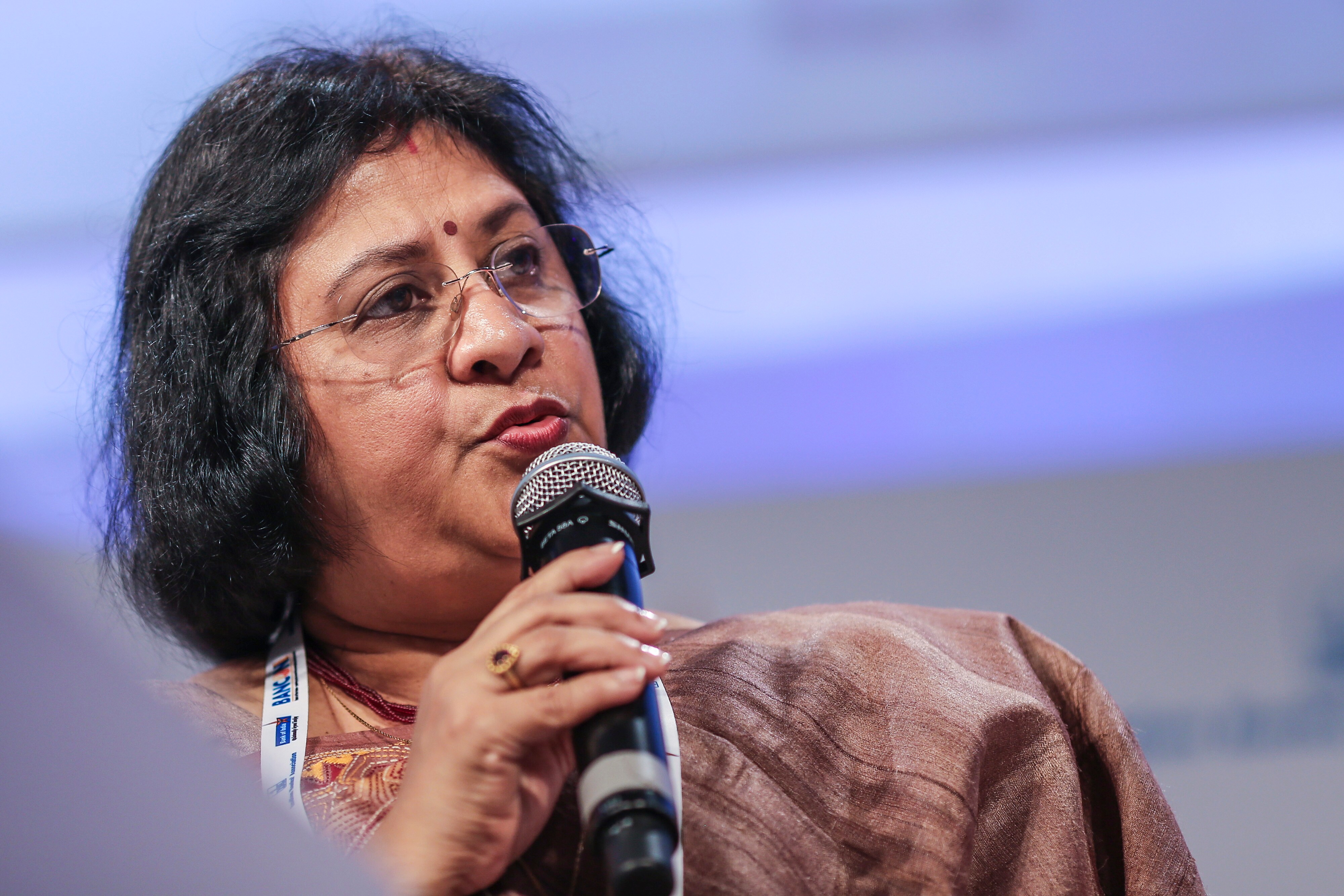
State Bank of India Ltd. (SBI) wants to merge its five associate banks with itself only in the new financial year, which starts 44 days from now, on April 1. It can technically do it by the end of this financial year though, said the lender's chairman, Arundhati Bhattacharya.
The Union Cabinet on Wednesday approved the merger of SBI with three of its associates and two wholly-owned subsidiaries, which would make India's largest public sector lender one of the 50 largest banks in the world.
The official notification should be out in within a week's time and will take a minimum of 30 days for the entire process to be completed. However, since this is a large merger, SBI would like to close its financial books for the current year without taking the merger into account, said Bhattacharya.
In an earlier interaction with reporters, before the final Cabinet approval came though, Bhattacharya had said that the government's surprise demonetisation drive had deferred the entire merger process by a quarter, hinting that it would be possible only in the new financial year.
SBI's board of directors had approved the scheme of arrangement for the merger in August last year, paving the way for its affiliates--State Bank of Bikaner and Jaipur Ltd., State Bank of Mysore Ltd., State Bank of Travancore Ltd., and its wholly-owned subsidiaries, State Bank of Hyderabad and State Bank of Patiala to be merged with itself.
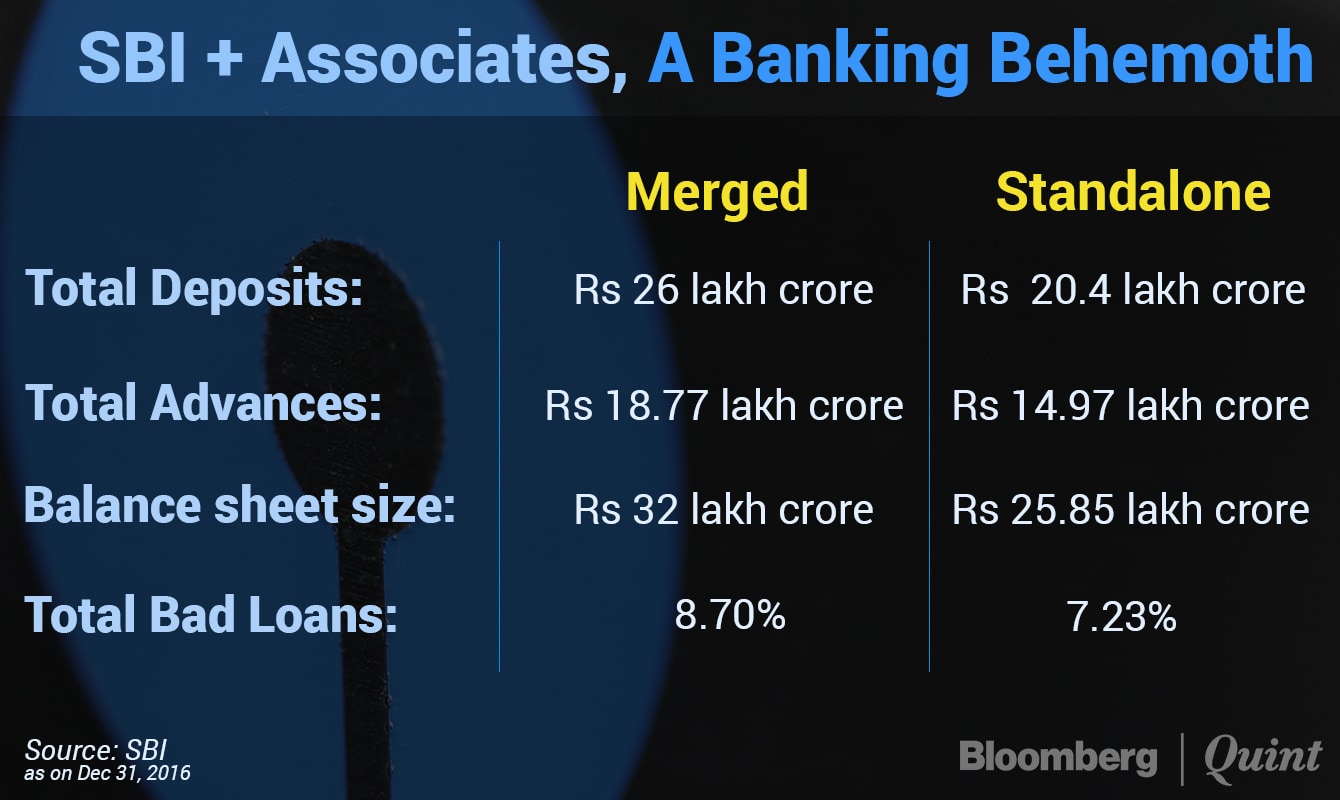
The merged entity will be a banking behemoth, with combined deposits of over Rs 26 lakh crore, advances of Rs 18.8 lakh crore, and a balance sheet size of over Rs 32 lakh crore.
In anticipation of the merger, the associate banks have already undertaken their own asset quality reviews and have ramped up provisioning in an attempt to bring it in-line with that of SBI, Bhattacharya said.
The associate banks' provision coverage ratio, which is the amount of provisions as a percentage of total bad loans, stood at just under 59 percent. SBI's is higher at around 62 percent, so for the merged entity the provision coverage ratio (PCR) would be close to 60 percent, said Bhattacharya.
There is no such thing as a comfortable level with regard to provision coverage ratio, since different accounts need different levels of provisions. Having said that, at one point the RBI had mandated that the PCR should be 70 percent, so that's what the market thinks is ideal. We have been inching it up with that in mind.Arundhati Bhattacharya, Chairman, SBI
The merger of SBI with its associates is likely to lead to a slight reduction in the bank's capital adequacy ratio, but Bhattacharya expects it will continue to remain at a comfortable level. That is to say, the bank does not anticipate a higher need for capital on account of the merger.
At the end of December, the capital adequacy ratio of SBI and its associates was 13.19 percent, lower than SBI's standalone ratio of 13.73 percent. However, these figures do not take into account the possible fund infusion by the government in the current quarter and retained profits, which will result in an addition of 79 basis points. Retained profit, or earning, is the amount that is held back by a company after paying dividends to its shareholders, which in case of a bank is included in its Tier-I capital calculation.

-
Getting To Work Costs Women More | The Reason Why

It is not just about women paying more than men. It is about women paying much more in cities than in villages.
-
AI Bias In Investing Cannot Be Eliminated, But It Can Be Governed
Framing is a particularly important example as identical financial information presented in terms of gains rather than losses can lead an LLM to reach a different assessment.
-
Joining The Dots | Dark Skies, Steady Diya: Why Hope Holds This Diwali
With war, a weak rupee and foreign outflows weighing on sentiment, policymakers at the NDTV World Summit and market veterans at NDTV Profit Ignite: Diwali Edition offered the same advice: stay invested and filter out the noise.
-
The Curious Case of Equitas Small Finance Bank And A CEO Who Quit For Stock
PN Vasudevan believes persistent investor concerns over a perceived conflict of interest had become a governance overhang on Equitas Small Finance Bank's stock, even as the lender improved profitability and asset quality.
-
Talking Points This Week: AI Cash Burn, A Tiger Comeback And An India That Still Finds Its Own Path
India is not immune to higher oil or tighter global liquidity, yet its earnings base is broader, its domestic policy levers are still available.
-
Foreign Investors Own Half Of HDFC Bank and ICICI Bank. An LTCG Cut Could Matter Most Here
Foreign portfolio investors have US$115 billion parked in HDFC Bank, ICICI Bank. If the government cuts long-term capital gains tax, Jefferies says returning foreign money could land here first.
-
'Never Seen This Level Of Negativity': Sandeep Tandon Says The Next Rally May Be Closer Than You Think
Veteran investor Sandeep Tandon says foreign selling is easing, large-caps are due a comeback and mid-caps are crowded, while he turns positive on gold, power and pharma this Diwali.
-
Indians Stay With Family, Not In Hotels | The Reason Why
India still lacks enough clean, reliable and affordable hotels for budget-conscious travellers.
-
The Economic Imperative: Analysing The Material Driving Force Behind India-Canada Strategic Reset
This economic complementarity is further reinforced by deep institutional investment ties and talent mobility, which form the bedrock of the bilateral framework.
-
Medicine Pricing: Where Must Profit Stop?
India must confront excessive margins, hidden incentives and regulatory gaps that threaten the integrity of medicine.










