SBI Cards IPO Falls Short Of Full Subscription On Day 2 As Coronavirus Risks Weigh
India's first billion-dollar initial public offering in more than two years is showing symptoms of the coronavirus outbreak.
The IPO of SBI Cards and Payment Services Ltd. was subscribed 87 percent as of 5:00 p.m. on Tuesday, the second of the four-day share sale. Against an issue size of 10.02 crore shares, the SBI Cards IPO has received bids for 8.75 crore shares, with retail investors and the company's shareholders making the bulk of the purchases.
According to National Stock Exchange data, the portion of shares reserved for retail investors was subscribed 35 percent while non-institutional investors picked up about 18 percent of the shares earmarked for them. Qualified institutional buyers have so far bought 19 percent of the shares reserved for them. The company's employees and State Bank of India shareholders picked up 2 percent and 37 percent of the shares allocated to them, respectively.
The IPO was subscribed 39 percent on Monday, the day S&P BSE Sensex swung 1,300 points after India recorded two new coronavirus cases. The cards subsidiary of India's largest lender had raised Rs 2,769 crore by selling 3.66 crore shares to 74 anchor investors in a pre-IPO placement on Saturday.
SBI Cards, according to its red herring prospectus, aims to raise up to Rs 10,350 crore by selling 13 crore equity shares in a price band of Rs 750-755 apiece. The bid lot size is 19 equity shares and multiples thereof. State Bank of India is selling 4 percent stake in SBI Cards while its joint venture partner Carlyle Group is paring 10 percent holding.
According to BloombergQuint's calculations, the company will have a market valuation of nearly Rs 70,900 crore at the upper end of the IPO price band.
Contagion Risk
With the world reeling from one of the biggest risk selloffs since the global financial crisis, the coronavirus-fueled declines in India may impact the IPO's over-subscription rate, which in turn may limit the premium on listing. For instance, IRCTC Ltd.'s share sale in October attracted bids 112 times the IPO size and the stock went on to list at double the offer.
“The subscription will be good but it will not be up to its true potential had it come three weeks ago,” Sameer Kalra, a strategist at Mumbai-based Target Investing, told Bloomberg over the phone. Kalra said he won't bid for the SBI Cards IPO due to high valuation and increasing competition from alternative digital payment platforms. “I'd rather buy it after the listing.”
Also Read: Market ‘Whiplash' To Continue For A While, Says Max Life's Mihir Vora
Future Growth Strategy
To be sure, SBI Cards—India's second-largest card issuer after HDFC Bank Ltd.—is not comparable with banks as it is the nation's only pure-play card issuer. Half of the company's income comes from interest and the other half comes from annual fee charged to customers. Interest income is cyclical, while the fee income is fixed.
Going forward, the company sees smaller towns driving growth after listing, Chief Executive Officer Hardayal Prasad told BloombergQuint in an interview.
Also Read: SBI Cards IPO: How To Value The Credit Card Company
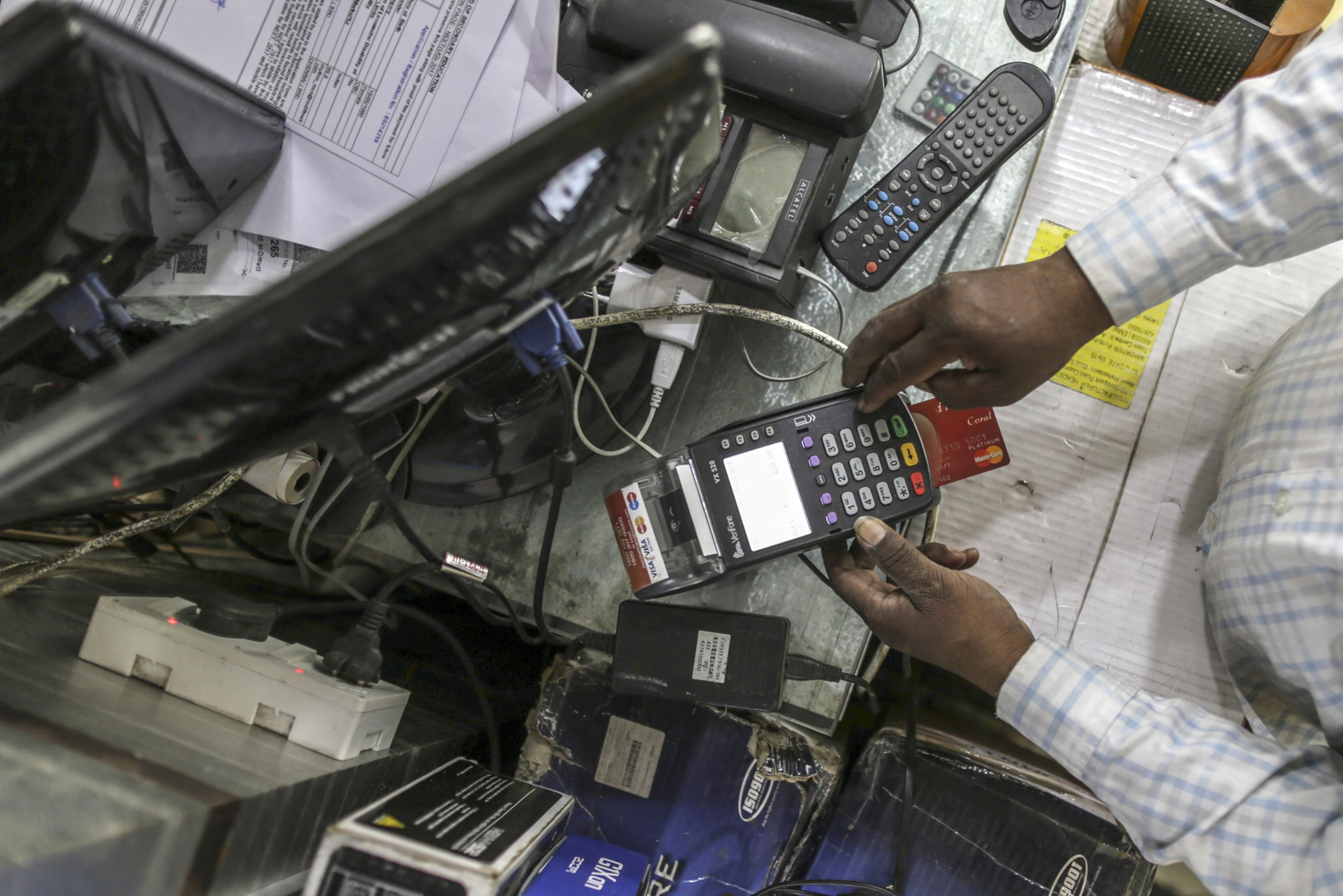
Penetration in Tier-2 and Tier-3 towns is “pretty low and people have aspirations over there”, Prasad said. This, added to the expansion in the number of point-of-sale machines installed from 1.1 million to over 4 million and the e-commerce boom, has led to increased adoption of credit cards even from smaller centres, he said.
Also Read: SBI Cards IPO: All The Details You Need To Know Before Subscribing
Prasad said SBI Cards' business model is unique. Valuing the company using price-to-earnings rather than the price-to-book, which is typically used for lenders, is more appropriate, he said.
Also Read: SBI Cards IPO: Is The Frenzy Justified?
When asked about growth, he said the second half of the year should be stronger than the first half. The company earned Rs 725 crore in the first half and Rs 1,161 crore profit in the first nine months of FY20. “Second half of India is always a busy season.”

-
The Economic Imperative: Analysing The Material Driving Force Behind India-Canada Strategic Reset

This economic complementarity is further reinforced by deep institutional investment ties and talent mobility, which form the bedrock of the bilateral framework.
-
Medicine Pricing: Where Must Profit Stop?
India must confront excessive margins, hidden incentives and regulatory gaps that threaten the integrity of medicine.
-
Why Amazon And Flipkart Are Struggling To Beat Meesho In India's Smaller Cities
With 274 million users and lowest-cost logistics, Meesho is defending its value commerce crown against giants like Amazon and Flipkart.
-
High US Salaries, No Green Card Certainty: The Financial Calculation Facing Indian H-1B Families
The suspension of PERM processing at eight technology employers does not cancel existing H-1B visas. What it does is force a question many Indian families have been avoiding: is the US salary worth tying your career and family plans to one employer?
-
Swiggy vs Eternal: Food Delivery's Two Rivals Are No Longer In The Same Race
Eternal is building a private AI assistant, dark.ai. Swiggy is still working out how to make Instamart pay, with an operating loss of Rs 895 crore in the July-September quarter while Blinkit stayed profitable.
-
Where You Live Shapes How You Get To Work | The Reason Why
Two-wheelers are the most popular way to get to work in India, accounting for nearly 43% of workplace commutes.
-
Unhedged Position: Can India See An Indonesia-Style Time Correction?
The Nifty is trading below levels it first clocked in 2024. Is there, then, as I have suggested in the headline, potential that the current time correction drags on painfully for the next three-five, even ten years?
-
Navigating Friction And Energy Realities: An Analysis Of Marco Rubio's October Visit To India
Occurring at a critical juncture marked by stalled trade negotiations and escalating geopolitical pressures over global energy supplies, the visit offers a profound window into modern US-India relations.
-
India Exports Capital. Why Not Export Trusteeship?
The big question, then, is whether India can build an institution that global borrowers, investors, banks, and lawyers can trust, even without an Indian connection.
-
France's Economy & Politics Are In Crisis | The Reason Why
Let's look at how the French economy and politics evolved under Nicolas Sarkozy, Franois Hollande and Emmanuel Macron.










