SBI Cards IPO: How To Value The Credit Card Company
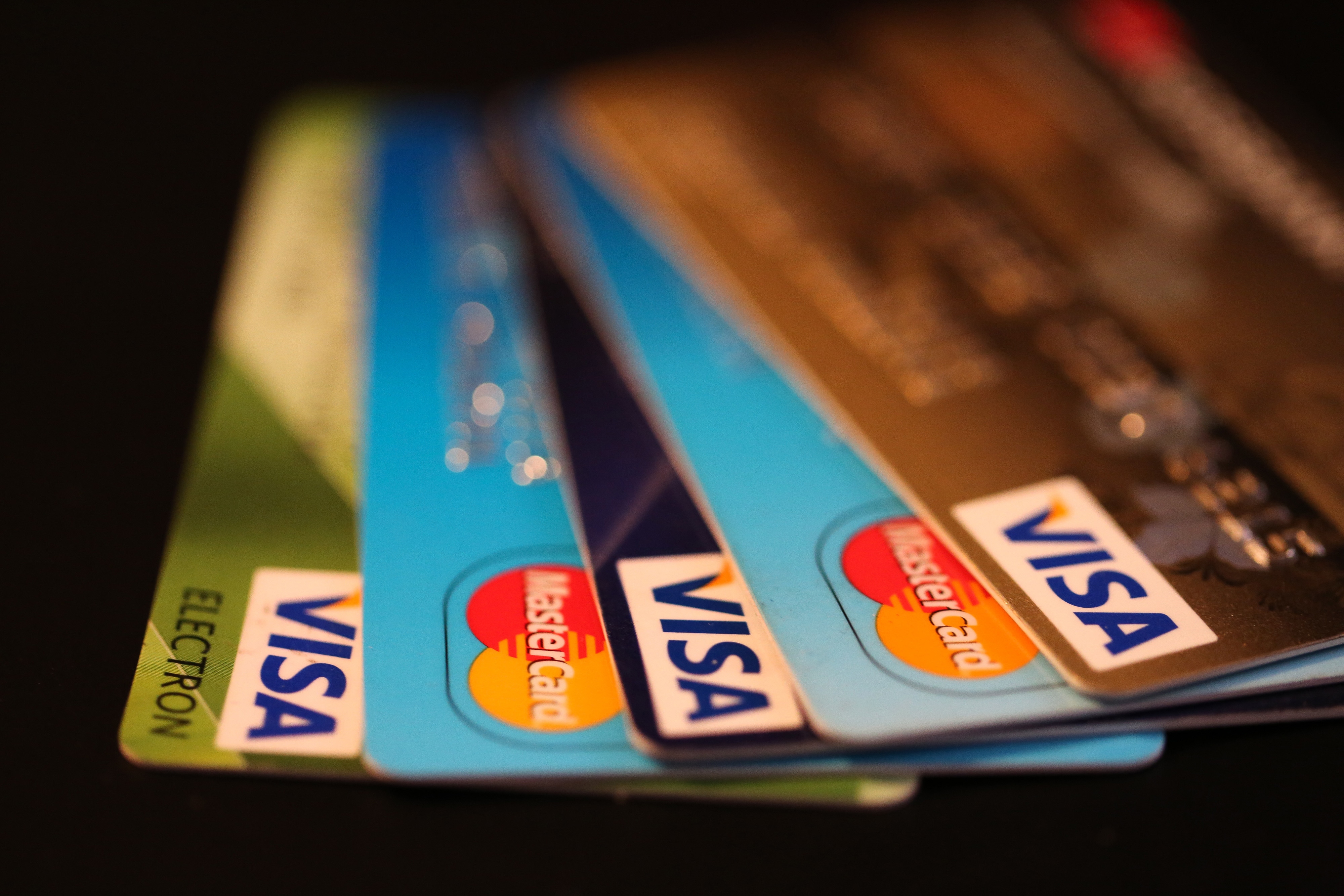
SBI Cards and Payments Services Ltd. launched its four-day initial public offering on Monday with an aim to raise Rs 10,000 crore, India's first billion-dollar float in at least two years.
The nation's only pure-play credit card issuer is offering shares at Rs 750-755 apiece. While there's a fresh stock issue worth Rs 500 crore, its top shareholders State Bank of India and Carlyle Group are selling a 4 percent and 10 percent stake, respectively. The maiden offer was subscribed 39 percent on the first day of the share sale, with retail investors making the bulk of the bids.
The credit card issuer, according to BloombergQuint's calculations, will have a market capitalisation of nearly Rs 71,000 crore at the upper end of the price band.
Banks and non-banking finance companies are usually valued on a price-to-book basis as price-to-earnings does not capture the inherent cyclicality and is used when earnings are more predictable. Analysts, however, have different views on how to look at SBI Cards' valuations.
P/E Vs P/B Multiple
Price-to-book may not be a fair metric to look at as the company is in a high growth phase currently, Jaikishan Parmar, senior analyst at Angel Broking, told BloombergQuint. “Once the book matures, once the loan book of SBI Cards crosses Rs 1-1.5 lakh crore and the growth normalises, price-to-book may be better. Right now, it's much better to look at price-to-earnings.”
Lalitabh Srivastava, analyst at Sharekhan, also said price-to-book would be a better criterion, mainly because the revenue stream is not only similar to that of a financial lender, but more importantly the measure is a good indicator of cyclical industries.
But Kajal Gandhi, analyst at ICICI Direct, finds price-to-earnings better as the potential for growth is high for SBI Cards. “We may not use price-to-book because it is not only a lending business, but a transaction-based income also which it earns.”
PEG Ratio
Another way to look at SBI Cards' valuation could be price earnings-to-growth — a ratio of the stock valuation to earnings growth. It's used to determine a stock's value while factoring in the company's expected earnings growth, providing a better picture than the P/E multiple. The higher the ratio, the lower the growth potential.
When the PEG exceeds 1, either the market expects more-than-estimated growth or an increase in demand for a stock has caused it to be overvalued. If it's below 1, analysts have either set estimates too low or the market has underestimated the stock's growth prospects.
Also Read: SBI Cards IPO: Is The Frenzy Justified?
How SBI Cards Compares With Peers
SBI Cards, India's largest card issuer after HDFC Bank Ltd., is not comparable with banks as it's the nation's only pure-play card issuer. Half of the company's income comes from interest and the other half comes from annual fee charged to customers. Interest income is cyclical, while the fee income is fixed.
- Based on the upper end of the price band, SBI Cards will trade at 45.5 times its annualised earnings per share for FY20, making it the costliest among global peers.
- It will trade at 13.5 times its book value, second only to Mastercard.
- According to Prabhudas Lilladher, it will trade at a PEG multiple of 1.2, making the valuations cheaper than Mastercard, Amex, and Visa.
To be sure, Mastercard Inc. and Visa Inc. aren't strictly comparable as they have a fee-based revenue model and do not incur credit risk. Sychrony Financial, CapitalOne, Discover, Amex and Samsung Card are SBI Cards' closest global peers.
Also Read: SBI Cards IPO: All The Details You Need To Know Before Subscribing
Analysts' Take
- ICICI Direct recommends a ‘Subscribe' for SBI Cards IPO as the company offers investment opportunity with a unique business model and strong profitability, the brokerage said. Sustainability of higher business growth and strong return ratios justify premium valuation for the business, it said.
- Nirmal Bang said in a note that the valuation factors in a very optimistic scenario of sustainable high growth and profitability ratios. Given the anticipation built around the IPO, the stock may deliver listing gains, it said.
- IDBI Capital suggests ‘Subscribe' on the back of the strong growth prospects and robust profitability with return on assets at 6.5 percent.
- Motilal Oswal said SBI Cards is well placed to benefit from the rising trend of digital payments and e-commerce given its dominant position in the credit card market and strong parentage.

-
The Economic Imperative: Analysing The Material Driving Force Behind India-Canada Strategic Reset

This economic complementarity is further reinforced by deep institutional investment ties and talent mobility, which form the bedrock of the bilateral framework.
-
Medicine Pricing: Where Must Profit Stop?
India must confront excessive margins, hidden incentives and regulatory gaps that threaten the integrity of medicine.
-
Why Amazon And Flipkart Are Struggling To Beat Meesho In India's Smaller Cities
With 274 million users and lowest-cost logistics, Meesho is defending its value commerce crown against giants like Amazon and Flipkart.
-
High US Salaries, No Green Card Certainty: The Financial Calculation Facing Indian H-1B Families
The suspension of PERM processing at eight technology employers does not cancel existing H-1B visas. What it does is force a question many Indian families have been avoiding: is the US salary worth tying your career and family plans to one employer?
-
Swiggy vs Eternal: Food Delivery's Two Rivals Are No Longer In The Same Race
Eternal is building a private AI assistant, dark.ai. Swiggy is still working out how to make Instamart pay, with an operating loss of Rs 895 crore in the July-September quarter while Blinkit stayed profitable.
-
Where You Live Shapes How You Get To Work | The Reason Why
Two-wheelers are the most popular way to get to work in India, accounting for nearly 43% of workplace commutes.
-
Unhedged Position: Can India See An Indonesia-Style Time Correction?
The Nifty is trading below levels it first clocked in 2024. Is there, then, as I have suggested in the headline, potential that the current time correction drags on painfully for the next three-five, even ten years?
-
Navigating Friction And Energy Realities: An Analysis Of Marco Rubio's October Visit To India
Occurring at a critical juncture marked by stalled trade negotiations and escalating geopolitical pressures over global energy supplies, the visit offers a profound window into modern US-India relations.
-
India Exports Capital. Why Not Export Trusteeship?
The big question, then, is whether India can build an institution that global borrowers, investors, banks, and lawyers can trust, even without an Indian connection.
-
France's Economy & Politics Are In Crisis | The Reason Why
Let's look at how the French economy and politics evolved under Nicolas Sarkozy, Franois Hollande and Emmanuel Macron.










