Rupee Weakens As Government’s Measures To Curb Fall Seen Inadequate
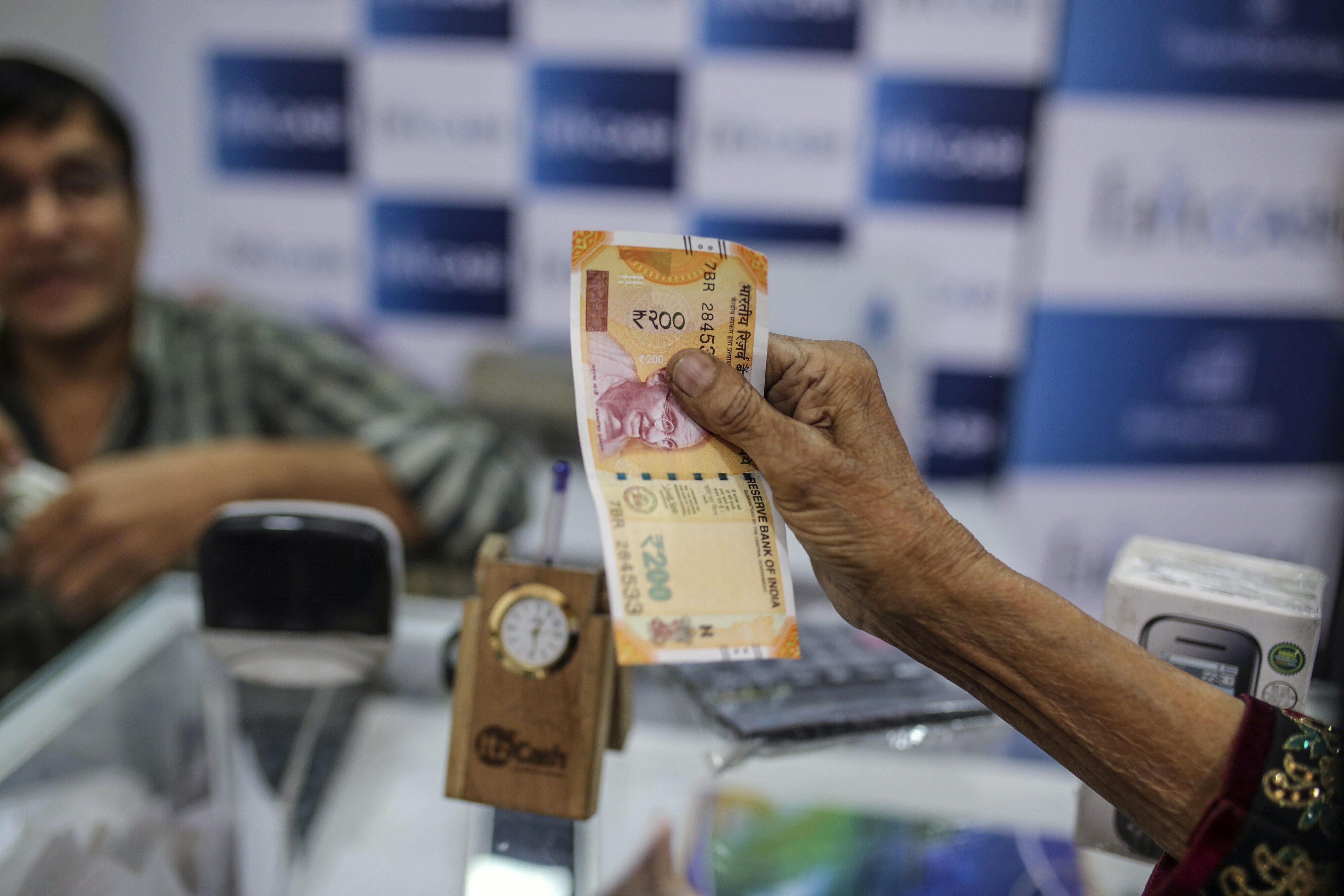
The Indian rupee halted its two-day gain as the measures announced by the government to curb the local unit's relentless fall were seen inadequate.
The domestic currency dropped more than a percent to as much as 72.6888 a dollar on Monday, wiping out the gains it made in the previous two sessions. It closed slightly lower at 72.5088 against the dollar.

The rupee weakened nearly 12 percent so far this year and is the worst-performing Asian currency.
The local unit on Friday gained 34 paise against the greenback to close at a one-week high of 71.84 as slowing inflation added to optimism that policymakers will take steps to stem a rout in the rupee. Later that day, the government announced a five-point plan to prop up capital inflows and curb “non-essential” imports to contain the widening current account deficit, which widened to 2.4 percent of gross domestic product in the April-June period, and check the rupee's depreciation.
But markets are not impressed with the government's five-point plan, according to Ananth Narayan, professor at S.P. Jain Institute of Management and Research. “Measures fell short of the street's expectations. We expect the Reserve Bank to step-in to defend the rupee's fall in the early trading hours today.”
Abheek Barua, chief economist at HDFC Bank, agreed. “The capital account measures announced are unlikely to result in any significant shift in fund flows in the immediate future,” he said. “These measures are better suited when the sentiment in the global market is positive towards emerging markets and in general when it is relatively easy for emerging market corporates to raise money abroad.”
Giving additional exposure limits to foreign institutional investors might not be much helpful when they are pulling out money from the Indian markets, according to Barua.
Yet, Narayan said India doesn't have any reason to panic now. “We have plenty of reserves to manage core issues. We can buy the time to take steps.” Strong reiteration by the finance minister on maintaining the fiscal deficit and capital spending targets for the ongoing financial year will boost sentiment, he said.
Finance Minister Arun Jaitley on Saturday said the government is confident of meeting its 3.3 percent fiscal deficit target for the ongoing financial year.
Brokerages Edelweiss and Nomura are bullish on the government's steps. But, they said, given the build-up of expectations, the role of global factors in driving capital inflows and escalating global trade tensions, these capital measures are more medium term than immediate game changers.
“Even as lack of any drastic measures may disappoint a section of markets, the government will likely remain more rupee vigilant henceforth,” Edelweiss said.
Nomura's two key takeaways from the announcement are:
- The policy strategy for now is to finance the deficit without sacrificing growth
- Policymakers have moved from the first line (allow currency depreciation, forex intervention) to the second line of currency defence (measures to boost capital inflows, cut imports and boost exports). Hence, we expect more measures in the weeks ahead.
Narayan said more steps from the RBI are expected to address immediate sentiments and the current account deficit in the medium term. “These measures largely indicate domestic entities to take position in the rupee.”
A possible RBI rate action, according to Edelweiss, may be on the cards in October amid increasing imported inflation pressures due to sharp moves in the rupee and Brent crude.
Nomura said the decision at the October policy meeting is a close call. It assigns a 55 percent probability to a status quo and the rest to a 25-basis-point rate hike. The brokerage expects no further tightening beyond that as they said slowing growth and the recent currency weakness will moderate import growth in the second half of the ongoing financial year.
“The risk is that dollar-rupee may trade through the 72-level and return to about 72.50 in the near term,” it said. “A stronger dollar and limited policy action could disappoint the market. There remain many negative risks to the rupee, but it is also clear that the government could step up actions if there is another round of significant depreciation.”
Edelweiss for now maintains its dollar-rupee range at 69-74 for the rest of the ongoing financial year but said it will closely watch out for the policy space.

-
AI Bias In Investing Cannot Be Eliminated, But It Can Be Governed

Framing is a particularly important example as identical financial information presented in terms of gains rather than losses can lead an LLM to reach a different assessment.
-
Joining The Dots | Dark Skies, Steady Diya: Why Hope Holds This Diwali
With war, a weak rupee and foreign outflows weighing on sentiment, policymakers at the NDTV World Summit and market veterans at NDTV Profit Ignite: Diwali Edition offered the same advice: stay invested and filter out the noise.
-
The Curious Case of Equitas Small Finance Bank And A CEO Who Quit For Stock
PN Vasudevan believes persistent investor concerns over a perceived conflict of interest had become a governance overhang on Equitas Small Finance Bank's stock, even as the lender improved profitability and asset quality.
-
Talking Points This Week: AI Cash Burn, A Tiger Comeback And An India That Still Finds Its Own Path
India is not immune to higher oil or tighter global liquidity, yet its earnings base is broader, its domestic policy levers are still available.
-
Foreign Investors Own Half Of HDFC Bank and ICICI Bank. An LTCG Cut Could Matter Most Here
Foreign portfolio investors have US$115 billion parked in HDFC Bank, ICICI Bank. If the government cuts long-term capital gains tax, Jefferies says returning foreign money could land here first.
-
'Never Seen This Level Of Negativity': Sandeep Tandon Says The Next Rally May Be Closer Than You Think
Veteran investor Sandeep Tandon says foreign selling is easing, large-caps are due a comeback and mid-caps are crowded, while he turns positive on gold, power and pharma this Diwali.
-
Indians Stay With Family, Not In Hotels | The Reason Why
India still lacks enough clean, reliable and affordable hotels for budget-conscious travellers.
-
The Economic Imperative: Analysing The Material Driving Force Behind India-Canada Strategic Reset
This economic complementarity is further reinforced by deep institutional investment ties and talent mobility, which form the bedrock of the bilateral framework.
-
Medicine Pricing: Where Must Profit Stop?
India must confront excessive margins, hidden incentives and regulatory gaps that threaten the integrity of medicine.
-
Why Amazon And Flipkart Are Struggling To Beat Meesho In India's Smaller Cities
With 274 million users and lowest-cost logistics, Meesho is defending its value commerce crown against giants like Amazon and Flipkart.










