Rupee Hits New Record Low, Stocks Tumble Amid Weak Global Cues
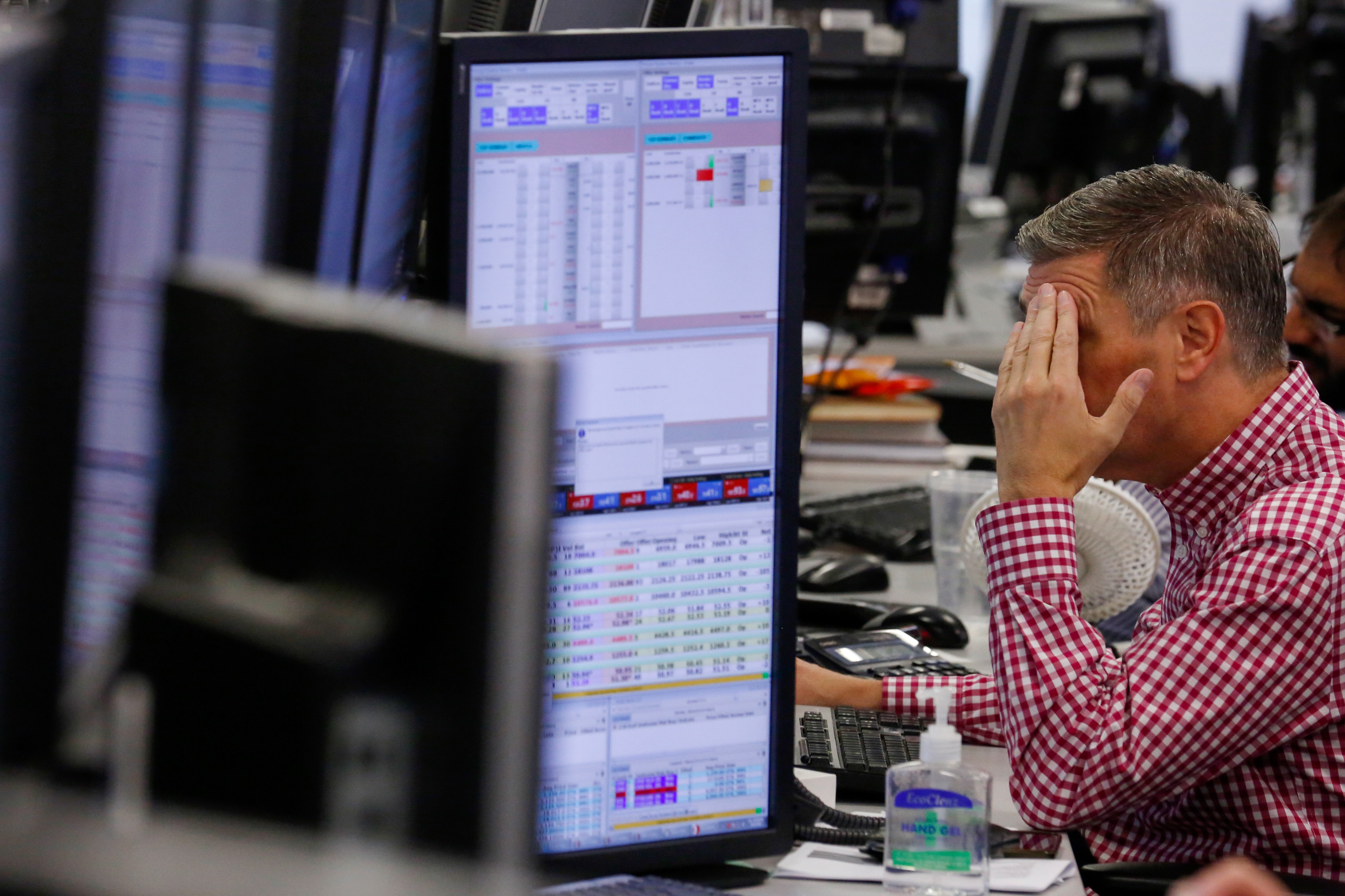
Indian stocks, currency, and bonds sold off sharply today in response to a tough global landscape where oil prices and interest rates are at multi-year highs and interest in emerging market assets is on the decline.
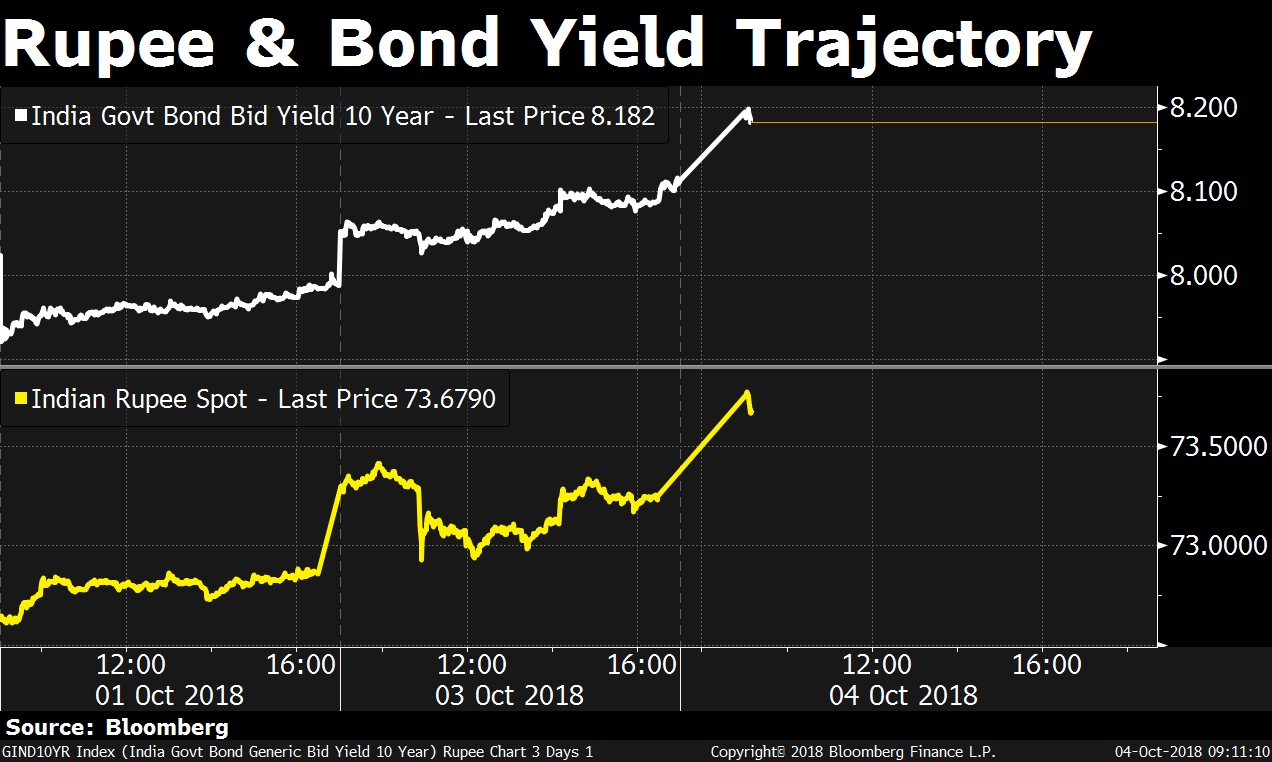
The Indian rupee hit a record low of 73.73 against the U.S. dollar soon after it opened for trade. This, despite the fact that the Reserve Bank of India announced liberalised overseas borrowing norms for oil companies intended to ease the pressure on the currency. The rupee is down close to 13 percent for the year, exceeding the quantum of losses seen in 2013 when the taper tantrum hit emerging market economies perceived to be weak.
In the bond markets, the yield on the benchmark 10-year bond jumped to 8.20 percent — the highest in three weeks.
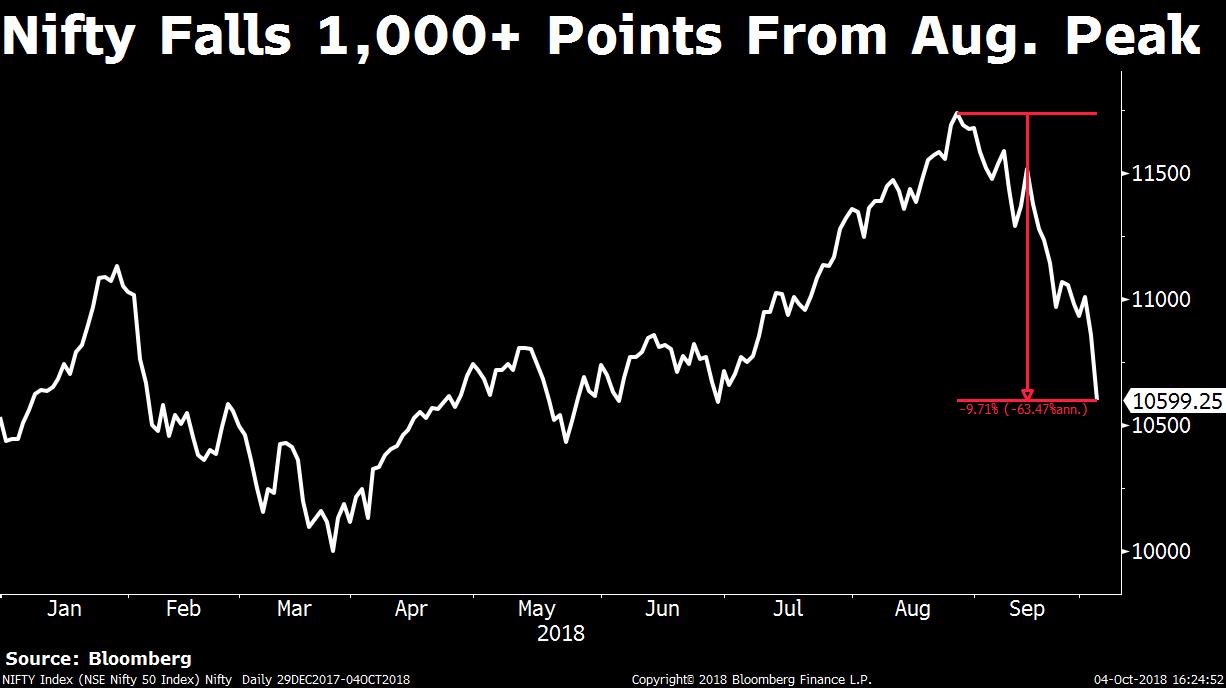
Indian equity benchmarks fell to their lowest level in over three months. The S&P BSE Sensex ended 2.24 percent lower at 35,169.16 and the NSE Nifty 50 Index declined 2.39 percent to 10,599.25.
The selling pressure on Thursday was global in nature. Overnight, the benchmark U.S. 10-year bond yield spiked to 3.18 percent. The U.S. Dollar Index rose to 96.11 and Brent crude prices hit $86 a barrel.
None of this bodes well for India.
Higher crude prices prices will push India's current account deficit towards an unsustainable level of 3 percent of GDP. This, in a year when capital flows have dried up. Foreign investors have sold a net of Rs 66,000 crore across Indian debt and equity markets.
A stronger dollar and higher U.S. interest rates could lead to more rapid outflows, unless India raises interest rates to increase the attractiveness of its domestic debt assets.
Against this backdrop, India's Monetary Policy Committee will announce its latest policy decision on Friday. Most analysts expect at least a 25 basis points hike. Some see the possibility of a reversal of the MPC's neutral stance as well.
“We expect the Reserve Bank of India to raise rates by 25 basis points at the October policy review and change its stance to reveal a tightening bias. However, this is likely to be accompanied by continuing OMOs (open market operations) to ensure inter-bank liquidity stays neutral,” Sajjid Chinoy, chief India economist at JPMorgan, said in a note on Thursday.
Here's what other experts had to say about the rupee depreciation:
‘Rising Oil, Falling Rupee A Dangerous Combination'
The rising crude oil prices and the depreciating rupee is a dangerous combination for Indian equities, Dalton Capital Advisors' UR Bhat said. “The combination is taking a toll. As long as there is no improvement in at least any of these fronts, don't expect markets to recover.”
‘Crude Oil Rally, RBI's Hawkish Stance Driving Selloff'
A fear of crude spiking further, the RBI moving to a hawkish stance to anticipate any inflationary pressures from crude spikes and the general liquidity issues in the domestic market are driving the selloff, according to Ajay Bagga, executive chairman at OPC Asset Solutions.
“Some recovery, however, is possible once earnings season starts but it is time to stay on the sidelines, not a time to do bottom-fishing or for intraday trading,” Bagga said.
‘Foreign Investors Exit On Rupee Threat'
“Foreign investors' exit is driven by the threat of rupee depreciating further and to protect their portfolios from currency loss (MTM). They are taking out funds from Indian markets and paying of losses they have incurred in other markets,” Deven Choksey, managing director at KR Choksey Securities, said.
‘Market Selloff A Value Buying Opportunity'
We are seeing a good value emerging in the market at the stock-specific level in the broader market, except for the Nifty, Mahesh Patil, co-chief investment officer of Birla Sun Life Mutual Fund told BloombergQuint in an interaction.
“This is a good opportunity for money managers to identify the stock because this kind of correction award opportunities to get good companies at a reasonable or attractive valuation,” Patil said.

-
Gold Is Rs 22,000 Cheaper Than A Month Ago. Should You Buy Amid The Wedding Season?

Gold's potential slide to $3,500 could save around Rs 4,700 per 10 grams, but a soft inflation print could just as easily push prices back up. One way to split the risk is to buy in parts, some now and the rest after the Fed's Dec. 9 decision.
-
AI Agents Are Gaining Power. Who Governs Them?
Artificial intelligence agents promise to transform productivity by moving machines from assisting decisions to executing them. But as organisations delegate greater authority to these AI-agents, they must first establish who controls that authority and who remains accountable when things go wrong.
-
Why Swapping Your Old Gold Can Trigger A Rs 5 Lakh Tax Bill, And How You Can Avoid It Legally
Swapping old gold for new is taxed as a sale and a fresh purchase. Getting your own gold remade can cut most of that bill, though it has its own costs.
-
The AI Trade is Done. The Real Opportunity for Investors Starts in 2027 | Unhedged Position
As pureplay AI stocks plunge and circular, capex-led financing unwinds, 2027 is set to be a year of reckoning for AI companies. Yet the bust clears the way for a better opportunity for investors in 2027 -- shifting the spotlight from AI builders to the companies using AI.
-
Leadership As Mission: Why The Age Of AI Demands More Human Leadership
Debjani Ghosh examines how AI is changing leadership, arguing that its success must be measured by its impact on people and the accountability of those guiding its use.
-
We May Need Another Tukaram Mundhe To Fight Air Pollution | The Reason Why
Developers may install basic measures such as sprinklers and green nets, resume work, and continue violating rules when this equipment stops working.
-
Extracting Value From Battery Scrap Could Be Challenging For India | The Reason Why
A discarded lithium-ion battery still contains valuable materials such as lithium, nickel and cobalt. These can be recovered and reused. When such batteries are crushed and shredded, they produce a dark powder called black mass.
-
One El Nino, India Can Handle. Two Could Break The Granary
India's grain stocks can absorb one bad year, but a second El Nino could drain the buffer in two to three years, economists say.
-
India's Troika Of Good Luck | Joining The Dots
As Jensen Huang's exit drags Nvidia down, a cooling AI trade and resilient earnings have revived investor interest in India. A likely RBI rate hike looms.
-
Talking Points This Week: Leadership Shock At Nvidia, Earnings Strength, And The Fog Over Hormuz
The Anthropic IPO pricing and first trading day, Nvidia's upcoming earnings, and any fresh signals from Iran will set the tone for the following week.









