Reliance Industries Q3 Results: Profit And Revenue Drop On Refinery Shutdown
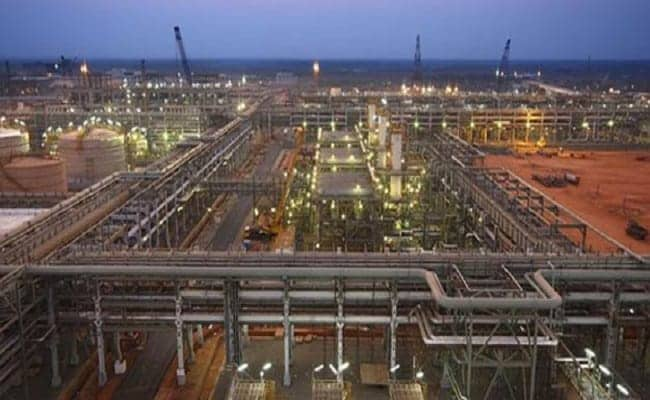
Reliance Industries Ltd.'s net profit and revenue for the third quarter of fiscal 2024 declined, missing analysts' estimates.
The numbers were impacted by a major shutdown undertaken in the refineries division of the O2C business, the company said.
Net profit for the Mukesh Ambani-led conglomerate fell 0.74% sequentially to Rs 17,265 crore for the October-December period, as against a Bloomberg estimate of Rs 18,080 crore.
RIL Q3 FY24 Highlights (QoQ)
Revenue from operations fell 2.98% to Rs 2.28 lakh crore (Bloomberg estimate: Rs 2.54 lakh crore).
Operating profit was down 0.77% to Rs 40,656 crore (Bloomberg estimate: Rs 40,413 crore).
Operating margin came in at 18.06% vs 17.66% (Bloomberg estimate: 17.3%).
The quarterly earnings were also impacted by increased cost of stock-in-trade, that rose by Rs 7,000 crore sequentially to Rs 57,898 crore. Increase in employee cost, finance cost, and depreciation also raised expenses.
Planned maintenance and inspection shutdown impacted yields and profitability, it said. O2C Ebitda would have been higher on a year-on-year basis and comparable on a quarter-on-quarter basis, if all major units were available during the quarter, the company said.
However, on a year-on-year basis, RIL's revenue from operations rose 11.3%, Ebitda grew by 11.5% and net profit by 11.6%, on the back of strong performance from the Reliance Jio Infocomm Ltd. and Reliance Retail Ventures Ltd. businesses.
Mukesh Ambani, chairman of Reliance Industries, said its telecom arm Jio has completed the fastest rollout of True 5G services in India. "The strong uptake of the JioBharat phone and JioAirFiber services has resulted in continued expansion of Jio's subscriber base, contributing to the stellar growth numbers of the digital services business."
The retail segment has also delivered an impressive financial performance with its rapidly expanding physical as well as digital footprint, Ambani said.
The oil and gas segment posted its highest-ever quarterly Ebitda. "...KG D6 is now contributing 30% of India's gas production, fueling its transition towards a greener and cleaner tomorrow," he said.
As of Dec. 31, 2023, RIL spent Rs 30,102 crore, or $3.6 billion, in pan-India 5G rollout, expansion of retail infrastructure and new energy business. "This excludes amount incurred towards spectrum and adjusted for capital advances and regrouping of assets," the company said.
The cash and cash equivalent position stood at Rs 1,92,371 crore, as compared with Rs 1,77,960 in the previous quarter. It was at Rs 1,93,282 crore a year ago.
Net debt as of Dec. 31, 2023, rose to Rs 1,19,372 crore as against Rs 1,17,727 crore in the previous quarter, and Rs 1,10,248 crore a year ago.
Segment Revenue
Oil-To-Chemicals
O2C revenue dropped 4.7% sequentially to Rs 1.41 lakh crore, on account of lower price realisation led by drop in average Brent crude oil prices. The drop in revenue was 2.4% on a YoY basis on account of 5.3% drop in average Brent crude oil price.
Segment Ebitda for the quarter dropped 13.61% QoQ to Rs 14,064 crore, or $1.7 billion, on account of lower downstream chemical margin and planned maintenance shutdown. However, it increased marginally by 1% YoY led by higher gasoline cracks and advantageous feedstock sourcing, the company said.
Ebitda margin dropped 100 basis points sequentially to 10%, however, it was up 40 basis points on a year-on-year basis. A year ago, Ebitda margin stood at 9.6 basis points.
Oil and Gas
Oil and gas business revenue rose 1.5% sequentially to Rs 6,719 crore. However, on a year-on-year basis, it rose 50.2% on account of higher volume. The revenue were partly offset by lower price realisation from KG D6 field.
The average price realised for KG D6 gas was $9.66/mmBtu in the third quarter, as compared with $11.32/mmBtu a year ago. The average price realised for coal bed methane gas was $15.55/mmBtu as against $20.92/mmBtu a year ago.
Segment Ebitda rose 21.77% QoQ to Rs 5,804 crore and 49.6% YoY. Ebitda margin was at 86.4% as against 72% QoQ.
Jio Platforms
Reliance Jio Platforms' quarterly revenue rose both on a sequential and year-on-year basis to Rs 32,510 crore. It was up 11.4% YoY. The Ebitda was up 11.5% YoY at Rs 13,955 crore.
Reliance Jio Infocomm Ltd.'s revenue rose 2.5% to Rs 25,368 crore. The average revenue per user on a sequential basis remained unchanged at Rs 181.7. It was up by Rs 2 on a YoY basis.
The company said that Jio has outpaced competition and net additions were at a 10-quarter high. Jio's True 5G has scaled up rapidly to deliver one-fourth of wireless data traffic in India, the company said.
JioAirfiber has been ahead of Jiofiber in terms of customer engagement and it sees extensive demand in underserved tier-3 and tier-4 towns and rural markets. Jio Bharat has over 45% market share in the sub-Rs 1,000 segment, it said.
Reliance Retail
Reliance Retail Ventures Ltd.'s gross revenue for the third quarter was Rs 83,063 crore as compared with Rs 77,148 crore sequentially. It was up 22.8% YoY, led by strong sales in the grocery, fashion and lifestyle and consumer electronics businesses.
The segment Ebitda for the quarter was at Rs 6,258 crore as compared with Rs 5,820 crore sequentially. It was up by 31.1% on a YoY basis.
Net profit for the period rose to Rs 3,165 crore, as against Rs 2,790 crore sequentially. The profit in the year ago period was Rs 2,400 crore.
Reliance Retail added 252 new stores to take its total store count at the end of the quarter to 18,774 stores, with an area of 72.9 million sq ft.
The quarter recorded footfalls of over 282 million across formats, a growth of 40.3% YoY, the company said.
Shares of Reliance Industries closed 0.01% higher, as compared with a 0.70% rise in the benchmark Sensex. The results were declared after market hours.

-
Why Swapping Your Old Gold Can Trigger A Rs 5 Lakh Tax Bill, And How You Can Avoid It Legally

Swapping old gold for new is taxed as a sale and a fresh purchase. Getting your own gold remade can cut most of that bill, though it has its own costs.
-
The AI Trade is Done. The Real Opportunity for Investors Starts in 2027 | Unhedged Position
As pureplay AI stocks plunge and circular, capex-led financing unwinds, 2027 is set to be a year of reckoning for AI companies. Yet the bust clears the way for a better opportunity for investors in 2027 -- shifting the spotlight from AI builders to the companies using AI.
-
Leadership As Mission: Why The Age Of AI Demands More Human Leadership
Debjani Ghosh examines how AI is changing leadership, arguing that its success must be measured by its impact on people and the accountability of those guiding its use.
-
We May Need Another Tukaram Mundhe To Fight Air Pollution | The Reason Why
Developers may install basic measures such as sprinklers and green nets, resume work, and continue violating rules when this equipment stops working.
-
Extracting Value From Battery Scrap Could Be Challenging For India | The Reason Why
A discarded lithium-ion battery still contains valuable materials such as lithium, nickel and cobalt. These can be recovered and reused. When such batteries are crushed and shredded, they produce a dark powder called black mass.
-
One El Nino, India Can Handle. Two Could Break The Granary
India's grain stocks can absorb one bad year, but a second El Nino could drain the buffer in two to three years, economists say.
-
India's Troika Of Good Luck | Joining The Dots
As Jensen Huang's exit drags Nvidia down, a cooling AI trade and resilient earnings have revived investor interest in India. A likely RBI rate hike looms.
-
Talking Points This Week: Leadership Shock At Nvidia, Earnings Strength, And The Fog Over Hormuz
The Anthropic IPO pricing and first trading day, Nvidia's upcoming earnings, and any fresh signals from Iran will set the tone for the following week.
-
Signature Play: The Classic Cocktail Is Dead. Or Is It?
Classic cocktails are disappearing from India's cocktail menus. But they're still being ordered, taught to bartenders and borrowed from. So, who's really having the last drink?
-
A New Samvat Wishlist: Inclusive Prosperity And Human Development
India has strengthened its economic foundations through infrastructure, digital access and enterprise. Its next growth chapter must deepen productivity, create better livelihoods and widen participation in prosperity.









