Reliance Industries Block Deal: BofA Acquires Stake Worth Rs 44 Crore
Bank of America on Thursday acquired shares in Reliance Industries Ltd. through a block deal for Rs 44 crore, according to data on the NSE.
The company bought 2.95 lakh shares through its affiliate BofA Securities Europe SA at a price of Rs 1,475.5 per piece. BofA bought the shares from Kadensa Master Fund.
Google has partnered with Reliance to offer the 18-month plan worth Rs 35,000 per user on a complimentary basis, which is part of their "expansive strategic partnership to accelerate the adoption of Artificial Intelligence (AI) across India".
Users will have access to the Gemini 2.5 Pro model in the Gemini app, which has higher limits to generate images and videos with the Nano Banana and Veo 3.1 models. It also has expanded access to Notebook LM for study and research, and 2 TB of cloud storage among other details.
They can activate this offer through the MyJio app. The rollout begins with an early access phase for 18- to 25-year-old users on unlimited 5G plans.
It will then expand to include every Jio customer across India, in the "shortest time possible."
“Reliance Intelligence aims to make intelligence services accessible to 1.45 billion Indians. Through our collaboration with strategic and long-term partners like Google, we aim to make India not just AI-enabled but AI-empowered - where every citizen and enterprise can harness intelligent tools to create, innovate and grow," said Mukesh Ambani, Chairman, Reliance Industries Ltd.
Reliance Industries Share Price Today
The stock settled 1.04% higher at Rs 1,488.50 apiece on the NSE, compared to a 0.68% decline in the benchmark Nifty 50. The shares earlier during the day fell as much as 1.34% to Rs 1,484 per share.
Reliance Industries' shares have risen 10.76% in the last 12 months and 22.46% year-to-date.
Out of 38 analysts tracking the company, 36 maintain a 'buy' rating and two suggests 'sell', according to Bloomberg data. The average 12-month consensus price target of Rs 1,684 implies an upside of 13.1%.

-
Ten Things I Learnt This Samvat

Patience can be a trap. Cheap stocks can stay cheap. Leverage can wipe you out. What did Samvat 2082 teach us? Niraj Shah writes on 10 lessons from the year gone by.
-
Talking Points This Week: Tech Nerves, FII Buying, And A Faraway Banking Shock
The global markets are not shining this Diwali. The exception in the large markets is, India.
-
Midterm Rally Lasted A Day. The Hard Reality Of A Divided US May Last Two Years | Opinion
Between a contested AI boom, a debt ceiling that arrives in 2027 and a president with every incentive to act alone, the next two years may prove more volatile than the first day's rally suggests.
-
Blue Wave Will Derail the AI Trade but Won't Dismantle the AI Era | Unhedged Position
The Democrats' sweep of the US Congress will see politics collide with economic forces both over the long and short term.
-
It's Time To Take The GST Council's Bet On Trust Global
Payment records can prove India's services exports, and clear, proportionate rules can bring foreign digital sellers into the tax net.
-
Opinion | India at 38: From Innovation Overperformer to Innovation Powerhouse
India now has 453 VC-backed deep science startups, 18 of them late-stage, after 117 percent growth since 2020. Laurus Labs, at USD 9.3 billion, is the most valuable deep science company in any middle-income economy outside China.
-
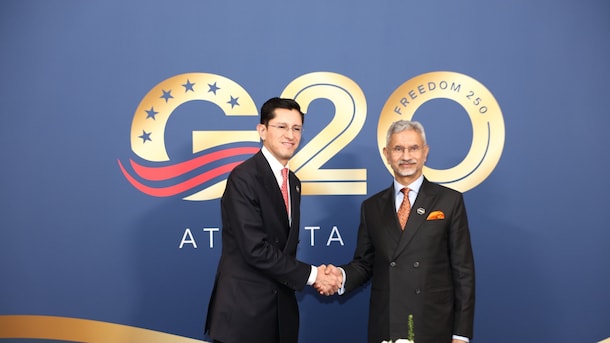
Navigating Energy Crossroads: S Jaishankar's Call For Diversified Supply Chains At G20 Ministerial Meeting
As geopolitical fault lines continue to test maritime trade routes and commodity flows, Jaishankar's message remains pertinent: true economic resilience requires open markets, protected transit lines, and a genuine commitment to multilateral cooperation rather than coercion.
-
Indians Are Travelling, But Not Every Journey Is A Holiday | The Week In Whys
Pilgrims, patients and working women are the real travellers, and the system hasn't quite caught up with them.
-
Getting To Work Costs Women More | The Reason Why
It is not just about women paying more than men. It is about women paying much more in cities than in villages.