RBI Shortens Forex, Money Market Trading Hours Amid Covid-19 Lockdown
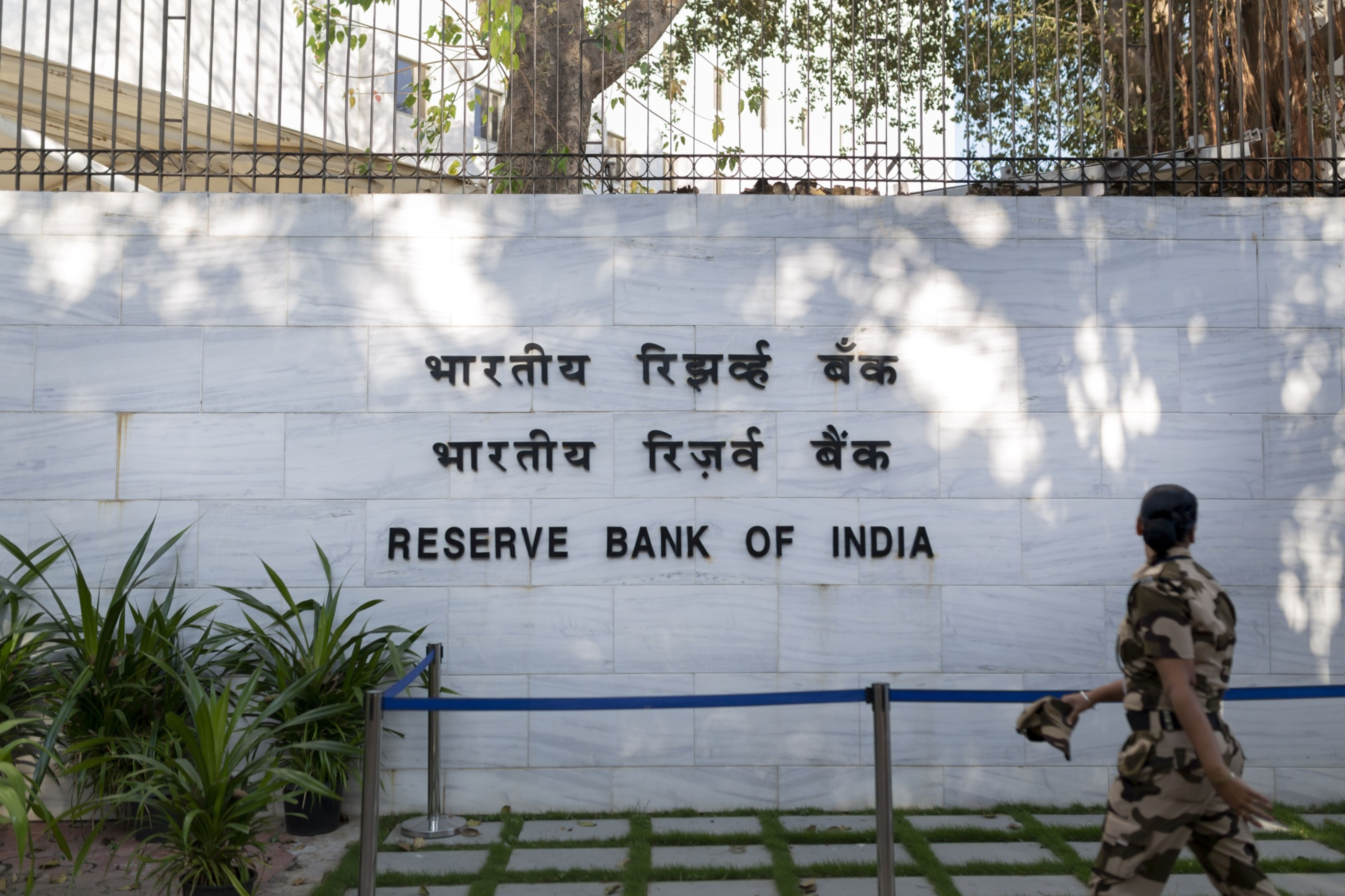
The Reserve Bank of India has decided to shorten trading hours for foreign exchange and money markets products, in light of challenges posed by lockdowns imposed to curb the spread of Covid-19.
The shortened hours, which will be in place from April 7-17, apply to products that do not trade on recognised exchanges.
India is currently in the midst of a 21-day lockdown, scheduled to be lifted on April 14. The lockdown has meant that a number of traders are working from home and, at times, facing difficulties in executing trades.
In a notification on Friday, the RBI said social distancing norms and restrictions on movement have led to dislocations and have adversely impacted the functioning of financial markets. “Staff and IT resources have been severely affected, posing operational and logistic risks. The thinning out of activity is impacting market liquidity and increasing volatility of financial prices,” the central bank said.
In order to minimise these risks and to ensure that market participants maintain adequate checks and supervisory controls while optimising thin resources and ensuring safety of personnel, it has been decided to revise trading hours for various markets...RBI Press Release
As per the circular, the trading hours stand revised as follows:
- Foreign currency/Indian rupee trades, including derivatives: Timing revised to 10 a.m.-2 p.m. from 9 a.m.-5 p.m..
- Rupee interest rate derivatives: Timing revised to 10 a.m.-2 p.m. from 9 a.m.-5 p.m.
- Government bond markets: Timing revised to 10 a.m.-2 p.m. from 9 a.m.-5 p.m.
- Tri-party repo in government securities: Timing revised to 10 a.m.-2 p.m. from 9 a.m.-3 p.m.
- Commercial paper and certificate of deposit: Timing revised to 10 a.m. -2 p.m. from 9 a.m.-5 p.m.
- Repo in corporate bonds: Timing revised to 10 a.m-2 p.m. from 9 a.m.-6 p.m.
- Call money/term money: Timing revised to 10 a.m.-2 p.m. from 9 a.m.-5 p.m.
- Market repo in government securities: Timing revised to 10 a.m.-2 p.m. from 9 a.m.-2.30 p.m.
The decision comes a little over a week after Prime Minister Narendra Modi imposed a 21-day lockdown across the country. While traders were allowed to go in to work under the essential services categories, trading activity thinned out considerably.
This was starkly visible in the trading session on March 24, when the government bond markets saw no trade for 32 minutes.
This is a good move, said K Harihar, treasurer at First Rand Bank. “The market has become very thin and trading activity is down due to governance rules across many banks. In this kind of a market, low volumes can only add to the volatility,” said Harihar.
Harihar said the only uncertainty that remains is whether permitted hours for large value transactions via RTGS will also be shortened. To be sure, the RBI circular said RTGS and NEFT timings remain unchanged.
In the foreign exchange markets, while bilateral deals could still continue, they would not be recorded via the clearing corporation immediately, Harihar said.
Bhaskar Panda, senior vice president for treasury at HDFC Bank also sees the RBI's decision as positive. While atleast half the staff is working from home, systems on which the treasury departments operate are not available at home. “This will ease the pressure considerably.” Panda added that market trading thins out after 2pm and hence cutting off trading hours at that point is valid.

-
Extracting Value From Battery Scrap Could Be Challenging For India | The Reason Why

A discarded lithium-ion battery still contains valuable materials such as lithium, nickel and cobalt. These can be recovered and reused. When such batteries are crushed and shredded, they produce a dark powder called black mass.
-
One El Nino, India Can Handle. Two Could Break The Granary
India's grain stocks can absorb one bad year, but a second El Nino could drain the buffer in two to three years, economists say.
-
India's Troika Of Good Luck | Joining The Dots
As Jensen Huang's exit drags Nvidia down, a cooling AI trade and resilient earnings have revived investor interest in India. A likely RBI rate hike looms.
-
Talking Points This Week: Leadership Shock At Nvidia, Earnings Strength, And The Fog Over Hormuz
The Anthropic IPO pricing and first trading day, Nvidia's upcoming earnings, and any fresh signals from Iran will set the tone for the following week.
-
Signature Play: The Classic Cocktail Is Dead. Or Is It?
Classic cocktails are disappearing from India's cocktail menus. But they're still being ordered, taught to bartenders and borrowed from. So, who's really having the last drink?
-
A New Samvat Wishlist: Inclusive Prosperity And Human Development
India has strengthened its economic foundations through infrastructure, digital access and enterprise. Its next growth chapter must deepen productivity, create better livelihoods and widen participation in prosperity.
-
Love, Sex Aur Dhokha: The Audacious Plot To Spy On Jensen Huang
A Taipei dinner, a Singapore chip buyer and a suspected Chinese asset: inside the alleged spy operation that got close to NVIDIA's Jensen Huang.
-
Ten Things I Learnt This Samvat
Patience can be a trap. Cheap stocks can stay cheap. Leverage can wipe you out. What did Samvat 2082 teach us? Niraj Shah writes on 10 lessons from the year gone by.
-
Talking Points This Week: Tech Nerves, FII Buying, And A Faraway Banking Shock
The global markets are not shining this Diwali. The exception in the large markets is, India.
-
Midterm Rally Lasted A Day. The Hard Reality Of A Divided US May Last Two Years | Opinion
Between a contested AI boom, a debt ceiling that arrives in 2027 and a president with every incentive to act alone, the next two years may prove more volatile than the first day's rally suggests.









