RBI Is Keen On Maintaining Liquidity Deficit To Tame Inflation
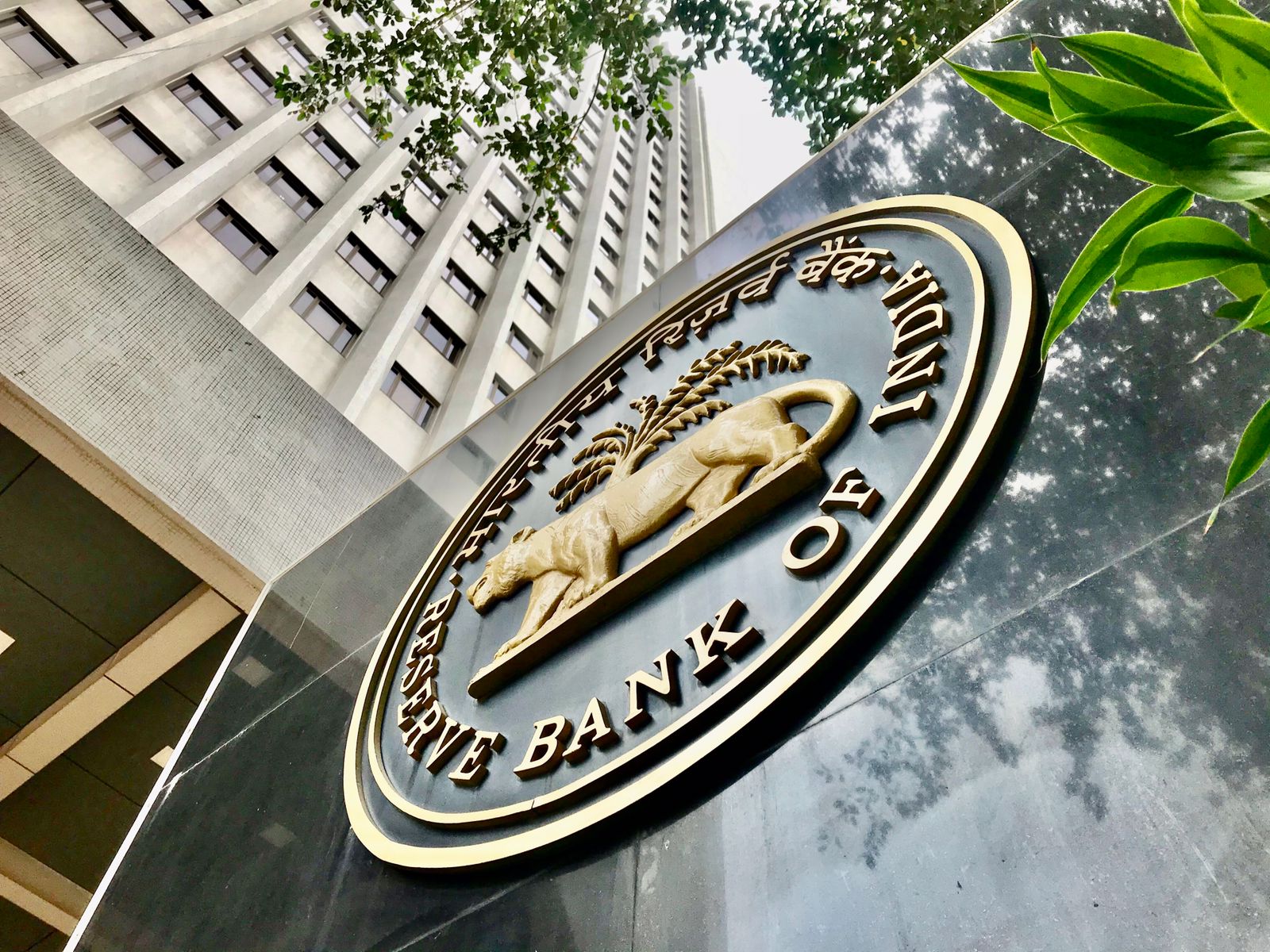
The Reserve Bank of India, at its monetary policy announcement on Friday, proposed the possibility of conducting the sale of government securities through the open market to suck out liquidity from the financial system.
Market participants have perceived it as a clear indication that the central bank intends to keep liquidity conditions tight going ahead, and surprisingly enough. This is also aimed at cushioning risks to price stability and ensuring financial stability.
"Surprisingly, the RBI Governor said that the central bank would seek to actively curb liquidity surplus via g-sec sales rather than rely upon organic factors to do the job in a gradual manner," Vivek Kumar, economist at QuantEco Research, said. "This emphasis on hawkishness underscores the RBI's desire to follow a proactive liquidity management approach rather than a passive one," he added.
Currently, the liquidity deficit in the banking system stands at Rs 34,000 crore, compared with a surplus of Rs 2.5 lakh crore before the RBI's incremental cash reserve ratio move in August.
With the last of the impounded liquidity being released on Saturday, the core liquidity is expected to rise to Rs 3.3 lakh crore, according to Gaura Sen Gupta, economist at IDFC First Bank. Core liquidity refers to the cash and other financial assets, such as government bonds, that banks possess that can easily be liquidated and paid out as part of operational cash flows.
"Looking ahead, liquidity conditions are likely to get progressively tighter with a pick-up in currency leakage from the festival season," Sen Gupta said.
Balancing Liquidity Distribution
RBI Governor Shaktikanta Das pointed out skewed liquidity distribution among banks and advised banks to deploy their excess funds in the inter-bank call money market rather than parking it in the RBI's standing deposit facility. The SDF allows banks to deposit their liquidity with the RBI at a 6.25% rate, i.e., 25 basis points under the prevailing repo rate.
"It is desirable that banks with surplus funds explore lending opportunities in the interbank call market rather than passively parking funds in the SDF at relatively less attractive rates," Das said.
Das mentioned that excess liquidity conditions, sparked by the deposit of Rs 2,000 banknotes, a pick-up in government spending, and capital inflows, have compelled banks running low on funds to tap into marginal standing facilities for their requirements.
The MSF is an emergency borrowing window where banks can borrow funds from the RBI at 6.75%, i.e., 25 bps above the prevailing repo rate.
Cumulatively, banks parked funds worth Rs 2.92 lakh crore in three months starting in July under SDF, RBI data showed. Further, average borrowings under the MSF increased to Rs 94,605 crore in September from Rs 6,702 crore in July.
Banks scrambling for funds to meet overnight demand have elevated short-term rates.
On average, the weighted average call rate spiked to 6.65% in September from 6.48% in July, the RBI data showed. In the second half of September, the weighted average call rate had risen to 6.70% after the I-CRR and advanced tax outflows turned liquidity into a deficit.
Sakshi Gupta, principal economist at HDFC Bank, perceives the announcement of the open market sale of government securities as "a very strong signal" for the market to prepare for tight liquidity conditions.
"I think their objective would be to align the overall call money rate slightly above the repo rate going forward. Liquidity balance would, therefore, be almost micromanaged through various tools," she told BQ Prime.
However, IDFC First Bank's Sen Gupta sees the quantum of the OMO sale as remaining small until October.
While the government bond market is expected to see passive inflows on account of inclusion in the JP Morgan bond index only next year, the global monetary conditions are going to drive the foreign portfolio inflows in the coming months.

-
Extracting Value From Battery Scrap Could Be Challenging For India | The Reason Why

A discarded lithium-ion battery still contains valuable materials such as lithium, nickel and cobalt. These can be recovered and reused. When such batteries are crushed and shredded, they produce a dark powder called black mass.
-
One El Nino, India Can Handle. Two Could Break The Granary
India's grain stocks can absorb one bad year, but a second El Nino could drain the buffer in two to three years, economists say.
-
India's Troika Of Good Luck | Joining The Dots
As Jensen Huang's exit drags Nvidia down, a cooling AI trade and resilient earnings have revived investor interest in India. A likely RBI rate hike looms.
-
Talking Points This Week: Leadership Shock At Nvidia, Earnings Strength, And The Fog Over Hormuz
The Anthropic IPO pricing and first trading day, Nvidia's upcoming earnings, and any fresh signals from Iran will set the tone for the following week.
-
Signature Play: The Classic Cocktail Is Dead. Or Is It?
Classic cocktails are disappearing from India's cocktail menus. But they're still being ordered, taught to bartenders and borrowed from. So, who's really having the last drink?
-
A New Samvat Wishlist: Inclusive Prosperity And Human Development
India has strengthened its economic foundations through infrastructure, digital access and enterprise. Its next growth chapter must deepen productivity, create better livelihoods and widen participation in prosperity.
-
Love, Sex Aur Dhokha: The Audacious Plot To Spy On Jensen Huang
A Taipei dinner, a Singapore chip buyer and a suspected Chinese asset: inside the alleged spy operation that got close to NVIDIA's Jensen Huang.
-
Ten Things I Learnt This Samvat
Patience can be a trap. Cheap stocks can stay cheap. Leverage can wipe you out. What did Samvat 2082 teach us? Niraj Shah writes on 10 lessons from the year gone by.
-
Talking Points This Week: Tech Nerves, FII Buying, And A Faraway Banking Shock
The global markets are not shining this Diwali. The exception in the large markets is, India.
-
Midterm Rally Lasted A Day. The Hard Reality Of A Divided US May Last Two Years | Opinion
Between a contested AI boom, a debt ceiling that arrives in 2027 and a president with every incentive to act alone, the next two years may prove more volatile than the first day's rally suggests.









