Raghuram Rajan, En-Route to Exit, Outlines RBI’s ‘Work in Progress’
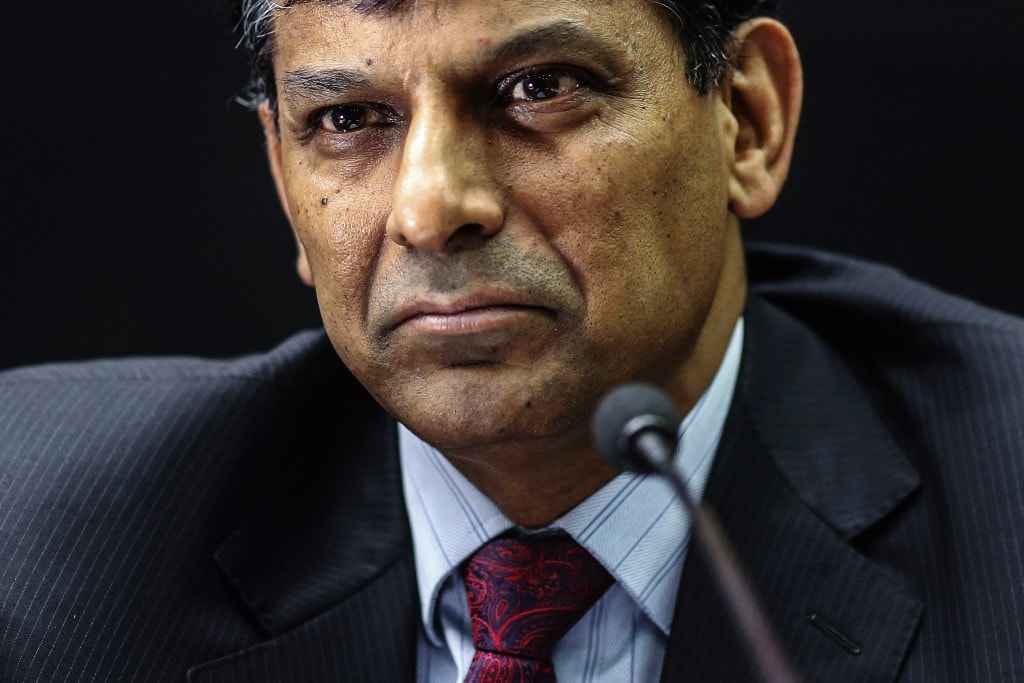
Outgoing Reserve Bank of India governor Raghuram Rajan highlighted three areas that the central bank needs to work on in 2016-17, calling them “work in progress”. These include aiding economic growth, bringing inflation under control, and ensuring transmission of monetary policy actions by banks.
“While the policy actions have had positive effects, there are a number of areas which should be considered ‘work in progress'. From RBI's perspective, three such areas continue to be important,” Rajan said in the foreword to the RBI's annual report for the year-ended June 2016.
Despite some signs of recovery, India's economic growth is still below the levels the nation is capable of achieving, Rajan said. “The key weakness is in investment, with private corporate investment subdued because of low capacity utilisation, and public investment slow in rolling out in some sectors,” he added.
The central bank has already outlined its target on inflation, having officially moved to the inflation-targeting method of monetary policy formulation. As per an agreement signed with the Central government, the RBI has committed to bringing consumer price inflation down to 5 percent by the end of the current financial year, and will endeavor to hit 4 percent by the end of the subsequent fiscal. It will then strive to maintain consumer price inflation within a 4 percentage point band with 4 percent as the median.
In his foreword to the annual report, Rajan reiterated that inflation projections are still at the upper limits of the RBI's inflation objective. He added that “…the room to cut policy rates can emerge only if inflation is projected to fall further.”
In the last monetary policy review earlier this month, Rajan chose to retain the key policy rate, or the repo rate, at 6.5 percent. He had then stated that there was an upside risk to the inflation trajectory for the current fiscal. Data released subsequently showed that consumer price inflation for July had jumped to 6.07 percent compared with 5.77 percent in June.
On the third issue, Rajan pointed out that the willingness of banks to cut lending rates is “muted”. The RBI is in the process of reviewing the Marginal Cost of Funds Based Lending Rate (MCLR) method of calculating the base rate. The RBI has found that despite the introduction of the new method, banks have only transmitted a portion of the 150-basis-point reduction in policy rates since January 2015.
“…Not only does weak corporate investment reduce the volume of new profitable loans, their stressed assets have tightened capital positions, which may prevent them from lending freely,” Rajan said.
Short Term Focus
Rajan is of the opinion that the imminent introduction of the Monetary Policy Committee will be a big positive. “This will be a welcome step forward in strengthening transparency, continuity, and independence of monetary policy.”
The Monetary Policy Committee will comprise of six members, three from the RBI and an equal number nominated by the Central Government. The RBI's members will include the Governor, the Deputy Governor in charge of monetary policy and another officer. Each member of the committee will be allowed one vote to determine policy action. In the event of a tie, the Governor has a casting vote, or a second vote, that will decide the outcome of the deadlock.
So far, it is clear that the newly appointed RBI Governor, Urjit Patel, who takes charge on September 4, and executive director Michael Patra will be part of the committee. The government is yet to announce its nominees, and appoint the deputy governor in charge of monetary policy. The second area of short-term focus will be on ensuring the move towards neutral systemic liquidity. In its monetary policy review in April this year, the RBI moved to a new liquidity framework, whereby measures were put in place to move systemic liquidity to net neutral from a 1 percent deficit.
“When the RBI gets to neutrality, periods of temporary liquidity surplus should be broadly equaled by periods of temporary liquidity deficit over the course of the year (2016-17),” said Rajan. He added that permanent liquidity requirements would be addressed by open market operations, while short-term liquidity needs would be taken care of through liquidity windows and the liquidity adjustment facility.
The third, and final area of focus for the RBI, according to Rajan will be to ensure that banks, which have already recognised stressed assets on their books, will now move to improving the operational efficiency of these stressed assets.

-
Indians Are Travelling, But Not Every Journey Is A Holiday | The Week In Whys

Pilgrims, patients and working women are the real travellers, and the system hasn't quite caught up with them.
-
Getting To Work Costs Women More | The Reason Why
It is not just about women paying more than men. It is about women paying much more in cities than in villages.
-
AI Bias In Investing Cannot Be Eliminated, But It Can Be Governed
Framing is a particularly important example as identical financial information presented in terms of gains rather than losses can lead an LLM to reach a different assessment.
-
Joining The Dots | Dark Skies, Steady Diya: Why Hope Holds This Diwali
With war, a weak rupee and foreign outflows weighing on sentiment, policymakers at the NDTV World Summit and market veterans at NDTV Profit Ignite: Diwali Edition offered the same advice: stay invested and filter out the noise.
-
The Curious Case of Equitas Small Finance Bank And A CEO Who Quit For Stock
PN Vasudevan believes persistent investor concerns over a perceived conflict of interest had become a governance overhang on Equitas Small Finance Bank's stock, even as the lender improved profitability and asset quality.
-
Talking Points This Week: AI Cash Burn, A Tiger Comeback And An India That Still Finds Its Own Path
India is not immune to higher oil or tighter global liquidity, yet its earnings base is broader, its domestic policy levers are still available.
-
Foreign Investors Own Half Of HDFC Bank and ICICI Bank. An LTCG Cut Could Matter Most Here
Foreign portfolio investors have US$115 billion parked in HDFC Bank, ICICI Bank. If the government cuts long-term capital gains tax, Jefferies says returning foreign money could land here first.
-
'Never Seen This Level Of Negativity': Sandeep Tandon Says The Next Rally May Be Closer Than You Think
Veteran investor Sandeep Tandon says foreign selling is easing, large-caps are due a comeback and mid-caps are crowded, while he turns positive on gold, power and pharma this Diwali.
-
Indians Stay With Family, Not In Hotels | The Reason Why
India still lacks enough clean, reliable and affordable hotels for budget-conscious travellers.
-
The Economic Imperative: Analysing The Material Driving Force Behind India-Canada Strategic Reset
This economic complementarity is further reinforced by deep institutional investment ties and talent mobility, which form the bedrock of the bilateral framework.










