Q2 Results: Deferred Tax Gain Masks Tata Steel’s Business Pain
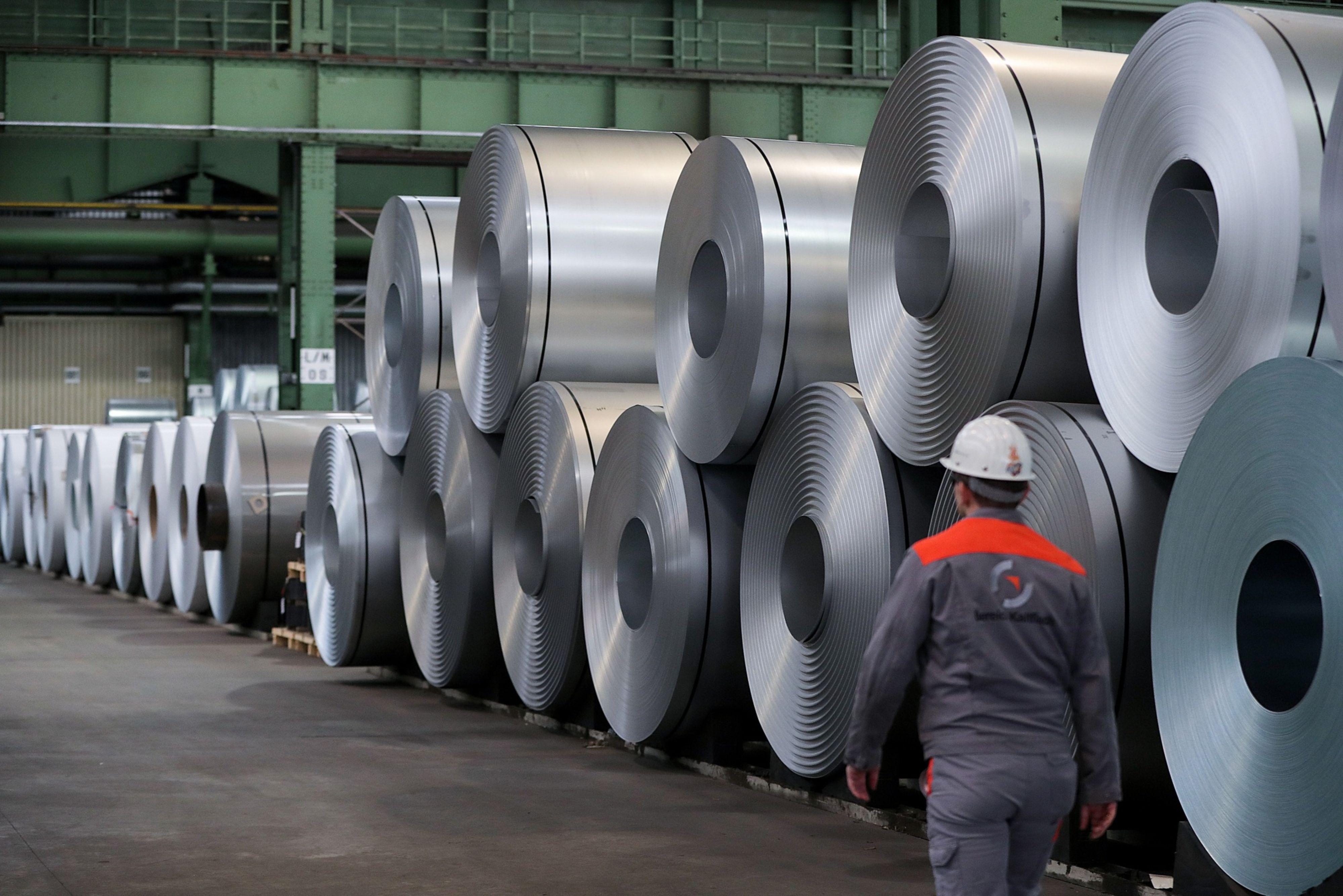
Tata Steel Ltd.'s quarterly profit rose more than expected due to a one-time tax gain. Still, its revenue and operating profit hit multi-quarter lows as steel prices fell and costs rose.
Net profit rose 15.9 percent over last year to Rs 4,144.7 crore, India's oldest steelmaker said in an exchange filing. That compares with the Rs 459.2-crore consensus estimate of analysts tracked by Bloomberg.
- Revenue fell 15.4 percent year-on-year to Rs 34,579.2 crore—a six-quarter low.
- Operating profit declined 56.6 percent to Rs 3,819.6 crore—the lowest in eleven quarters.
- Margin narrowed 950 basis points to 11 percent.
The company's bottom line was aided by a one-time tax benefit of Rs 4,233 crore. Of this, around Rs 2,400 crore gain came as some of the company's subsidiaries moved to a lower corporate tax rate and about Rs 1,808 crore was for the reversal of deferred tax liabilities.
While the company decided to pay tax under the existing structure till it exhausts its minimum alternative tax credits, it wrote back deferred tax liabilities that are expected to reverse when it moves to the new reduced tax rates.
But it's just a temporary relief for the steelmaker's woes. That's because demand for steel in India is expected to grow at the slowest pace in three years as economic growth fell to a six-year low. The automobile sector—on which the sector depends for 10-12 percent demand—is facing its worst slowdown in more than a decade. That, along with an extended monsoon, dragged the prices of steel to the lowest in three years.
The business environment continued to be challenging and weighed heavily on steel prices, Chief Executive Officer TV Narendran said in the media conference. “In India, steel prices were marked by demand weakness on the back of persistent liquidity issues, weak investment sentiment and seasonal impact of heavy and prolonged monsoons.”
The global steel outlook, too, turned bearish. ArcelorMittal SA, the world's biggest steelmaker, trimmed its 2019 forecast for global steel demand to 0.5-1.5 percent from the earlier guidance of 1-1.5 percent. Growth in China eased. The nation that consumes half of the world's steel is expected to witness a drop in demand.
Also, Tata Steel's volume in Europe was impacted due to planned shutdowns and unplanned outages.
Relying On Exports
The steelmaker was able to offset some of the demand weakness by exporting more to South Asian markets. “South East Asia has been the biggest market for exports and realisations there have gone up by about $10 per tonne,” Narendran said. “Looks like, for now, that we've hit the bottom. Hopefully, it now starts tracking up.”
Exports aren't a favourable option to boost demand but that's what Tata Steel had to rely on to limit the damage. “There's a balance that we'll seek. Because if you flood the global markets when the demand is not so strong then you end up hurting the domestic market as well.”
If the domestic market picks up, then we would like to export less.TV Narendran, Chief Executive Officer, Tata Steel
Hiccup On Debt Reduction
The challenging quarter means Tata Steel's debt reduction plans may have hit a bump. Earlier this year, it had planned to reduce debt by $1 billion in the ongoing fiscal after its failed joint venture in Europe. That timeline will have to be “recalibrated”, said Koushik Chatterjee executive director and chief financial officer at the steelmaker.
In a good year, $1 billion looks feasible. In a year which has seen an unprecedented reduction in market conditions—arithmetically we may not reach that. But we will look at all opportunities to reduce debt.Koushik Chatterjee, ED, CFO, Tata Steel
Still, analysts remained optimistic as a possible revival in demand and softening of raw material prices could aid margins. Over two-thirds of the 30 analysts tracked by Bloomberg have retained a ‘Buy' rating on Tata Steel.
Other Highlights
- India steel production stood flat sequentially at 4.5 million tonne.
- India steel deliveries rose 4 percent quarter-on-quarter to 4.13 million tonne.
- Consolidated steel production stood at 6.95 million tonne, while deliveries stood at 6.53 million tonne.
Tata Steel's stock remained flat at close ahead of the results. That compares with a 0.6 percent gain in the benchmark Sensex.

-
Foreign Investors Own Half Of HDFC Bank and ICICI Bank. An LTCG Cut Could Matter Most Here

Foreign portfolio investors have US$115 billion parked in HDFC Bank, ICICI Bank. If the government cuts long-term capital gains tax, Jefferies says returning foreign money could land here first.
-
'Never Seen This Level Of Negativity': Sandeep Tandon Says The Next Rally May Be Closer Than You Think
Veteran investor Sandeep Tandon says foreign selling is easing, large-caps are due a comeback and mid-caps are crowded, while he turns positive on gold, power and pharma this Diwali.
-
Indians Stay With Family, Not In Hotels | The Reason Why
India still lacks enough clean, reliable and affordable hotels for budget-conscious travellers.
-
The Economic Imperative: Analysing The Material Driving Force Behind India-Canada Strategic Reset
This economic complementarity is further reinforced by deep institutional investment ties and talent mobility, which form the bedrock of the bilateral framework.
-
Medicine Pricing: Where Must Profit Stop?
India must confront excessive margins, hidden incentives and regulatory gaps that threaten the integrity of medicine.
-
Why Amazon And Flipkart Are Struggling To Beat Meesho In India's Smaller Cities
With 274 million users and lowest-cost logistics, Meesho is defending its value commerce crown against giants like Amazon and Flipkart.
-
High US Salaries, No Green Card Certainty: The Financial Calculation Facing Indian H-1B Families
The suspension of PERM processing at eight technology employers does not cancel existing H-1B visas. What it does is force a question many Indian families have been avoiding: is the US salary worth tying your career and family plans to one employer?
-
Swiggy vs Eternal: Food Delivery's Two Rivals Are No Longer In The Same Race
Eternal is building a private AI assistant, dark.ai. Swiggy is still working out how to make Instamart pay, with an operating loss of Rs 895 crore in the July-September quarter while Blinkit stayed profitable.
-
Where You Live Shapes How You Get To Work | The Reason Why
Two-wheelers are the most popular way to get to work in India, accounting for nearly 43% of workplace commutes.
-
Unhedged Position: Can India See An Indonesia-Style Time Correction?
The Nifty is trading below levels it first clocked in 2024. Is there, then, as I have suggested in the headline, potential that the current time correction drags on painfully for the next three-five, even ten years?










