Better Profit Ratios, Lower Unsecured Loans Boost Q2 For Government Banks
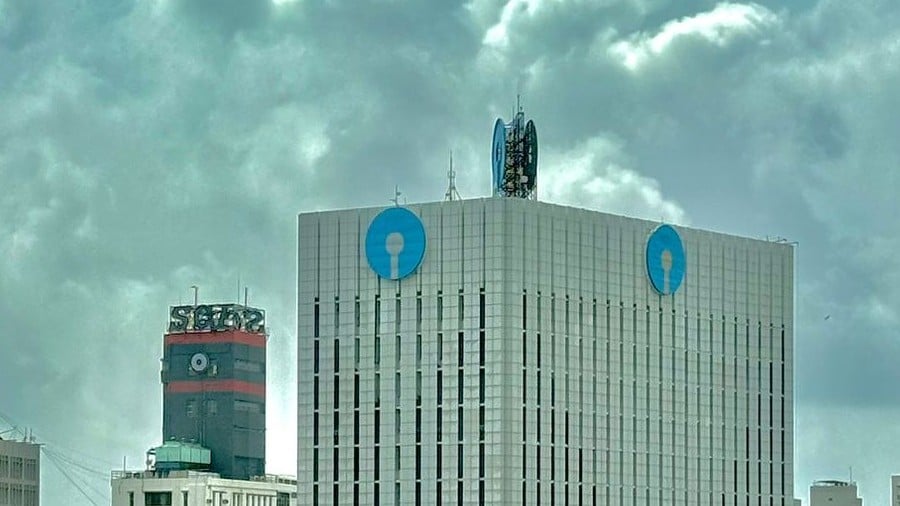
Public sector banks saw their profitability rise and asset quality improve, in line with analyst expectations, in the quarter ended Sept. 30, 2024.
While most public sector banks underperformed on the margin front, their return on assets rose between 2 basis points and 29 basis points, sequentially. The RoAs measure how well a bank uses its assets to generate profit.
"Public sector banks are in a sweet spot in terms of valuations, asset quality, return on equity, and return on assets, and they are expected to outperform the broader markets," Vinit Bolinjkar, head of research at Ventura Securities, said.
Barring State Bank of India, Canara Bank, and Bank of Maharashtra, the other state-owned banks also saw their return on equity rise on a quarter-on-quarter basis.
Like the RoA, the RoE is also a measure of a bank's ability to churn profits. While the RoA weighs profits against the assets of a bank, the RoE indicates how a bank has used shareholders' funds to generate profits.
According to analysts, there is still room for lending rates to rise, which most banks have not opted for, based on their asset mix. However, more lending rate hikes will help manage the compression in the net interest margin.
Analysts say that lower unsecured loan exposures place public sector banks better off than their private peers. The lower exposures to microfinance customers and personal loans push up the quality of their retail book.
India's largest lender saw its asset quality improve as the gross non-performing assets ratio fell to 2.13%, down 8 basis points from a quarter ago. The net bad loan ratio fell to 0.53% from 0.57% a quarter ago.
At the post-earnings conference, Chairman CS Setty also highlighted that SBI has miniscule exposure to the microfinance space. "Our microfinance exposure is miniscule at about Rs 10,000–11,000 crore and we are not worried about asset quality," Setty said.
Bank of Baroda Managing Director Debadatta Chand also echoed a similar view. "Our book is not large enough in microfinance...as far as the current book position is concerned, it's fairly comfortable," Chand said in a post-earnings call.
Strong growth in advances among most state-owned banks also aided their performance in the July–September period. While SBI's advances grew 15% year-on-year, Bank of Baroda reported a 13% rise, followed by Punjab National Bank at 12% and Union Bank of India at 9%.
Growth in advances of banks' retail, agriculture, and micro, small, and medium enterprises segments also showed that they are trying to optimise where they are able to get a higher yield.
RAM is a large portion of most of these banks' loan books and increasing corporate loan growth is another challenge for these lenders, analysts said.
During the second quarter, SBI's corporate book grew 18% annually, faster than its retail personal loans segment, which rose 12%.
But deposit mobilisation continued to remain a challenge for the sector, with SBI cutting deposit growth guidance to 10-11% for the current financial year from its previous guidance of 12-13%.
What is a relief for investors is that the loan-to-deposit ratio of most public sector banks is lower than that of large private lenders.
"The only thing is that they have to catch up on the deposit side...LDR seems manageable for PSU banks," Christy Mathai, equity fund manager at Quantum Mutual Fund, said. "What we are seeing in the past few months is that deposit accretion has slowly started picking up, driven by more government spending and liquidity improving."
While earnings of most PSU banks have been fairly well in the September quarter, their stocks seem inexpensive to analysts.
"Shares of these banks may pick some more momentum after they saw some correction earlier in the year, followed by the introduction of draft project finance norms," Asutosh Mishra, head of research-institutional equity at Ashika Stock Broking Ltd, said.

-
We May Need Another Tukaram Mundhe To Fight Air Pollution | The Reason Why

Developers may install basic measures such as sprinklers and green nets, resume work, and continue violating rules when this equipment stops working.
-
Extracting Value From Battery Scrap Could Be Challenging For India | The Reason Why
A discarded lithium-ion battery still contains valuable materials such as lithium, nickel and cobalt. These can be recovered and reused. When such batteries are crushed and shredded, they produce a dark powder called black mass.
-
One El Nino, India Can Handle. Two Could Break The Granary
India's grain stocks can absorb one bad year, but a second El Nino could drain the buffer in two to three years, economists say.
-
India's Troika Of Good Luck | Joining The Dots
As Jensen Huang's exit drags Nvidia down, a cooling AI trade and resilient earnings have revived investor interest in India. A likely RBI rate hike looms.
-
Talking Points This Week: Leadership Shock At Nvidia, Earnings Strength, And The Fog Over Hormuz
The Anthropic IPO pricing and first trading day, Nvidia's upcoming earnings, and any fresh signals from Iran will set the tone for the following week.
-
Signature Play: The Classic Cocktail Is Dead. Or Is It?
Classic cocktails are disappearing from India's cocktail menus. But they're still being ordered, taught to bartenders and borrowed from. So, who's really having the last drink?
-
A New Samvat Wishlist: Inclusive Prosperity And Human Development
India has strengthened its economic foundations through infrastructure, digital access and enterprise. Its next growth chapter must deepen productivity, create better livelihoods and widen participation in prosperity.
-
Love, Sex Aur Dhokha: The Audacious Plot To Spy On Jensen Huang
A Taipei dinner, a Singapore chip buyer and a suspected Chinese asset: inside the alleged spy operation that got close to NVIDIA's Jensen Huang.
-
Ten Things I Learnt This Samvat
Patience can be a trap. Cheap stocks can stay cheap. Leverage can wipe you out. What did Samvat 2082 teach us? Niraj Shah writes on 10 lessons from the year gone by.
-
Talking Points This Week: Tech Nerves, FII Buying, And A Faraway Banking Shock
The global markets are not shining this Diwali. The exception in the large markets is, India.









