Pakistan Stocks Surge Most In 15 Years After IMF Loan Deal
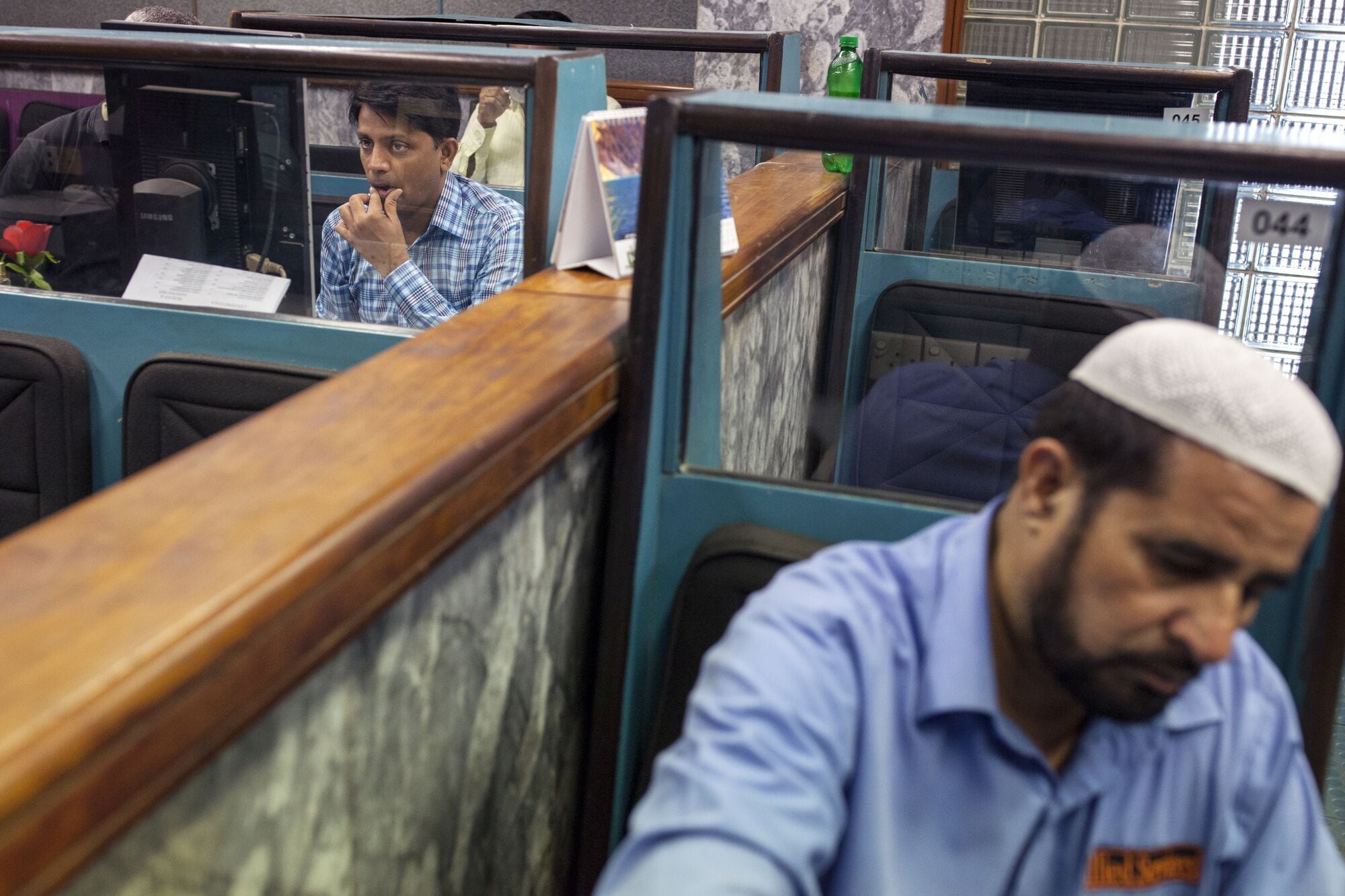
(Bloomberg) -- Pakistan's key stock gauge surged by the most in 15 years on Monday after the nation clinched an initial $3 billion loan deal from the International Monetary Fund, easing default fears.
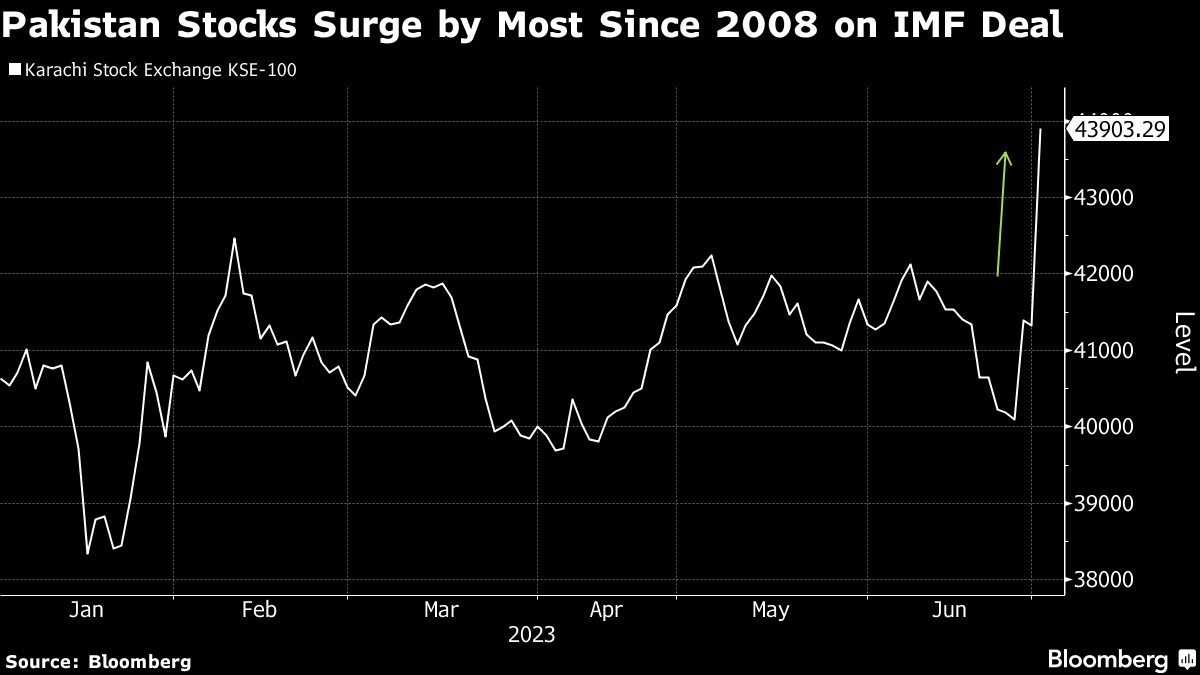
The nation's benchmark KSE-100 Index gained enough to trigger a one-hour halt early in the session after reopening in the wake of the three-day Eid holiday. It rose 6.2% at close, the biggest gain since 2008.
The rebound comes after a draft agreement with the IMF last week that gave the country a lifeline from a potential debt default. Pakistan is going through its worst economic crisis on record with sky-high interest rates and inflation. It increased taxes and energy prices, and in January allowed its currency to weaken to meet the IMF's key demands. The rupee has lost more than 20% this year, among the worst performers in the world.
“This IMF arrangement provides some comfort to investors over Pakistan's ability to overcome short term external repayments,” said Ruchir Desai, fund manager at Asia Frontier Capital Ltd. based in Hong Kong. The “market should do pretty well” in the next few weeks, he said.
Financial support from multilateral lenders has boosted investor confidence — and returns — across troubled emerging and frontier markets in recent months, as funds were approved or disbursed for countries including Kenya, Tanzania, Senegal, Ukraine, Ghana and Ivory Coast. Other sovereigns in Africa, including Egypt and Mozambique, are expected to have their loans approved soon.
Inexpensive valuations are helping Pakistan's market as well. Concerns related to the slew of negative headlines recently ranging from political turmoil to the risk of a debt default and sinking rupee had sent investors fleeing, with the KSE-100 Index becoming the world's cheapest equity benchmark.
“Overall, the valuations are dirt-cheap with significant room for rebound,” said Ali Raza, head of international equities trading at BMA Capital, in Karachi.
Pakistan dollar bonds advanced, with the paper due in 2024 gaining 17 cents in the past week. The 8.25% 2024 bond was indicated 3.1 cents higher to trade at 73.6 cents on the dollar on Monday, a level last seen about a year ago in August. The gains come after dollar bonds notched their best-ever week. Pakistan's currency market opens Tuesday.
Read More: Pakistan's Politics Seen Key to Deliver on New IMF Aid Program
Economic indicators are helping as well. Pakistan's inflation eased in June for the first time in seven months as record borrowing costs dampened demand and lower commodity prices slowed price gains. Consumer prices rose 29.40% in June from a year earlier, according to data released by the Pakistan Bureau of Statistics Monday. That compares with a median estimate for a 30.8% gain in a Bloomberg survey and a record 37.97% increase in May.
Still, the picture isn't entirely rosy. Pakistan faces some $23 billion of external debt obligations coming due in the fiscal year starting July — more than six times the nation's foreign-exchange reserves. Reserves dropped to $3.5 billion, to cover less than a month of imports — and below the global standard benchmark of three months. That restricted its ability to fund imports including raw materials, and forcing many factories to suspend operations.
The IMF bailout does change the game for Pakistan, to some market watchers. Barclays upgraded Pakistan debt to market weight on the development. Moody's Investor Service expects the deal to open up support from bilateral and multilateral partners and help the nation with its high external debt repayments, analyst Grace Lim said in an emailed reply.
“This is the first-ever market halt on a positive rally,” BMA's Raza said. “This is a huge day for Pakistan equities.”
--With assistance from Ronojoy Mazumdar and Malavika Kaur Makol.
(Updates with closing levels in the second paragraph.)
More stories like this are available on bloomberg.com
©2023 Bloomberg L.P.

-
Why Swapping Your Old Gold Can Trigger A Rs 5 Lakh Tax Bill, And How You Can Avoid It Legally

Swapping old gold for new is taxed as a sale and a fresh purchase. Getting your own gold remade can cut most of that bill, though it has its own costs.
-
The AI Trade is Done. The Real Opportunity for Investors Starts in 2027 | Unhedged Position
As pureplay AI stocks plunge and circular, capex-led financing unwinds, 2027 is set to be a year of reckoning for AI companies. Yet the bust clears the way for a better opportunity for investors in 2027 -- shifting the spotlight from AI builders to the companies using AI.
-
Leadership As Mission: Why The Age Of AI Demands More Human Leadership
Debjani Ghosh examines how AI is changing leadership, arguing that its success must be measured by its impact on people and the accountability of those guiding its use.
-
We May Need Another Tukaram Mundhe To Fight Air Pollution | The Reason Why
Developers may install basic measures such as sprinklers and green nets, resume work, and continue violating rules when this equipment stops working.
-
Extracting Value From Battery Scrap Could Be Challenging For India | The Reason Why
A discarded lithium-ion battery still contains valuable materials such as lithium, nickel and cobalt. These can be recovered and reused. When such batteries are crushed and shredded, they produce a dark powder called black mass.
-
One El Nino, India Can Handle. Two Could Break The Granary
India's grain stocks can absorb one bad year, but a second El Nino could drain the buffer in two to three years, economists say.
-
India's Troika Of Good Luck | Joining The Dots
As Jensen Huang's exit drags Nvidia down, a cooling AI trade and resilient earnings have revived investor interest in India. A likely RBI rate hike looms.
-
Talking Points This Week: Leadership Shock At Nvidia, Earnings Strength, And The Fog Over Hormuz
The Anthropic IPO pricing and first trading day, Nvidia's upcoming earnings, and any fresh signals from Iran will set the tone for the following week.
-
Signature Play: The Classic Cocktail Is Dead. Or Is It?
Classic cocktails are disappearing from India's cocktail menus. But they're still being ordered, taught to bartenders and borrowed from. So, who's really having the last drink?
-
A New Samvat Wishlist: Inclusive Prosperity And Human Development
India has strengthened its economic foundations through infrastructure, digital access and enterprise. Its next growth chapter must deepen productivity, create better livelihoods and widen participation in prosperity.









