Stock Market Crash: Nifty, Sensex Plummet, Yet Hold Edge Among Asian Peers
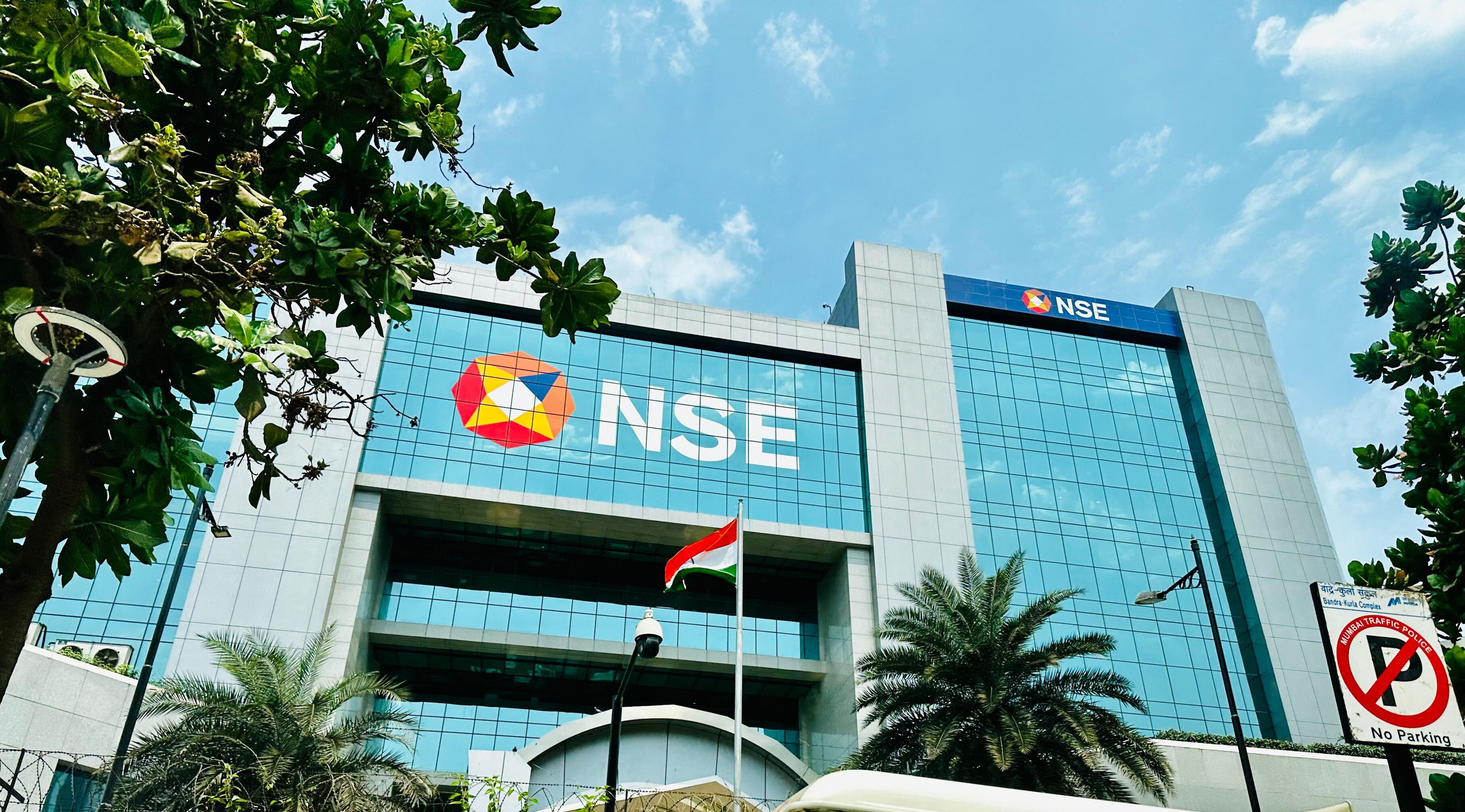
Indian equity markets plunged sharply on Monday, with the Nifty 50 dropping 5.07% to 21,743.65 and the Sensex tumbling 3,939.68 points to 71,425.01. This decline came amid a global wave of risk-off sentiment, yet India managed to emerge as the second-best performing market in Asia for the day.
The sell-off was sparked by escalating global concerns following US President Donald Trump's tariff announcement, which triggered retaliation from China. The ongoing trade tensions have rattled investor confidence, injecting extreme volatility into markets worldwide. Reflecting the panic, India VIX surged to 57.40% on Monday.
Extending last week's losses, Asia-Pacific markets suffered their steepest fall since the 2008 financial crisis. The MSCI Asia Pacific Index plummeted by as much as 7.9%, its worst decline since October 2008. Hong Kong's Hang Seng led the fall, crashing nearly 13%, with most regional indices firmly in the red. The index has fallen over 20% from its March high and entered a bear market.
Japan's Nikkei 225 slid 8.84%, while the broader Topix index dropped 9.62%. The index has fallen over 20% from its December high and has also entered a bear market.
South Korea's KOSPI fell 5.59%, and Taiwan's Taiex nosedived 10%. Hong Kong's Hang Seng was the worst hit, plunging 12.6%. Markets in Indonesia, Thailand, and Vietnam were closed for holidays.
In Southeast Asia, Singapore's Straits Times dropped 8.66%, China's Shanghai Composite slid 8.11%, and Malaysia's KLCI Index fell 5.66%. Australia's ASX 200 was down 6.5%, while the Philippines' PSEi Index declined by 4.6%.
In contrast, Indian indices showed relative resilience. On the previous trading session, the Nifty had declined 1.69%, and the Sensex dropped 1.38%, far less than their Asian counterparts.
The correction was exacerbated by a massive Wall Street sell-off on Friday. US indices experienced one of their worst trading days in history, with the Dow Jones Industrial Average falling 5.5% after a 4% drop on Thursday.
The S&P 500 lost 5.97%, following a 4.84% dip the previous day, and the Nasdaq Composite declined 5.73%, extending Thursday's 5.97% loss. Concerns are mounting that a full-blown trade war could push the global economy into recession.
Since the US tariff announcement on April 2, Hong Kong's Hang Seng has lost 11.6%, Japan's Nikkei 225 is down 11.3%, and China's CSI 300 has dropped 7.8%. South Korea's KOSPI has declined by 5.5%. In comparison, India's Nifty 50 has shed just 1.8%, underlining its relative strength amid global turmoil.
European markets were not spared either. The UK's FTSE 100 fell 6.4%, Germany's DAX lost 7.8%, and France's CAC 40 dropped 7.4%. The Euro Stoxx 50, representing major eurozone companies, declined by 8%.
Despite Monday's sharp losses, India's comparatively moderate decline highlights its resilience, keeping it among the top-performing markets in a region battered by fear and uncertainty.

-
Indians Are Travelling, But Not Every Journey Is A Holiday | The Week In Whys

Pilgrims, patients and working women are the real travellers, and the system hasn't quite caught up with them.
-
Getting To Work Costs Women More | The Reason Why
It is not just about women paying more than men. It is about women paying much more in cities than in villages.
-
AI Bias In Investing Cannot Be Eliminated, But It Can Be Governed
Framing is a particularly important example as identical financial information presented in terms of gains rather than losses can lead an LLM to reach a different assessment.
-
Joining The Dots | Dark Skies, Steady Diya: Why Hope Holds This Diwali
With war, a weak rupee and foreign outflows weighing on sentiment, policymakers at the NDTV World Summit and market veterans at NDTV Profit Ignite: Diwali Edition offered the same advice: stay invested and filter out the noise.
-
The Curious Case of Equitas Small Finance Bank And A CEO Who Quit For Stock
PN Vasudevan believes persistent investor concerns over a perceived conflict of interest had become a governance overhang on Equitas Small Finance Bank's stock, even as the lender improved profitability and asset quality.
-
Talking Points This Week: AI Cash Burn, A Tiger Comeback And An India That Still Finds Its Own Path
India is not immune to higher oil or tighter global liquidity, yet its earnings base is broader, its domestic policy levers are still available.
-
Foreign Investors Own Half Of HDFC Bank and ICICI Bank. An LTCG Cut Could Matter Most Here
Foreign portfolio investors have US$115 billion parked in HDFC Bank, ICICI Bank. If the government cuts long-term capital gains tax, Jefferies says returning foreign money could land here first.
-
'Never Seen This Level Of Negativity': Sandeep Tandon Says The Next Rally May Be Closer Than You Think
Veteran investor Sandeep Tandon says foreign selling is easing, large-caps are due a comeback and mid-caps are crowded, while he turns positive on gold, power and pharma this Diwali.
-
Indians Stay With Family, Not In Hotels | The Reason Why
India still lacks enough clean, reliable and affordable hotels for budget-conscious travellers.
-
The Economic Imperative: Analysing The Material Driving Force Behind India-Canada Strategic Reset
This economic complementarity is further reinforced by deep institutional investment ties and talent mobility, which form the bedrock of the bilateral framework.










